The enemy of knowledge is not ignorance, it’s the illusion of knowledge (Stephen Hawking)

It ain’t what you don’t know that gets you into trouble. It’s what you know for sure that just ain’t so (Mark Twain)

Invest with smart knowledge and objective odds

THE DAILY EDGE: 17 MARCH 2021

U.S. Retail Sales Are Held Back by Severe Winter Weather in February

Total retail sales including food service and drinking establishments declined 3.0% (+6.3% y/y) during February after rising 7.6% in January, which was strengthened by a second round of government stimulus checks. The January gain was revised from 5.3%. The Action Economics Forecast Survey expected a 0.3% slip. Retail sales excluding motor vehicles and parts declined 2.7% last month (+5.5% y/y) after surging 8.3% in January, revised from 5.9%. Sales have fallen in four of the last five months. A 0.3% February rise had been expected.

Sales in the retail control group, which excludes autos, gas stations, building materials and food services, fell 3.5% last month (+10.2% y/y) after surging 8.7% in January, revised from 6.0%.

Motor vehicle purchases declined 4.2% in February (+9.2% y/y) following a 5.0% January rise. The decline compares to a 5.6% weakening (-6.7% y/y) in unit sales of light vehicles. (…) Furniture & home furnishings sales weakened 3.8% (+8.9% y/y) following a 12.9% jump while sales of electronics & appliances eased 1.9% (-3.1% y/y) after surging 16.7% in January. Sporting goods, hobby and book store sales declined 7.5% (+15.4% y/y) after rising 10.3%.

Building materials sales fell 3.0% (+14.2% y/y) with the severe weather after increasing 4.9% in January. (…)

In the nondiscretionary sales categories, food & beverage store sales held steady in February (11.7% y/y) after gaining 2.4% in the prior month. Health personal care store sales eased 1.3% (+5.4% y/y) following a 2.3% rise.

Sales at restaurants and drinking establishments posted a 2.5% decline (-17.0% y/y) in February after rising 9.1% in January.

The consumer-spent-out theory finds support from the declining sales in 4 of the past 5 months. Note however that Control Sales (blue bars) are still up at a 3.6% annual rate since October amid the second wave and poor February weather:

fredgraph - 2021-03-16T175508.044

The pent-up-demand view says that consumers continue to buy goods at double digit YoY rates over pre-pandemic February 2020. Per ING: “January’s stimulus-payment-induced surge was revised even higher and with another stimulus cheque hitting bank accounts and the weather situation having improved, the numbers for March and April will surge.”

fredgraph - 2021-03-16T092205.821

The next set of government payments have not reached consumers yet but Chase’s spending tracker has surged through March 12:

image

China’s experience per Bloomberg which coined the expression “revenge spending”: “The reopening of the nation’s domestic travel corridors sparked a tourism revival, with locals visiting destinations like Macau and Hainan. They’ve been spending so much there that brands like Ralph Lauren Corp., Estee Lauder Cos. and Coach are all scrambling to open more stores. There’s universal hope that there’ll be a similar fervor in the U.S. too.

The other, related, debate:

Goldman Sachs: The Inflation Boost From Supply Chain Disruptions: Here Today, Gone in 2022

US manufacturers’ supply chains are increasingly strained, as a rapid recovery in goods demand combined with lingering pandemic-related constraints on international transport services has pushed delays in supplier deliveries to their highest level in over 40 years. As a result, a significant majority of manufacturing firms currently indicate that supply chain disruptions and delivery delays are negatively affecting production.

Unfortunately, supply chain disruptions are unlikely to abate in the near term and will continue to put upward pressure on consumer prices for the rest of this year: fiscal stimulus will keep goods demand elevated and the virus will continue to disrupt the supply of international goods transport services. However, by early next year, we think that shipping bottlenecks are likely to resolve themselves and prices will moderate, turning the boost to core inflation into an outright drag.

The good news is that because supply challenges are largely driven by transportation and not production constraints—unlike last spring when supplier delays spiked due to factory shutdowns that halted the supply of intermediate goods—we expect that supply constraints will put upward pressure on prices but have less of an impact on real economic activity. As examples of how some importers and manufacturers have alleviated bottlenecks at higher costs, some companies have started importing bike parts and hot tubs by air rather than sea freight, and other producers have started rerouting imports through alternate ports.

Hmmm…read on and judge by yourself if “supply challenges are largely driven by transportation and not production constraints”.

Commodities Boom Hits Home Prices are surging for the raw materials used to build American homes and builders and manufacturers are passing along higher prices for wood, copper and bricks.

(…) “Whoever the home buyers are, they have been able to pay for it,” said Todd Tomalak, who tracks building products for John Burns Real Estate Consulting.

American Homes 4 Rent, which built more than 1,600 rentals last year and plans to construct another 2,000 houses this year, said its lumber bill is between $20,000 and $25,000 per house, up from about $10,000.

“Fortunately, we’ve been in a rental-rate growing environment, and that has kept us yield neutral,” said Jack Corrigan, the company’s chief investment officer.

Investors are watching all corners of the economy for signs of stimulus driving a pickup in inflation. They are finding it in housing, where rising input prices are translating into higher costs for consumer goods. (…)

“We’re sold out. We can’t take on any more business this year,” [CanWel Building Materials Group Ltd.] Chief Executive Amar Doman told investors last week. “Everything that we’re producing is sold, and it’s out the door.” (…)

The National Association of Home Builders says that rising lumber prices have added $24,000 to the cost of building the average single-family home and about $9,000 per apartment. (…)

Builders boosted prices for nearly three quarters of all floor plans offered during January, according to RBC Capital Markets, compared with 54% of models that became more expensive in December. (…)

At Burke Brothers Hardware nearby, owner Jeff Hastings is balancing rising costs with keeping customers. He is stocking up on copper wire before prices go any higher and sacrificing his own profit on lumber sales to attract customers who will add higher-margin items, like fasteners and tools, to their tickets. (…)

From the latest ISM survey:

  • “The coronavirus [COVID-19] pandemic is affecting us in terms of getting material to build from local and our overseas third- and fourth tier suppliers. (Computer & Electronic Products)
  • “Supply chains are depleted; inventories up and down the supply chain are empty. Lead times increasing, prices increasing, [and] demand increasing. Deep freeze in the Gulf Coast expected to extend duration of shortages.” (Chemical Products)
  • “Steel prices have increased significantly in recent months, driving costs up from our suppliers and on proposals for new work that we are bidding. In addition, the tariffs and anti-dumping fees/penalties incurred by international mills/suppliers are being passed on to us.” (Transportation Equipment)
  • “We anticipate a fast and large order surge in the food-service sector as restaurants open back up.” (Food, Beverage & Tobacco Products)
  • “Overall capacities are full across our industry. Logistics times are at record times. Continuing to fight through shipping and increased lead imes on both raw materials and finished goods due to the pandemic.” (Fabricated Metal Products)
  • “Prices are going up, and lead times are growing longer by the day. While business and backlog remain strong, the supply chain is going to be stretched very [thin] to keep up.” (Machinery)
  • “Things are now out of control. Everything is a mess, and we are seeing wide-scale shortages.” (Electrical Equipment, Appliances & Components)
  • “We have seen our new-order log increase by 40 percent over the last two months. We are overloaded with orders and do not have the personnel to get product out the door on schedule.” (Primary Metals)
  • “Prices are rising so rapidly that many are wondering if [the situation] is sustainable. Shortages have the industry concerned for supply going forward, at least deep into the second quarter.” (Wood Products)

Samsung Warns of Severe Chip Crunch While Delaying Key Phone The tech giant voices concern about chip shortages spreading beyond the automaking industry.

(…) Samsung, one of the world’s largest makers of chips and consumer electronics, expects the crunch to pose a problem to its business next quarter, (…).

Industry giants from Continental AG to Renesas Electronics Corp. and Innolux Corp. have in recent weeks warned of longer-than-anticipated deficits thanks to unprecedented Covid-era demand for everything from cars to game consoles and mobile devices. Volkswagen AG said this week it’s lost production of about 100,000 cars worldwide. In North America, the silicon shortage and extreme weather have combined to snarl more production at Toyota Motor Corp. and Honda Motor Co. The fear is the crunch, which first hit automakers hard, may now disrupt the much larger electronics industry.

“There’s a serious imbalance in supply and demand of chips in the IT sector globally,” said Koh, who oversees the company’s IT and mobile divisions. “Despite the difficult environment, our business leaders are meeting partners overseas to solve these problems. It’s hard to say the shortage issue has been solved 100%.” (…)

“The tightened supply of Qualcomm AP chips produced by TSMC is affecting everybody except Apple,” said MS Hwang, analyst at Samsung Securities. “PCs will soon be hit due to the short supply of display driver ICs, and the profitability of TV will be affected by soaring LCD panel prices.”

Compounding matters, Samsung’s own production got sideswiped last month. Its fab in Austin, Texas — which makes chips both for internal and external consumption — was sidelined in February by statewide power outages and hasn’t resumed full production. The resulting shortfall in production of Qualcomm 5G radio frequency chips could reduce global smartphone output by 5% in the second quarter, research firm Trendforce estimates. (…)

Some analysts say shortages could get mostly ironed out in coming months. But the concern is that tight supply in certain segments — such as in more mature semiconductors where it takes time to build capacity — could eventually throttle the broader consumer electronics industry and jack up prices if it persists. (…)

At the same time, China’s insatiable appetite for chips — fueled in part by its rapid recovery from the pandemic — and inventory stockpiling by local companies is fueling demand. Sales for the country’s chip industry climbed 18% to 891.1 billion yuan ($137 billion) in 2020, China Semiconductor Industry Association Chairman Zhou Zixue told a conference in Shanghai Wednesday. (…)

U.S. Import and Export Prices Rise Further in February

Import prices increased a slightly larger-than-expected 1.3% m/m (3.0% y/y) in February on top of an unrevised 1.4% m/m gain in January. The Action Economics Forecast Survey anticipated a 1.2% m/m gain in February. The 3.0% y/y increase was the largest since October 2018. A 11.1% m/m (6.5% y/y) jump in fuel prices following a 9.0% m/m increase in January was the major factor behind the rise in import prices in February. (…)

Nonfuel import prices rose a modest 0.4% m/m (2.8% y/y) in February after a 0.9% m/m increase in January. The 2.8% y/y rise in nonfuel prices was the largest since January 2012. Prices in all of the major end-use categories rose in February, though apart from fuel and foods, feeds, beverages (1.6% m/m), the increases were very small. These figures are not seasonally adjusted and do not include import duties.

After posting a 2.5% m/m jump in January, the largest monthly gain in the series history, export prices increased a larger-than-expected 1.6% m/m (5.2% y/y) in February. The Action Economics Forecast Survey had expected a 1.1% m/m gain. The 5.2% y/y rise was the largest since June 2018. The price index for agricultural exports rose 2.9% m/m (16.1% y/y) following a 6.0% jump in the previous month. The February gain was primarily due to higher soybean and corn prices. The 16.1% y/y increase was the largest annual gain since September 2011.

Prices of nonagricultural exports increased 1.5% m/m (4.1% y/y) in February after a 2.2% m/m gain in January. Prices rose in all major end-use categories in February with the largest being a 3.6% m/m increase in prices of industrial supplies and materials, led by an 8.8% m/m increase in exported fuel prices.

image

Note that non-fuels import prices are up 7.0% a.r. in the last 3 months.

“It’s Gone Parabolic”: Canadian Housing In One Shocking Chart The months’ supply of homes for sale across the country hit a record low of 1.8 in the month (the norm is about 5)

U.S. Industrial Production Drops 2.2% in February After 4 Strong Months

Industrial production fell 2.2% in February (-4.2% y/y). It had advanced 1.1% in January, 1.0% in December, 0.9% in November and 1.0% in October. The Action Economics Forecast Survey looked for a 0.3% m/m gain for February. Nearly all industry groups experienced the February declines. Manufacturing output fell 3.1% (-4.1% y/y) after a 1.2% increase in January. Mining output declined 5.4% (-15.3% y/y) following a 2.1% increase in January. Utilities were the exception in February, as their output advanced 7.4% (10.1% y/y) after falling 0.6% in January.

Durable manufacturing output fell 2.6% in February (-4.0% y/y) after a 1.5% gain in January. Among those individual industries, only primary metals and aerospace and miscellaneous transportation equipment had increases, with declines marked in the other nine industries in that sector. Specifically, motor vehicle industry output fell 8.3% in February (-8.6% y/y).

Nondurable goods output fell 3.7% in the month (-3.6% y/y) after increasing 1.1% in January and 1.2% in December. The only industry with an increase was textiles and product mills, which saw their production increase 0.6% (-3.3% y/y). Otherwise, the biggest declines in February output were in chemicals, which plunged 7.1% m/m (-5.1% y/y) and in petroleum and coal products, 4.4% (12.3% y/y). (…)

Output of selected high technology equipment decreased 0.3% m/m (7.9% y/y) in February. Excluding these products, overall production fell 2.3% m/m (-4.0% y/y). Excluding both high tech products & motor vehicles, factory production fell 1.9% m/m (-3.7% y/y).

Capacity utilization for the industrial sector increased dropped to 73.8% last month from 75.5% in January. Factory sector utilization was 72.3%, down from 74.6%.

image

PMIs are supposed to be leading indicators. But diffusion indices sometimes fail showing the actual magnitudes of trends.

image

Here’s what Markit was saying on March 1:

Despite easing, rates of expansion in output and new orders remained sharp overall in February. The rate of production growth was among the fastest in six years while new order growth was among the fastest seen over the past three years. New export orders also rose solidly, registering the second-steepest gain since September 2014.

Particularly encouraging is a marked improvement in demand for machinery and equipment, hinting strongly at strengthening business investment spending. However, new orders for consumer goods showed the strongest back-to back monthly gains since the pandemic began, suggesting higher household spending is also feeding through to higher production. (…)

The accumulation of backlogs of work was the quickest for three months. (…) The degree of optimism was the highest for three months (…)

Toyota, Honda to Halt Some U.S. Production Over Supply Shortages Toyota and Honda are halting production at some North American plants as the pandemic’s continuing effects on the global supply chain create shortages of essential components.

(…) Toyota cited an unspecified “shortage of petrochemicals” at some North American plants. The shortage would affect production at vehicle factories in Kentucky and Mexico, as well as an engine plant in Alabama. (…) It said that for now it didn’t expect to have to furlough any workers.

Honda said it would halt production at most of its U.S. and Canadian car factories next week because of supply-chain issues including port backlogs that have delayed the delivery of parts.

Honda said a combination of the port issues, a shortage of semiconductors, pandemic-related problems and fallout from severe winter weather across the central U.S. led to the decision. The cold caused pipes to burst in some of its factories. (…)

The shutdown is set to start at most of Honda’s five auto plants in the U.S. and Canada on March 22 and last a week, the company said, without specifying which plants would halt production.

Honda said the duration of the shutdown could change depending on parts supply. Workers will continue to be paid to perform other tasks at the plants, it said. (…)

That was all about goods. What about services?

NY Fed’s Service Business Leaders Survey

No surprise, service business activity remains very weak:

image

The surprise may be that wages and prices are rising in this environment:

The employment index rose seven points to -7.1, pointing to a modest decline in employment levels. The wages index continued to march upward, rising eight points to 34.9. As in recent months, price increases picked up in the March survey. The prices paid index rose eleven points to 53.2, its highest level in two years, and the prices received index rose five points to 14.5.

image

Uber to Reclassify U.K. Drivers in Win for Labor Activists The change, after a court loss, reclassifies drivers as “workers” rather than independent contractors, making the U.K. the first place where Uber is paying directly for drivers’ vacations and pensions amid a global battle over gig-economy employment.

(…) The changes may presage legal wrangling, however, because the ride-hailing company says it will guarantee its drivers the U.K.’s minimum wage only after they have accepted a trip—not from the moment they sign into the app and are ready to work, as labor activists have demanded. (…)

But the U.K.’s Supreme Court found in its February ruling that the group of former drivers should have been considered working whenever they were connected to the Uber app and available for trips. (…)

In November, Uber won a major ballot battle in California—its home state—that exempted it from having to reclassify its drivers as employees eligible for broad employment benefits. As part of that win, Uber offered some new benefits including health insurance for some drivers. The company passed on some of its costs to riders in the form of higher prices.

Uber and others are lobbying to make such a model the national standard in the U.S., and the company has made similar proposals in Europe. (…)

Elsewhere in Europe, meantime, Swiss courts have forced Uber Eats, the company’s food-delivery arm, to stop using independent contractors in the Geneva area. Last spring, a French court reclassified a former Uber driver as an employee. (…)

Uber, for instance, says the change in employment status doesn’t cover delivery workers at its Uber Eats business, saying the food-delivery sector operates using a different economic model—a view labor activists may challenge. (…)

THE YEARN TO EARN

Putting the Risk Into Risk-Free Treasurys Inflation worries make buyers wary of locking up money in government bonds for a long time

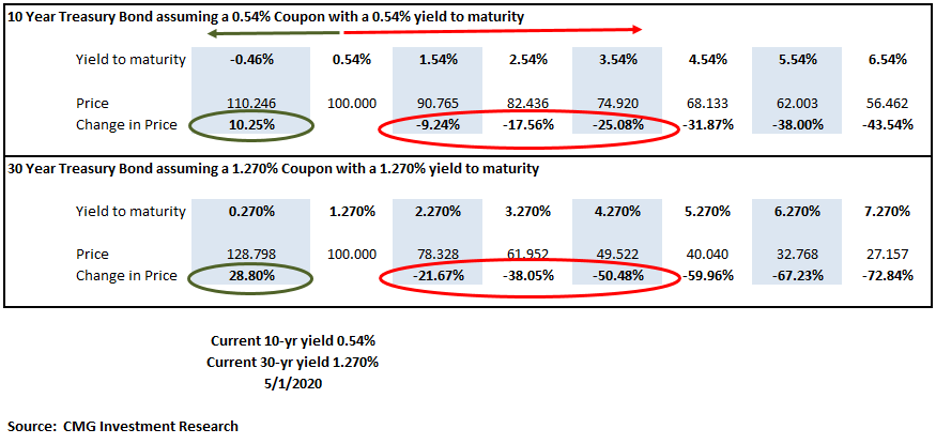
(…) The value of a 30-year Treasury fell 15.6% in just three months. That is the equivalent of almost a decade of the income it offered three months ago, and it is the flip side of the sudden rise in yields. Shorter-maturity Treasurys have fallen less, but even for the 10-year note it will take six years of income to recover the loss of the past three months.

The danger is that this is just the beginning. (…)

But this recent chart from David Rosenberg should interest the contrarian in you:

image

David titillates us even more writing that “bond yields have always peaked out and rolled over at these levels.”

Like Ronald Reagan, I trust but verify: the red dots are approximately where sentiment bottomed above. Rosie is right!

image

Coincidentally, BofA just published its latest Fund Manager Survey: getting long bonds here is a truly contrarian move.

TLT may be extended but the trend is not your friend just yet, particularly with the booming budget deficit:

tlt

Steve Blumenthal’s On My Radar warns:

What the next chart shows is how much is at risk for every 1% rise in bond yields (red arrow pointing right). Shown are the 10-year Treasury note and the 30-year Treasury bond. Zero in on the -9.24% and -21.67% numbers. That’s the current loss in rise in interest rates since late August. Note the losses should rates move up another percentage point from here too. This is why I say the bond market is broken. A 1.54% yield with inflation above that number does nothing to help your portfolio. Further, should rates continue to rise, you lose money. The reward-to-risk is just not there.
More yearn to earn:

Greensill-Owned Bank Declared Insolvent, Causing Losses for Small German Towns Local governments deposited money at the lender to escape negative interest rates at their usual banks.
COVID-19
Alibaba Browser Pulled From China’s App Stores As Xi Warns Tech Giants Pose “Risks” To CCP Control

(…) According to minutes from a meeting of senior CCP leaders, President Xi warned that tech giants are growing “in an inappropriate manner” that creates risks for the Chinese system.

“Some platform companies are growing in an inappropriate manner and therefore bear risks. It is a considerable problem that the current regulatory regime has failed to adjust” to the rise of these groups,” the minutes of the meeting said. Regulators will “step up” efforts to improve the regulation of China’s big internet companies, the minutes added.

Xi added that the development of China’s platform economy is currently at a crucial stage, and it’s necessary to focus on the long term, strengthen weaknesses and create an innovative environment to promote the healthy and sustainable development of the platform economy. In the past, Xi has spoken about the importance of limiting monopolies, but this is the first time he has specifically addressed the problems posed by “platform” companies like Tencent, Alibaba, JD.co and others. (…)

THE DAILY EDGE: 16 MARCH 2021

U.S. Retail Sales Fell 3% in February Shoppers pulled back on retail spending in February, but sales are poised to accelerate as the pandemic eases and more government stimulus is distributed.

The decline followed robust January sales that were propelled by stimulus payments to households and other impact from the December pandemic-relief package. January sales advanced a revised 7.6%, up from the earlier estimate of a 5.3% increase. (…)

Retail sales were up 6% over the last three months compared with the same period a year ago, according to the Commerce Department. (…)

Control sales were up 10.3% YoY in February, the last 2020 non-pandemic month. Nothing close to weak.

fredgraph - 2021-03-16T092205.821

The Pandemic Ignited a Housing Boom—but It’s Different From the Last One Residential home sales are hitting peaks last seen in 2006, just before the bubble burst, but this time mortgages are stricter, down payments are higher, and a tight supply is supporting prices.

(…) Millennials, the largest living adult generation, continue to age into their prime homebuying years and plunk down savings for homes. At the same time, the market is critically undersupplied. New-home construction hasn’t kept up with household demand, and homeowners are holding on to their houses longer. Buyers are competing fiercely for a limited number of homes.

Mortgage lenders, meanwhile, are maintaining tight standards—buyers are drawn to the market by historically low interest rates, not by easy access to credit. Rising home values also mean that even if homeowners can’t afford their mortgage payments, they can likely sell their homes for a profit rather than face foreclosure. Financial firms are still packaging mortgages as securities, but the vast majority of those mortgages today have government backing. (…)

Those trying to break into the market for the first time have rarely found it more difficult. U.S. house prices soared 10.8% in the fourth quarter from a year earlier on a seasonally adjusted basis, the biggest annual increase in data going back to 1992, according to the Federal Housing Finance Agency. The median home purchase price climbed above $300,000 last year for the first time. Nearly one in four home buyers between April and June bought houses priced at $500,000 or more.

Less-expensive homes became harder to find. Sales of homes priced at $250,000 and below declined in 2020 from a year earlier, according to NAR.

First-time home buyers are struggling to afford down payments. For many renters who lost jobs in 2020, homeownership is even further out of reach. (…)

The homeownership rate stood at 65.8% in the fourth quarter of 2020, up from 63.7% in the fourth quarter of 2016, according to the U.S. Census Bureau.

The housing market’s biggest near-term concern is rising mortgage interest rates, which recently hit their highest level since July and cooled the market slightly. (…) In the fourth quarter, the typical monthly mortgage payment ticked upward to $1,040, from $1,020 a year earlier, NAR said, even though mortgage rates declined nearly a full percentage point. (…)

Unlike in the building boom of the mid-2000s, a deficit of homes for sale is playing a big role in the current spike in prices. New-home construction hasn’t kept up with demand in recent years, as builders took years to recover from the financial crisis and faced shortages of land and skilled labor. Those shortages and rising material costs continue to hinder builders as they increase production.

While housing starts rose in 2020, new-home construction per U.S. household in December was still more than 20% below its average level in the late 1990s, according to Jordan Rappaport, a senior economist at the Federal Reserve Bank of Kansas City.

Homebuying demand is so high that many builders are limiting the number of homes they sell at a time, to ensure they don’t sell more than they can build. They are also raising prices. The median new-home sales price was $346,400 in January, up 5.3% from a year earlier.

“It’s the hottest market I’ve ever seen,” said Sean Chandler, president of the central Texas division at home builder Chesmar Homes. “The buyers that come in are like, ‘I just want a home. I don’t care at this point what it costs.’ ” (…)

Redfin: Key housing market takeaways for 400+ U.S. metro areas during the 4-week period ending March 7:

(Note from D.O.: numbers in parentheses are for the week ended Feb.28).

  • The median home-sale price increased 17% (16%) year over year to $328,350, an all-time high. This is the largest increase on record in this data set, which goes back through 2016.

  • Asking prices of newly listed homes hit a new all-time high of $349,975, up 10% from the same time a year ago.

  • Pending home sales were up 19% (18%) year over year and up 3% from the four-week period ending February 7. In the two weeks since pending sales dipped during the winter storms over the 7-day period ending February 21, the weekly number of pending sales is up 17%.

  • New listings of homes for sale were down 17% (17%) from a year earlier.

  • Active listings (the number of homes listed for sale at any point during the period) fell 41% (40%) from 2020 to a new all-time low. This is the largest decrease on record in this data, which goes back through 2016.

  • 56% (55%) of homes that went under contract had an accepted offer within the first two weeks on the market, well above the 45% rate during the same period a year ago. This is another new all-time high for this measure since at least 2012 (as far back as Redfin’s data for this measure goes). During the 7-day period ending March 7, 59% (57%) of homes sold in two weeks or less.

  • 44% (43%) of homes that went under contract had an accepted offer within one week of hitting the market, up from 32% during the same period a year earlier. This is also an all-time high for this measure. During the 7-day period ending March 7, 48% (44%) sold in one week or less.

  • The average sale-to-list price ratio, which measures how close homes are selling to their asking prices, increased to 99.8% (99.6%) —1.7 percentage points higher than a year earlier and an all-time high. During the 7-day period ending March 7, the ratio shot up to 100.1% (99.9%), the first time on record since this data series began in 2016 that the average home has sold for above its list price nationwide.

  • For the 7-day period ending March 7, the seasonally adjusted Redfin Homebuyer Demand Index—a measure of requests for home tours and other services from Redfin agents—was up 55% (49%) from the same period a year ago.

  • Mortgage purchase applications increased 7% week over week (seasonally adjusted) and were up 2% from a year earlier (unadjusted) during the week ending March 5. For the week ending March 11, 30-year mortgage rates increased to 3.05%, the highest level since July.

Redfin Homebuyer Demand Index Up 55% From 2020 

Active Listings of Homes For Sale Down 41% From 2020

  • Canadian real estate group raises 2021 forecast as sales jump 39% in February

Air Travel Is Showing Signs of Renewed Demand While federal health officials still advise against travel, passenger volumes are picking up as U.S. airline executives voice optimism about a rebound.

(…) Airports screened nearly 1.36 million people Friday and more than 1.34 million people on Sunday, two of the busiest days since March 2020. (…) Some states, including New York and Connecticut, are relaxing rules requiring that inbound travelers quarantine. (…)

Southwest Airlines Co. LUV 1.75% and JetBlue Airways Corp. also said Monday that more people are making plans to travel, booking vacations or trips to visit friends and family, helping to pare expected revenue declines this quarter. (…)

JetBlue sold more bundled flight-and-hotel vacation packages last week than ever before, Chief Executive Robin Hayes said at the conference hosted by JPMorgan Chase & Co.

Bookings to destinations such as Florida and Hawaii, while still down from 2019 levels, are holding up better than other areas, according to data from ForwardKeys, a travel-analytics company. Domestic bookings were 42% of 2019 levels in the first week of January but were at 64% of 2019 levels in the first week of March, according to its data. (…)

United CEO Scott Kirby said at the conference Monday that the company expects its cash flow to turn positive, excluding debt payments, this month. Mr. Bastian also said Delta expects to stop burning cash as soon as this month. (…)

“For the first time since this crisis hit a little over a year ago, we at American are not looking to go raise any money.”

From Axios:

“Well over half, 60% of Americans, say they will be traveling for leisure in the next three months, according to a survey done less than a week ago,” Micki Dudas, director of AAA Leisure Travel, told reporters.

  • AAA also found that 84% of those surveyed have at least tentative plans to travel in 2021.  
  • “The travel industry continues to see a parallel between the vaccine roll out and increased optimism among the traveling public, and a greater comfort level from travelers seeking to book for the summer or fall of this year,” Dudas added.

Yes, but: The number of passengers on Friday was still 20% lower than on the same day last year, and down nearly 38% from 2019, TSA data show.

  • The 7-day average of travelers is only about half of what it was at this point in 2019.

unnamed - 2021-03-16T075501.185

Data: TSA; Chart: Axios Visuals

Swine Fever Resurgence Damps Hopes for U.S. Soybean Farmers A new outbreak of African swine fever is putting new strain on China’s efforts to rebuild its pig herds—a threat to U.S. farmers’ hopes to sell more soybeans there this year.
SENTIMENT WATCH

Risk-on behavior is nearing record levels

(…) By the end of last week, nearly 100% of the indicators were in risk-on mode. That’s so high that it has preceded weak returns. We should generally expect prices to rise when behavior is showing a risk-on mode. But when it gets above 80%, the S&P’s annualized return was -0.1% and above 90% it was -1.7%. (…) The Backtest Engine shows us that when the 50-day average has been this high, future returns were poor. Out of 162 days that met the criteria, only 50 of them showed a positive return 3 months later. (…)

Higher-beta indexes like the Nasdaq Composite fared even worse. Using that index in the Backtest Engine, the median 3-month return was -3.9% with only a 24% probability of seeing a positive return.

If we only look at the first signal in 3 months, then all of them saw any further short-term gains peter out or turn to an outright negative in the months ahead. (…)

We’re still not seeing some of the divergent internal breadth deterioration that often triggers after true extremes in sentiment. For the most part, other than some odd days here and there, the indexes are still showing internal strength. It would be unusual, though not unprecedented, to see a sharp and prolonged downturn given those conditions.

The biggest problem is simply that things have been so good for so long, and investors have grown so comfortable, that forward returns have consistently been weak and extremely unlikely to be sustained.

Ray Dalio Says It’s Time to Buy Stuff Amid ‘Stupid’ Bond Economics

(…) “The economics of investing in bonds (and most financial assets) has become stupid,” he said Monday in a post on LinkedIn. “Rather than get paid less than inflation why not instead buy stuff — any stuff — that will equal inflation or better?”

Dalio thinks it may even be a good time to borrow cash to buy higher-returning non-debt investment assets in a new paradigm he said could be characterized by “shocking” tax increases and prohibitions against capital movements. With rising amounts of government debt and “classic bubble dynamics” among many different asset classes, Dalio recommends a “well-diversified” portfolio of non-debt and non-dollar assets.

“I also believe that assets in the mature developed reserve currency countries will underperform the Asian (including Chinese) emerging countries’ markets,” he wrote, adding that Chinese bond holdings by international investors are rising fast. (…)

CATHY’S ARK

Cathie Wood Persuades Investors to Stick With ARK’s ETFs The stock picker uses TV interviews and YouTube videos to put investors at ease amid a volatile period for her investment funds.

(…) Ms. Wood has leaned on television interviews and YouTube videos, which racked up more than 1.5 million views, to put investors at ease throughout the volatility. (…)

“It’s exciting to be alive. We’re as excited as ever about everything we’re doing,” Ms. Wood said in a video posted March 5.

(…) during the recent tumult, investors put more money into most of the funds than they took out, adding a net $1.6 billion to ARK’s coffers over the past month. That is nearly $300 million more than JPMorgan Chase & Co., the eighth-largest ETF issuer in the U.S. As of Friday, ARK managed a total of about $50.6 billion. (…)

“She still has conviction. It makes me feel better about it,” said Mr. Sanders (…).

“There’s nothing wishy-washy about her opinions,” said Mr. Carroll. “Those come through loud and clear and are part of her success.” (…)

Nerd smile Morningstar:

ARKK’s since-inception performance puts it in rarefied air. Only 64 of the 8,637 (0.74%) U.S.-domiciled stock mutual funds in Morningstar’s U.S funds database have ever gained as much or more over a similar time frame. The common thread among most of these highfliers is the fact that they rode booming markets to great gains. Of the 64 funds in this exclusive group, 26 (40%) trace their success to the inflating of the dot-com bubble, which took some of them with it when it burst. Included in that group of 26 is a fund that today goes by the name AB Sustainable Global Thematic ALTFX, which ARK founder Cathie Wood ran from 2009-2013. Many of these funds ultimately folded.

Of the 64 on this list, 14 (21%) have since been liquidated. Some merged into other offerings. And others have seen regular changes in management—most notably Fidelity Magellan FMAGX, which gained nearly 43% annually from March 1977 through June 1983 with Peter Lynch at the helm. In all cases, searing returns cooled off after a hot streak. A majority of these funds’ subsequent returns were negative over the ensuing three- and five-year periods. (…)

There is no denying ARK’s impressive trajectory. But is it sustainable? Historical precedents suggest it isn’t. And after a period of stellar returns and a flood of inflows, capacity concerns loom large.

In the context of funds, capacity is the amount of money an investment strategy can take in without compromising its performance. Every investment strategy has a finite amount of capacity, the amount of which depends on a variety of factors. These include the breadth and depth of the investment opportunity set, liquidity, valuations, and more. A market-cap-weighted total U.S. stock market index fund has immense capacity. The U.S. stock market is broad, deep, and generally liquid. (…)

Too often, asset managers dismiss as a “wouldn’t that be nice to have” problem. This is because accepting more money from investors has an immediate, positive impact on their bottom line. But failing to manage capacity prudently can be detrimental to their investors. Asset bloat can lead managers to stray from their mandates. New money they receive from investors may be added to existing positions in their portfolios that are no longer trading at attractive valuations or to new positions that represent managers’ next-best ideas. Too much money chasing too few good ideas at unattractive valuations is not a formula for successful investing. (…)

There are increasing signs that ARK’s funds are facing capacity challenges. This is evidenced by the changing contours of its flagship fund’s portfolio and the market impact of its trading activity.

The complexion of ARKK’s portfolio has changed. Over the five years from July 2015 through July 2020, the average market cap of companies within ARKK’s portfolio never topped $10.5 billion, consistent with the team’s goal of finding under-the-radar companies that the market doesn’t fully appreciate. Since then, the fund’s average market cap has spiked, topping $20 billion in November 2020 and reaching over $35 billion in January 2021.

Much of the increase in ARKK’s average market cap has owed to rapid price appreciation among many of the smaller companies in its portfolio. But as assets have swelled, ARK has also begun deploying cash in more-established large-cap companies, a shift that is further changing the makeup of the portfolio. From Oct. 31, 2020, through Jan. 31, 2021, the fund initiated new positions in 10 companies. All but three of these companies had market caps greater than $30 billion at the time of purchase, and three–Novartis NVS, PayPal PYPL, and Baidu BIDU–are mega-caps with market caps of more than $100 billion. It appears the fund’s heft is at least partly responsible for pushing it toward owning larger names.

As its picks have posted big gains and it has added bigger names at the margin, small caps’ representation in ARKK’s portfolio has fallen. At the end of October 2020, 33% of ARKK assets were in stocks with a market cap under $5 billion; by the end of February 2021, those stocks made up just 14% of the fund. None of those stocks rose as a percentage of fund assets over that time period.

Even as ARK has shifted to established, larger-cap companies, it still maintains a sizable ownership stake in many of its smaller holdings. Looking across the portfolios of its five actively managed ETFs, we find that ARK owns more than 10% of 26 companies, up from 24 in October 2020. This data ignores the firm’s two passive ETFs, as well as the funds they subadvise for Japanese asset manager Nikko, which would push its stakes even higher. (…)

These large stakes raise concerns around capacity and liquidity management. The more of a company the firm owns, the more difficult it will be to add to or reduce its position without pushing prices against fund shareholders. For example, ARK holds approximately 25.8 million shares of Cerus CERS–a biotech company with a $1 billion market capitalization. Cerus’ shares represent 0.48% of ARKK’s portfolio and 0.44% of Ark Genomic Revolution ARKG. In a liquidation scenario, assuming the firm accounted for 25% of the past month’s average trading volume of 1.9 million shares a day (a generous amount that assumes near-perfect trading conditions), it would take more than 52 trading days for it to completely exit the position.

These ownership stakes tie ARK’s hands. If it changes its thesis on a company and wants to scale down quickly, it won’t be able to do so without materially impacting stock prices. It also increases the exogenous risks it faces related to the behavior of its investors. If the firm faces outflows that outpace its ability to sell these stocks, these illiquid positions could rise as a percentage of the funds’ assets, especially as the team has typically reduced its stake in “cashlike” stocks and added to its favorite names during sell-offs. (…)

ARK is also beginning to have difficulty initiating positions in new names. Take Paccar PCAR, a manufacturer of heavy-duty trucks, which ARK first added to ARKK on Jan. 20, 2021. On Jan. 19, Paccar announced a partnership with autonomous vehicle platform Aurora. The announcement likely piqued ARK’s interest but went little noticed by the market. That day, Paccar’s stock closed at $89.21, up 1.19% from its $88.17 open. ARK purchased around 175,000 shares of Paccar on Jan. 20, about 16% of the stock’s average daily trading volume of 1.1 million shares over the previous 20 trading sessions.

ARKK’s new stake amounted to roughly 0.07% of its portfolio. ARK broadcast its new stake after markets closed on Jan. 20. The next day, Paccar’s share price jumped 7% at the open, on no news other than ARK’s disclosure from the night before. After its initial purchase, ARK added to the position on 10 of the next 11 trading days, building it up to about a 1% position in the fund. (…)

Since the beginning of 2021, ARK has made 20 first-time buys across its five actively managed ETFs. Among those 20 new names, 14 saw their stock prices rise more than 3.5% the day after ARK revealed its first purchase.

This has been a tailwind for the funds. It is a form of reflexivity. ARK buys a stock. The buying boosts the share price, which in turn boosts fund returns. A spike in the funds’ returns drives flows into the funds, which then spurs the fund to buy more shares and drive prices higher. However, this can just as easily work in reverse in a scenario where redemptions increase and/or returns disappoint. (…)

ARK is facing a novel challenge in managing capacity. Of the $53.2 billion that the firm manages in regulated funds, 96% is invested in its ETFs. The ETF wrapper has many investor-friendly features. ETFs tend to offer lower costs and greater tax efficiency than mutual funds. By virtue of being traded on stock exchanges, ETFs are also more widely available at lower investment minimums (typically as low as the price of a single share). But when it comes to plying an active strategy with significant capacity constraints in an ETF, the drawbacks may outweigh the benefits.

As it pertains to capacity, the most significant drawback of the ETF wrapper is that managers cannot say “no” to new money. An ETF’s manager cannot suspend the creation of new shares at its discretion. Thus, the simplest and most effective means of addressing capacity concerns is not at their disposal. Instead, the firm must either:
1. Allocate new money to existing positions that have experienced significant price appreciation.
2. Invest in its next-best ideas.
3. Some combination of number one and number two—which is what has happened to date.

Since the ETF can’t close to new investors, new assets will inevitably diminish the team’s ability to buy its best ideas at compelling valuations.

Another shortcoming of the ETF wrapper is that ARK’s U.S. ETFs must disclose their portfolios to the market each day. As the firm’s assets under management have mushroomed, so have the number of eyeballs watching its every move. In fact, there is a website (cathiesark.com) and an app (ARK Tracker) that monitor the firm’s trades daily. Investors can also sign up for intraday trade alerts on the company’s website (ark-funds.com/trade-notifications). While transparency is generally laudable, this degree of transparency has never been tested at ARK’s current scale. Based on the market’s response to many of its new positions in smaller names, it appears that this degree of visibility is impeding the team’s ability to build positions in new holdings without sometimes significantly impacting their prices. The daily transparency provided by the fully transparent active ETF format may be detrimental to shareholders.

Forfeiting the ability to turn down new investors and tipping its hand to the market each day are serious structural impediments to ARK’s ability to manage capacity in its ETF lineup. Similarly, because of the equitylike characteristics of ETFs, the firm can’t control where new investors are coming from or readily discern what their motives might be. (…)

But demand for ETF shares isn’t driven exclusively by traditional long-only, buy-and-hold investors, be they individuals, intermediaries, or institutions. As equity instruments, ETFs can also be sold short. Also, many ETFs have derivative contracts, such as call or put options, linked to them. Demand for shares of ARK’s ETFs can be driven by investors looking to bet against the ARK team or to hedge options dealers’ exposure. Indeed, in recent weeks, we’ve seen short interest in ARKK’s shares and open interest in options tied to the fund reach new highs. Demand from these atypical sources can put more capital on the ARK team’s plate.

While there are some precedents of the kind of performance that the ARK team has generated, its explosive growth and the fact that the majority of its assets are invested in fully transparent actively managed ETFs make it unique. While the ETF wrapper has many investor-friendly characteristics, in this instance, it might be investors’ enemy. (…)

Here’s what ARK funds traded yesterday:

image

BTW:

The S&P will be getting riskier, as the index’s owners announced on Friday they would add Penn National Gaming and Caesars Entertainment to the benchmark equity gauge along with NXP Semiconductors and Generac Holdings.

  • Those companies will replace Xerox, Flowserve, SL Green Realty and Vontier, which will move to the S&P MidCap 400, with changes scheduled to happen before the start of trading on March 22.

Of note: Penn’s stock has risen nearly 800% over the past year, joining Tesla as another new S&P entrant that skeptical market watchers have cautioned is displaying the tenants of a highly speculative asset. (Axios)

Meanwhile in China: