*** GONE FISHING ***
I am in Ungava salmon fishing until August 29.
Amid all the economic and financial uncertainties, demographics are the critical variable for longer term economic growth and standards of living. Investment strategies should be cognizant of the solid underlying trends.
Our current economic systems and social contracts have developed over decades of growing populations, in particular working-age populations that drive economic growth and support and sustain people living longer lives. This calculus no longer holds.
A combination of higher productivity, more work per person, effective migration, and higher fertility rates can ensure global prosperity for the future. That said, no one of those levers alone will be enough, and each presents challenges. Bending the trajectory of the demographic shift will require society to rethink existing systems for work and retirement in ways that may compel a change in our social contract—no easy feat. (…)
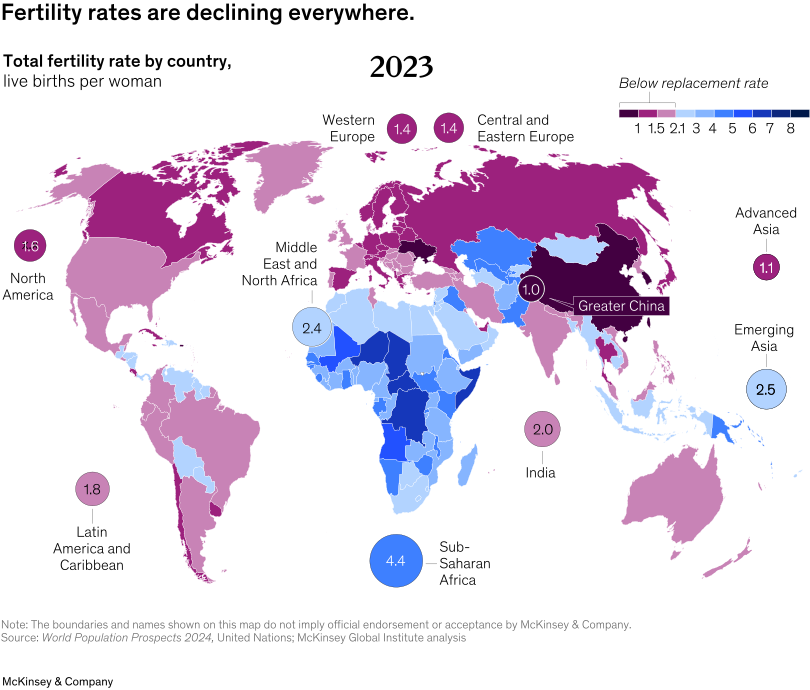
As well-being and prosperity increase around the world, two outcomes—fewer children and longer lives—are reshaping global populations. Over the past several decades, families have shrunk in size virtually everywhere. In much of the world today, the total fertility rate, which we refer to as the fertility rate, is below the replacement rate of 2.1, which is the number of children needed to replace their parents. As a result, the global age mix is shifting. While many people call this phenomenon “aging,” in fact the declining number of young people—a youth deficit—is driving the bulk of the demographic shift
While declining fertility rates and changing population patterns are occurring everywhere, a first wave of regions, generally higher-income ones, has already begun to experience the effects of the demographic shift over the past several decades. Later waves of the same challenge will wash over many emerging economies in the next one to two generations. (…)
Working-age people account for the bulk of economic output, so their numbers relative to those of older and younger people determine a host of economic outcomes. All regions will see the share of working-age people in their populations decline, although at different paces and points in time. (…)
Among first wave regions are predominantly developed economies—Advanced Asia, Central and Eastern Europe, North America, and Western Europe—and Greater China, which has lower GDP per capita than other first wave regions but shares their demographic characteristics. These regions have an average total fertility rate of 1.2 children per woman today, and 67 percent of their combined population is working age, down from a high of 70 percent in 2010. In aggregate, this cohort is rapidly shrinking in these regions, where the share of the working-age population is projected to drop to about 59 percent by 2050.
There are two later wave groups of regions. A second wave has just reached the shores of Emerging Asia, India, Latin America and the Caribbean, and the Middle East and North Africa. Their total fertility rate is 2.2, and 67 percent of their population is working age today. This wave is still gathering momentum, however, and will peak in the 2030s in aggregate.
In Sub-Saharan Africa, the average fertility rate is 4.4 today, and just 56 percent of the population is working age. This share will continue to grow, peaking at 66 percent well into the second half of the century, when the third wave of the demographic shift hits its shores. (…)
For first wave regions, the declining share of working-age population is a relatively new development, and many companies, governments, and communities haven’t yet fully come to grips with the implications. Later wave regions, excluding Sub-Saharan Africa, still have time to prepare, but not much.
Globally, the support ratio was 9.4 in 1997. Put differently, there were more than nine working-age people to support one older person. Today, the global support ratio is 6.5. And by 2050, it is expected to fall to 3.9—that is, fewer than four people to support each senior.
This trend is starker in first wave economies, where the support ratio is already 3.9 today, down from 6.8 in 1997. The ratio is expected to fall to two working-age individuals for every person over 65 years by 2050. Among regions in the first wave, Advanced Asia, Greater China, and Western Europe will have the lowest support ratios by 2050; the ratio will fall fastest in Greater China.
The world reached its maximum number of annual births in 2012, when 146 million babies were born, and the global number of births will continue to slowly decline. According to the United Nations, the total number of people on Earth will peak in 2084, at just above ten billion, and start declining in the latter years of this century. (…)
Total population in first wave regions, however, peaked in 2020. On the current trajectory, the population of these regions will fall from 2.8 billion today to 2.6 billion by 2050 and to 1.9 billion by 2100. Only 22 of the 55 countries in these regions will have more people in 2050 than today, and populations in most of those countries will decline thereafter. Already, more people die each year than are born in 37 countries in first wave regions. Today, 60 percent of the world’s population aged 65 and older resides in these regions. By contrast, only 22 percent of those younger than 15 years live there.
Populations across later wave regions are still increasing. The second wave’s total population will reach its maximum by 2071, going from four billion today to five billion at its peak. Sub-Saharan Africa’s population will still be growing by the turn of the century and is projected to reach 3.5 billion by then, up from 1.3 billion today. (See sidebar “Predicting the future is hard, and demographers don’t agree.”)
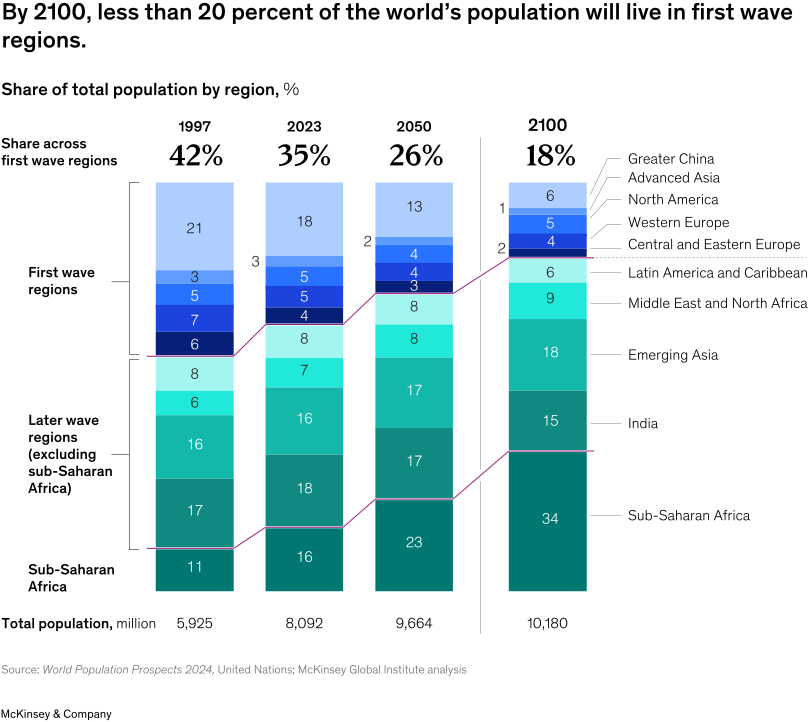
These dynamics mean that the planet’s population is shifting toward later wave regions. By 2050, a quarter of the global population will live in first wave regions, compared with 35 percent of the world’s people today. According to UN projections, these regions could be home to less than 20 percent of the global population by 2100.
Even though Sub-Saharan Africa’s fertility rate is falling fast, almost 300 of the world’s next thousand babies will be born there. Nigeria alone will become home to 57 of the next thousand—or five more than the 52 born across Central, Eastern, and Western Europe combined. Similarly, 172 of the next thousand babies the stork delivers will be in India, where the birth rate overall has dropped below replacement but where the current population of women of childbearing age is still high.
By 2100, Sub-Saharan Africa will account for all of the net global population increase, doubling its current share to 34 percent. By contrast, Greater China’s share of the global population, today the second largest among the ten regions, will shrink by two-thirds, from 18 percent in 2023 to 6 percent by 2100. This would make Greater China’s population only 170 million larger than North America’s, according to UN estimates, compared with a difference of roughly one billion people today. (…)
By 2050, holding current hours worked per capita constant within each age group, later wave regions would account for more than two-thirds of all hours worked globally.
At that time, Sub-Saharan Africa alone could account for 18 percent of global hours worked, doubling its share of work hours today. The share of the world’s work done by Chinese workers, on the other hand, could drop to 18 percent by 2050 from 26 percent today, and every other first wave region’s share is set to shrink. This could create an opportunity for many later wave countries to progress economically. Opportunities span the entire tradeable economy—services as well as manufacturing.
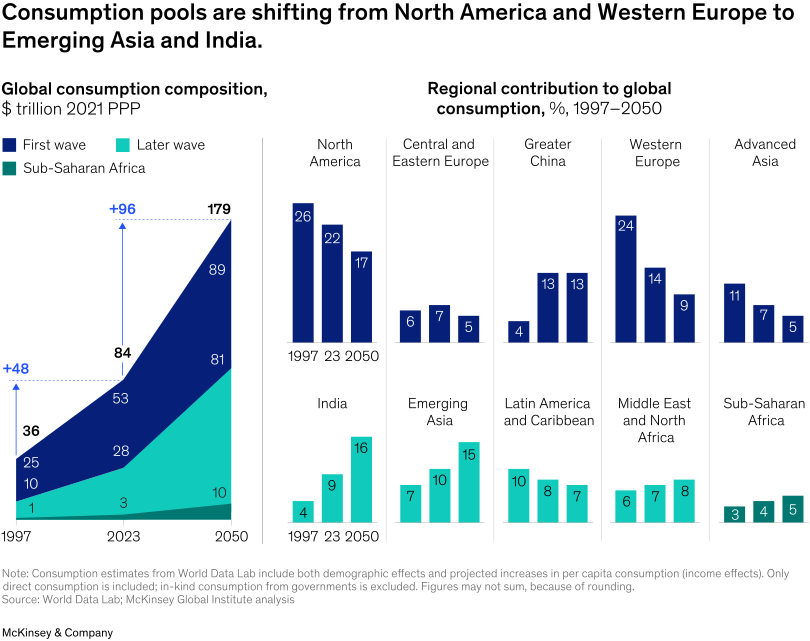
At least for the next quarter century, countries in later wave regions will account for more than half of global consumption, too, due to fast-growing young populations and growing incomes. For example, World Data Lab projects that India and Emerging Asia will account for 30 percent of global consumption at purchasing-power parity (PPP), up from 12 percent in 1997. By comparison, Advanced Asia, North America, and Western Europe could account for just 30 percent of the world’s consumption then, down from 60 percent in 1997. (…)
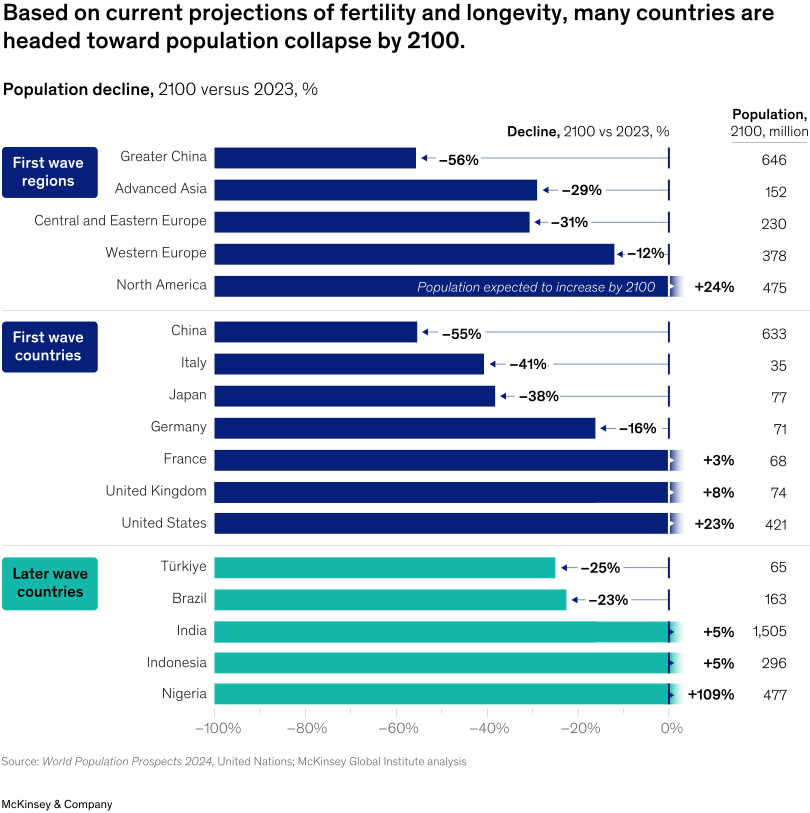
Over the longer term, countries in first wave regions may face the challenge of depopulation. Populations in 26 countries in these regions are on track to decline by a third or more by 2100, while in countries including China, Poland, and South Korea, they are expected shrink by half or more. Projections suggest that some countries with fertility rates below replacement, including France, the United Kingdom, and the United States, will have continued population growth through 2100 based on positive net migration. (…)
Declining populations would also challenge debt sustainability and the social contract, not to mention the global geopolitical balance. (…)
Many first wave economies face a virtually unprecedented depopulation challenge toward the end of the century, according to UN projections. More immediately, they face another challenge: increasing dependency that could depress economic growth over the next quarter century. As population pyramids become bottom-light and top-heavy, the well-being of a growing legion of older people and of society at large will depend on a stagnant or shrinking number of people who work, which will increase pressure on public finances. Youth scarcity could also modify consumption and savings patterns. (…)
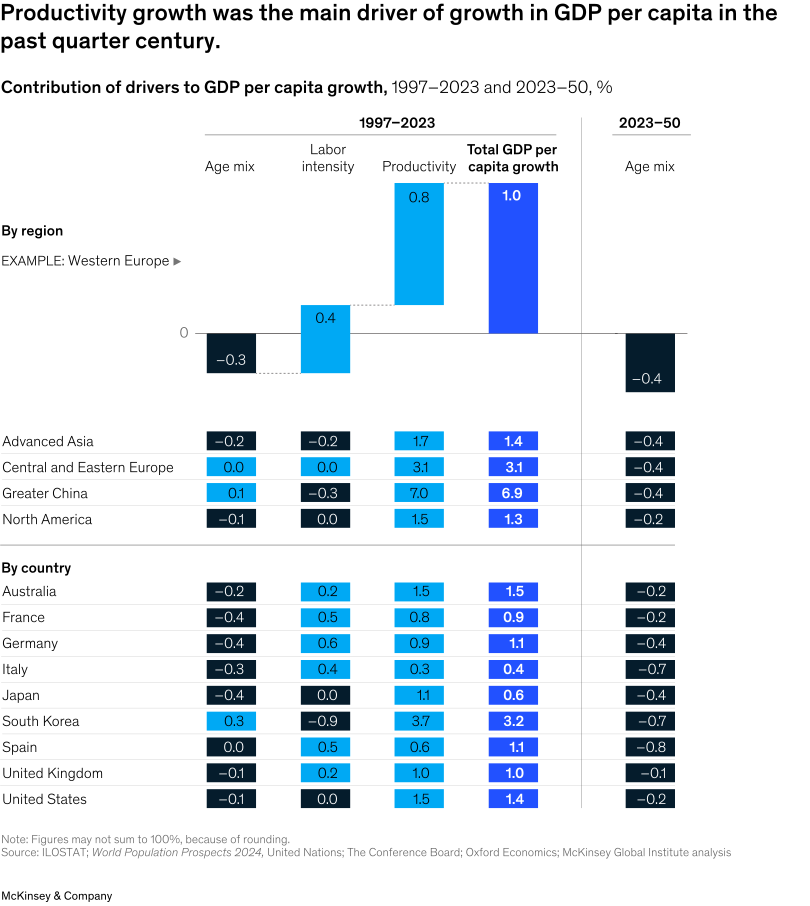
GDP per capita depends on the number of hours worked per person and how productive each hour of work is, or productivity. Hours worked, in turn, depend on how much individuals of each age work, or labor intensity, and the number of people in each age group, or the age mix. Thus, GDP per capita growth depends on productivity growth, shifts in the age mix, and growth in labor intensity among people in each age cohort.
Under current projections, a changing age mix—more older people and fewer working-age people—will result in slower growth in hours worked and thus reduce GDP per capita growth if left unaddressed. To maintain GDP per capita growth, countries will need to influence their age mix, increase labor intensity, or boost productivity growth—or, more likely, rely on a combination of all three. (…)
Across first wave regions, weekly hours worked per capita peak at about 50 years of age and decline thereafter (Exhibit 11). The primary reason is falling labor force participation rates—fewer older people continue to work—but on average, older workers who are employed also work fewer hours.
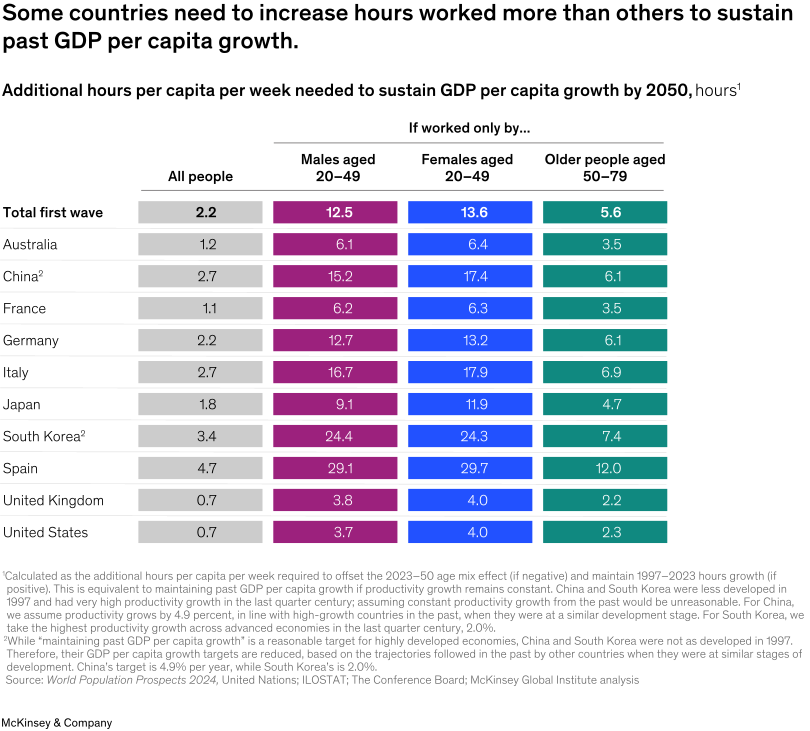
(…) over the coming 25 years, the number of older people living in first wave regions will continue to grow while every other age cohort shrinks. This shift in the age mix could slow the growth in hours worked per capita across first wave regions by 2.2 hours per capita per week on average, thus slowing GDP per capita growth. (…)
A 0.4 percent drag on GDP per capita growth per year may seem trifling, but it isn’t. The shift in age mix could slow GDP per capita growth over the next quarter century, for example, by an average of $10,000 in Western Europe and $6,000 in Greater China. (…)
Productivity growth is the other lever underpinning GDP per capita growth, and generally the most important one. Across first wave economies, it has been the largest contributor to growth over the past quarter century. (…)
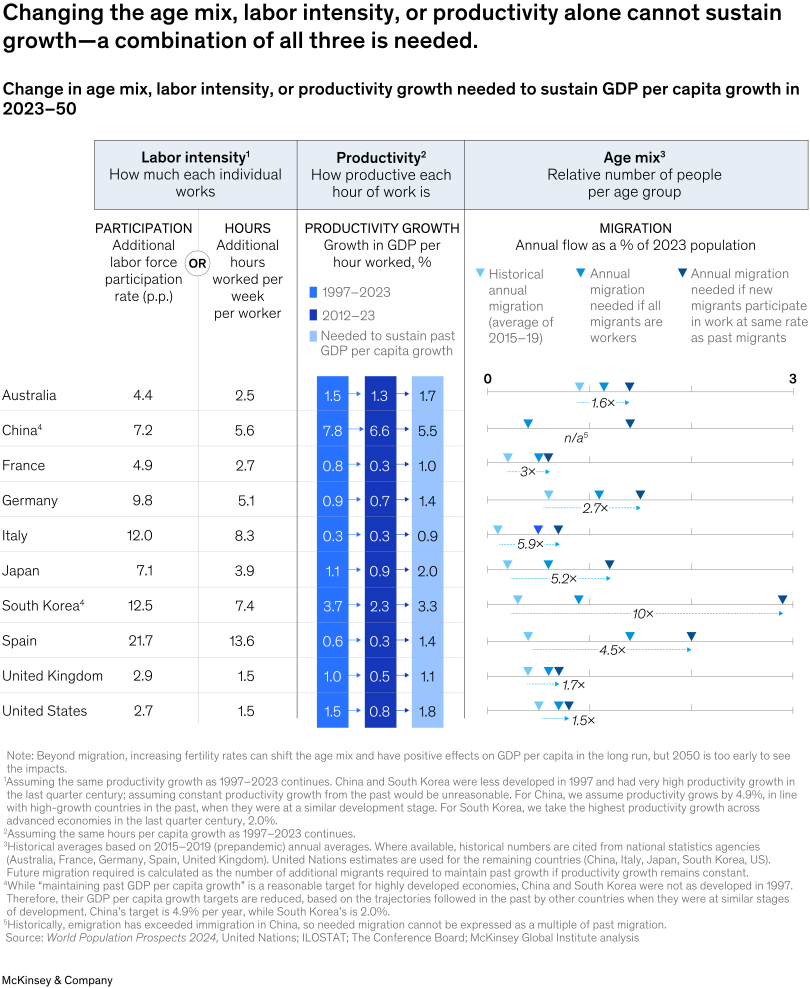
Maintaining past economic progress, let alone increasing it, will require measures to address the impact of demographic headwinds. In this section, we explore the three levers available—labor intensity, productivity, and age mix—to neutralize the drag on economic growth caused by shifting age mix. The third lever, influencing the age mix by increasing the number of working-age people, can be pulled via migration and higher fertility. However, the impact of higher fertility rates by 2050 would be negligible, as a baby born today would be barely joining the workforce. So we only analyze the impact of migration here.
The conclusion is clear: pulling on only one of these three levers will be insufficient to achieve this goal in most countries, so using some combination of all three will be needed to maintain growth and raise living standards. (…)
(…) the target for each country is equal to its past GDP per capita growth, which in many cases is not high. Italy’s target, for example, is a mere 0.4 percent annual growth. Should Italy want to achieve a healthier GDP per capita growth of, say, 1.5 percent, similar to that of the United States or Australia, the growth in hours per capita required would jump from 2.7 to a whopping 7.9, assuming constant past productivity growth of 0.3 percent per year. (…)
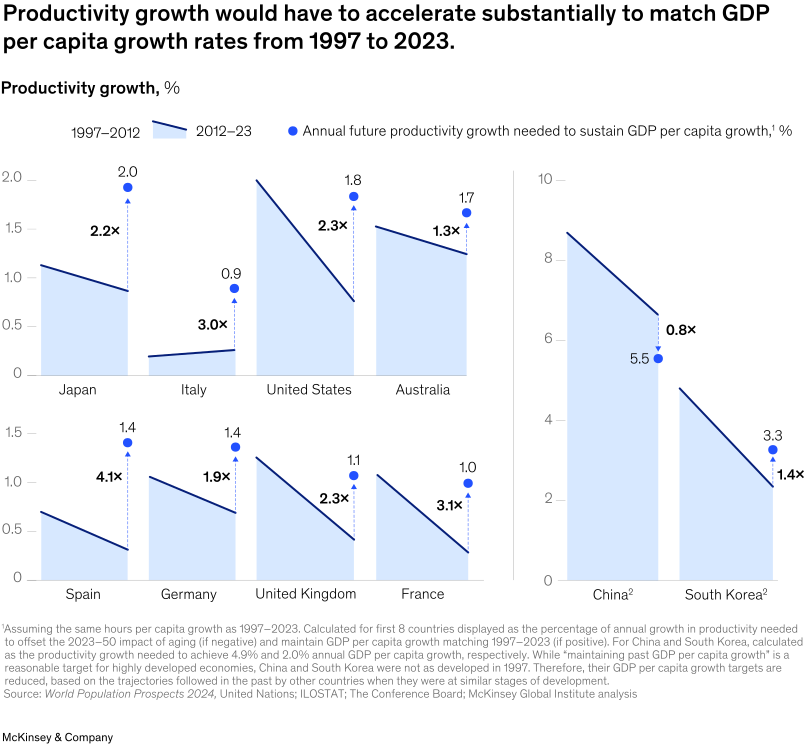
Assuming hours worked per capita grow at the same rate as in the past quarter century, productivity in most first wave countries would need to grow between 1 and 2 percent a year to maintain past GDP per capita growth (Exhibit 19). That level of increase may seem modest, but in Germany, for example, it means doubling the past decade’s average rate of annual productivity growth of 0.7 percent. In Spain, productivity growth needs to increase by about four times, even assuming labor intensity grows at past rates. If labor intensity does not increase—a plausible scenario—productivity in Germany and Spain would need to grow by 1.5 percent and 1.9 percent, respectively, per year.
While productivity can grow by raising capital investment and harnessing digital and automation technologies, most first wave countries have long struggled to do so.32 In fact, productivity growth has slowed in many of those countries over the past decade. For instance, US productivity over the past decade grew 0.8 percent per year on average, much less than its earlier annual growth of 2.0 percent.
From the beginning of 2023 through the second quarter of 2024, productivity growth spiked in the United States to top 2 percent per year, while it flatlined in many Western European countries and Australia. This suggests that the United States may be better positioned to jump-start growth, although that remains an open question. The future holds opportunities and risks for productivity growth everywhere. For example, while AI promises to propel productivity, increasingly fragmented global value chains and the growth of traditionally low-productivity service sectors like healthcare due to increasing longevity could restrain productivity growth.
China faces a special challenge. It is a first wave country because of its current demographic profile, but its GDP per capita of $21,000 (after adjusting for purchasing power) is closer to that of later wave regions. The country’s population is aging faster than almost anywhere else on Earth due to its low and declining fertility rate. To achieve a 4.9 percent growth target, China would need to grow its productivity by 5.5 percent a year, on average, through 2050 to counteract the demographic shift. This target is challenging, though not unattainable. While Chinese annual productivity growth over the past quarter century has been impressive, above 8 percent, it has slowed down more recently. Since the pandemic and through 2023, Chinese productivity grew by 5.2 percent annually.As the country develops further, maintaining such very high rates of productivity growth will not be an easy feat.
All in all, relying on either of these levers, labor intensity and productivity growth, to offset the impact of the demographic shift on its own is unlikely to do the job. Fortunately, countries can use them in combination. The possible combinations of hours and productivity growth needed to maintain GDP per capita growth vary by country.
For example, Germany could achieve past growth by increasing productivity at 0.9 percent per year while also increasing hours of work per capita by 2.2 or, alternatively, by growing productivity at 1.4 percent and hours of work per capita by 0.5 hour. It could also attain past growth with a middle point of productivity and hours between these two outcomes, for example productivity growth of 1.1 percent and an additional 1.6 weekly hours per capita. What is clear is that most countries in the first wave will likely need to rely on both. (…)
While increasing fertility rates is critical for population growth over the long term, babies born today will barely have entered the labor market by 2050, reducing the potential impact of higher fertility rates over much of the next quarter century. Migration can more immediately help countries grow their working-age population. However, the increase in migration needed to maintain GDP per capita growth is significant. (…)
Other metrics illustrate the scale of migration required to maintain the economic status quo. For instance, new research estimates that if advanced economies relied on migration alone to maintain support ratios at today’s levels, in many cases as much as half of their populations would be foreign born by 2050, assuming each migrant brings one dependent. (…)
In the USA:
Why Americans Aren’t Having Babies The costs and rising expectations of parenthood are making young people think hard about having any children at all
Americans aren’t just waiting longer to have kids and having fewer once they start—they’re less likely to have any at all.
The shift means that childlessness may be emerging as the main driver of the country’s record-low birthrate.
Women without children, rather than those having fewer, are responsible for most of the decline in average births among 35- to 44-year-olds during their lifetimes so far, according to an analysis of the Census Bureau’s Current Population Survey data by University of Texas demographer Dean Spears for The Wall Street Journal. Childlessness accounted for over two-thirds of the 6.5% drop in average births between 2012 to 2022.
While more people are becoming parents later in life, 80% of the babies born in 2022 were to women under 35, according to the Centers for Disease Control and Prevention’s National Vital Statistics data.
“Some may still have children, but whether it’ll be enough to compensate for the delays that are driving down fertility overall seems unlikely,” says Karen Benjamin Guzzo, director of the Carolina Population Center at the University of North Carolina at Chapel Hill.
The change is far-reaching. More women in the 35-to-44 age range across all races, income levels, employment statuses, regions and broad education groups aren’t having children, according to research by Luke Pardue at nonprofit policy forum the Aspen Economic Strategy Group.
Birthrates among 35- to 44-year-olds give demographers who study fertility an early look into millennials’ changing approach to parenthood. But these researchers also look closely at women over 40, reasoning that if a woman doesn’t have a child by then, she is more likely to remain childless.
The number of American women over 40 who had no children was declining until 2018, according to Current Population Survey data, when it then began to rise again. Now, some demographers and economists expect the increase in childlessness will be sustained due to shifts in how people think about families. (…)
Throughout history, having children was widely accepted as a central goal of adulthood.
Yet when Pew Research Center surveyed 18- to 34-year-olds last year, a little over half said they would like to become parents one day. In a separate 2021 survey, Pew found 44% of childless adults ages 18 to 49 said they were not too likely, or not at all likely, to have children, up from 37% who said the same thing in 2018.
As more women gained access to birth control and entered the workforce in the 1970s, reshaping family life and expectations around gender, Americans began having fewer kids. By 1980, the average number of children per family was 1.8, down from a high of 3.6 during the post-Depression baby boom, according to Gallup.
Now, researchers say, having children at all has begun to feel optional. (…)
Nobody will dispute that kids are expensive. Whether they have become more so in recent years—and the extent to which that is driving down birthrates—is more complicated.
Parents are spending more on their children for basics such as housing, food and education—much of that due to rising prices. Another factor, however, is the drive to provide children with more opportunities and experiences.
Middle-class households with a preschooler more than quadrupled spending on child care alone between 1995 and 2023, according to an analysis of Bureau of Labor Statistics and Department of Agriculture data by Scott Winship at think tank the American Enterprise Institute.
Yet only about half of the increase is due to rising prices for the same quality and quantity of care. (Child care prices are up 180% overall since the mid-90s, according to BLS data.)
The remaining half is coming from parents choosing more personalized or accredited care for a given 3- to 5-year-old, or paying for more hours, Winship says.
“People say kids are more expensive, but a lot of this comes from parenting becoming more intensive so people are spending more on their kids,” says Melissa Kearney, an economist at the University of Maryland who researches children and families.
It has always been costly and time-consuming to raise kids, she says, and it has always come into conflict with other priorities. What’s changed is that more people are deciding not to have children at all. (…)
“With geopolitical issues, climate change, it’s like what are you bringing them into and then dropping them off and saying, ‘good luck!’” says Mills, who is 27 and works for a tech company. “There’s no real confidence that things are going to get better.” (…)
The couple’s other consideration is financial. Despite both having well-paying jobs, they say they haven’t been able to afford a house in Boston, where they live, amid low supply and high interest rates.
Laubenthal, a 27-year-old asset manager, calculated that they could retire at 55 with the same spending power if they don’t have kids. He then did the math to account for two children, factoring in costs of daycare, college, clothing and other essentials. That pushed their retirement back by 13 years, to age 68.
“That’s a big gap,” he says. His conclusion: Retire early, and skip kids.
Immigration will make the difference between future population growth or decline
![image_thumb[1]](https://i0.wp.com/www.edgeandodds.com/wp-content/uploads/2025/08/image_thumb1.png?ssl=1 "image_thumb[1]")
![image_thumb[3]](https://i0.wp.com/www.edgeandodds.com/wp-content/uploads/2025/08/image_thumb3.png?ssl=1 "image_thumb[3]")
![image_thumb[5]](https://i0.wp.com/www.edgeandodds.com/wp-content/uploads/2025/08/image_thumb5.png?ssl=1 "image_thumb[5]")
(…) While much attention politically and otherwise has been given the racial diversity of immigrants and their contribution to making America “less white,” the new census projections make clear that the nation will become more racially and ethnically diverse regardless of immigration levels.
(…) over the entire projection period through 2060, white persons who do not identify as other racial or ethnic groups will see declines in their population under all immigration scenarios. This is due to their older age structure, leading to what demographers call “natural decrease” (the excess of deaths over births), which overtakes their gains via immigration. Under all immigration scenarios, the nation’s white population declines each year.
Thus, all population gains are attributable to persons who identify as other racial groups, including persons who identify as two or more races.Of these groups, Latino or Hispanic Americans are projected to show the largest gains under each immigration scenario. While Latino or Hispanic Americans are projected to assume sizeable portions of future immigrant flows, their large share of the U.S. resident population at the beginning of the projection period (19%) ensures that their natural increase will contribute to future population gains even under the low and zero immigration scenarios.
Because of these dynamics, under each immigration scenario, the U.S. will experience a rise in the share of the total population that identifies as a nonwhite racial or ethnic group, above its 2022 level of 41%. By 2060, that share will grow to 57% in the high immigration scenario, 55% in the main scenario, 53% in the low scenario, and 49% in the zero immigration scenario. (…)
Already in 2022, people identifying as Latino or Hispanic, a race other than white, or two or more races comprise 51% of the under-18 population. (…)
Even with average immigration levels, the nation’s population will experience decade-wide growth levels far below any we have sustained in our history due to reduced fertility and increases in deaths in an aging population. Because immigrants and their children on the whole are younger than the rest of the U.S. population, they will help counter the decline and slow growth of America’s youth and working-age populations over future decades as our senior population continues to swell. (…)
Although the U.S. faces population growth and aging challenges in the decades ahead, we are still in a better position than many other developed countries such as Japan, Italy, Germany, and other European nations—due in large part to the healthy immigration levels we experienced over the past 30 to 40 years. While immigration remains a hot-button political issue that focuses on illegal immigrants and asylum seekers, it is crucial to move the discussion to a serious analysis of the importance of immigration for the nation’s demographic and economic growth, and how broad policies such as comprehensive immigration reform can address our future needs. (…)
![image_thumb[7]](https://i0.wp.com/www.edgeandodds.com/wp-content/uploads/2025/08/image_thumb7.png?ssl=1 "image_thumb[7]")
Festivals and Parades Are Canceled Amid US Immigration Anxiety From LA to Pittsburgh, fears over immigration raids are dampening cultural vibrancy as events are canceled.
Pittsburgh had planned to host its first-ever local World Cup this summer, a community soccer competition inspired by the global tournament and aimed at celebrating the city’s cultural diversity. The weeks-long event, which was set to begin in June, would have featured teams made up of residents from the city’s vast immigrant community, who’d play under the flags of their national origins.
But city officials called off the games amid growing anxieties over President Donald Trump’s immigration crackdown. The city also canceled its annual International Parade and Festival, which previously brought out vendors and performers from dozens of cultural groups. In a statement from Mayor Ed Gainey’s office to Bloomberg, spokesperson Olga George said both events were canceled out of “an abundance of caution” after consulting with residents and community stakeholders.
Many in the city’s Latino community told Monica Ruiz, executive director of the local immigrant advocacy group Casa San Jose, that they weren’t planning to attend either event even before their cancellation. “They’re very vulnerable, and they didn’t want to be in a situation where they could go somewhere to have a great time — and then end up in a different country,” she said, referring to the Trump administration’s controversial method of deporting noncitizens to countries other than their own.
Similar concerns have prompted organizers across the US to reconsider holding public events that celebrate different ethnicities or that might draw large crowds from immigrant and refugee communities. (…)
The concern comes as federal immigration agents ramp up raids and arrests in order to meet the White House’s goal of detaining at least 3,000 undocumented migrants a day.
Earlier this year, organizers in Chicago and Philadelphia both called off their Cinco de Mayo parades, citing safety concerns from their respective Mexican communities that the events may become targets for raids. And in Los Angeles, several July 4 celebrations, including in predominantly Hispanic communities, were canceled amid a series of US Immigration and Customs Enforcement raids that prompted nationwide protest. (…)
As arrests have increased, so has the share of detained migrants with no criminal records. US citizens have reportedly also been swept up in raids amid accusations that the agency has engaged in widespread racial profiling during their operations.
And since the Trump administration reversed a more-than-decade-old policy in January restricting immigration officers from making arrests in sensitive locations like schools and churches, ICE has vastly expanded its targets to places outside the workplace, including parks, outdoor markets, small businesses and even parking lots.
In June, armed and masked agents swarmed a popular flea market in the Los Angeles County suburb of Santa Fe Springs, one that typically drew large crowds of vendors and shoppers on weekends. Witnesses to the raid at the Santa Fe Springs Swap Meet told the Los Angeles Times that several people were taken away, and that agents approached anyone who “looked Hispanic in any way.” (…)
Such raids have had chilling effects on communities nationwide, and the impacts go beyond the cancellation of organized gatherings, said Guttlein. Parks in heavily Hispanic neighborhoods — where families often met up for play dates and intimate celebrations — are now quieter than usual as many choose to stay out of public spaces. Many are skipping out on doctor’s appointments, school, work and even court hearings as families essentially go into hiding. Shops and restaurants in immigrant communities have also seen foot traffic plummet.
“This is a product of the Trump administration’s prioritization of meeting quotas for detentions and for removal, and not prioritizing the safety of our community,” Guttlein said. “We now as a society are having to assess the risk to our safety when it comes to normal things.” (…)
1 thought on “YOUR DAILY EDGE: 25 August 2025: Demographics: Major New Trends Underway”
Thanks for your great work and time in sharing your research ! It’s always good quality information.
Enjoy your well deserved rest and fishing trip !
Comments are closed.