U.S. Retail Sales Rebounded in August Sales at retailers and restaurants grew 0.7% last month, a sign of the economic recovery’s resilience despite the Delta variant.
Sales at retailers and restaurants grew 0.7% last month, despite a big decline in car sales related to product shortages and shipping problems, the Commerce Department said Thursday. Sales had fallen 1.8% in July. Excluding cars, sales rose 1.8% last month. (…) In the year through August, overall sales rose 15.1%.
Full pdf from the Census Bureau here.
September is off to a good start:
- Cardify’s Weekly Consumer Spend:
- For the week ending September 5th, Total Expenditure is up (+8.7%) WoW and (+1.8%) YoY. MoM spending continues to show slight declines rolling into the new month at (-3.3%) MoM
- YoY spending when compared to last year is beginning to soften at (+1.8%). Although re-opening categories continue to lead this elevated level of spending, when compared to this week last year, the gap is closing
- All MoM tracked categories with the exception of Computer & Electronics (+1.5%) are down. Travel continues to lead this decline in relative MoM spend at (-15.6%) with the closest second being Restaurants at (-3.7%)
- Across the board WoW spending is up, with all tracked categories showing relative growth. Home Improvement & Furniture leads the WoW growth at (+18.8%), followed by Personal Care at (+11.6%) WoW.
- The Chase Card Spending Tracker is also fairly steady through September 11:


Spending on Travel and Entertainment has weakened but other categories are holding well:

New York Renters Face 70% Increases as Pandemic Discounts Expire
Landlords are jacking up rents — often by 50, 60 or 70% — on tenants who locked in deals last year when prices were in freefall. Some renters are being forced to move at a time when the market is roaring back to nearly pre-pandemic levels. And concessions are slipping away. (…)
Across New York, landlords last year were forced to cut rents and offer freebies when the Covid-19 pandemic all but shut down the city, scattering residents who were looking for additional space or more-affordable housing. (…)
The median asking rent in Manhattan rose to $3,000 in July, the highest it’s been since July 2020 and up from the pandemic low of $2,750 in January 2021, according to StreetEasy.
Across the borough, rents are still below pre-Covid levels. But in some particularly popular neighborhoods — including the Flatiron district, the East Village, the Financial District and Nolita — they’ve surged higher than before the pandemic, according to StreetEasy. Landlords are still offering incentives, but they’re not as common and typically only apply to new leases, not renewals, realtors say. (…)
People who try to move are having a hard time finding a new place, as inventory across all boroughs dwindles. In July, inventory had fallen 43% from a year earlier, according to StreetEasy. (…)
Europe’s Uninspiring Car Sales Turn Ugly Amid Chip Crunch New-car registrations fell 18% in August and 24% in July from year-ago levels, the European Automobile Manufacturers’ Association said Thursday. Sales are now up just 13% for the year, less than half the percentage increase posted at the year’s halfway point.
(…) The July and August figures are the worst for the two months since the tail end of the Eurozone economic crisis in 2013. The declines were broad-based, with Europe’s biggest car markets — Germany, France, the U.K., Italy and Spain — all seeing double-digit drops each month. (…)
Business Inflation Expectations
The Atlanta Fed survey measures the year-ahead inflationary sentiments of businesses in the Sixth District. It actually asks business people how much they expect their unit cost to change in the year ahead. September came in at +3.1%, up from 3.0% in August, 2.4% in March, 2.0% in December 2020 and 1.9% pre-pandemic.

“Firms’ long-term (per year, over the next five to 10 years) inflation expectations were relatively unchanged at 3.0 percent, on average.” Unchanged from June but up from March (+2.8%) and December 2019 (+2.6%)
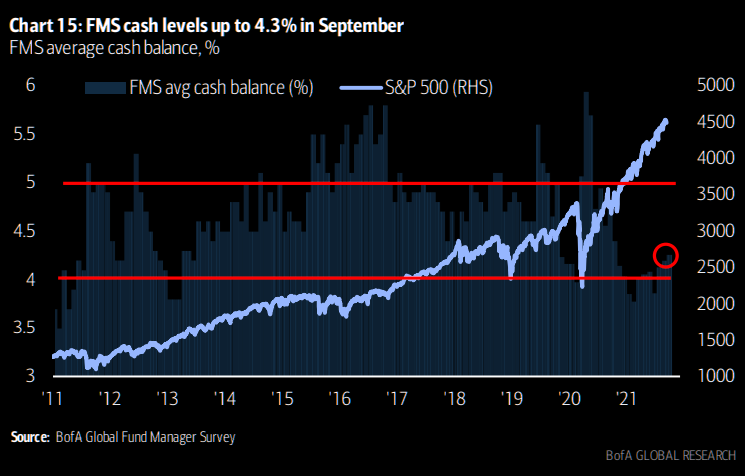
While business people, and American consumers, worry about inflation, investors no more as the BofA Fund Manager Survey reveals:

69% of investors view current inflation as transitory, a sentiment probably helped by their other view that the global economy is slowing.

They are still deep in equities, mind you, even though they are getting increasingly concerned about the profit cycle:

Slower demand, slower profits, but over weighted equites. Higher multiples needed. Better be right on transitory…
Some are getting a little edgy and raising some cash, however:
Deutsche Bank’s survey does not seem to poll the same managers:

Pick your survey…
The survey’s Risk Appetite Index fell from +14% in August to +1% in September, barely above the zero level that separates risk tolerance from risk aversion and registering the lowest degree of risk appetite yet recorded by the survey.
At the same time, the survey’s Expected Returns Index fell from zero in August to -12% in September, meaning more investors see returns falling in the next 30 days than anticipate a rise. The latest reading is the second lowest since last October, with pessimism exceeded only by that seen back in May, when the survey saw concerns flare up over inflation and central bank policy, as well as rising taxation. These concerns continued to dominate in September, exacerbated by worries about the lingering impact of COVID-19.

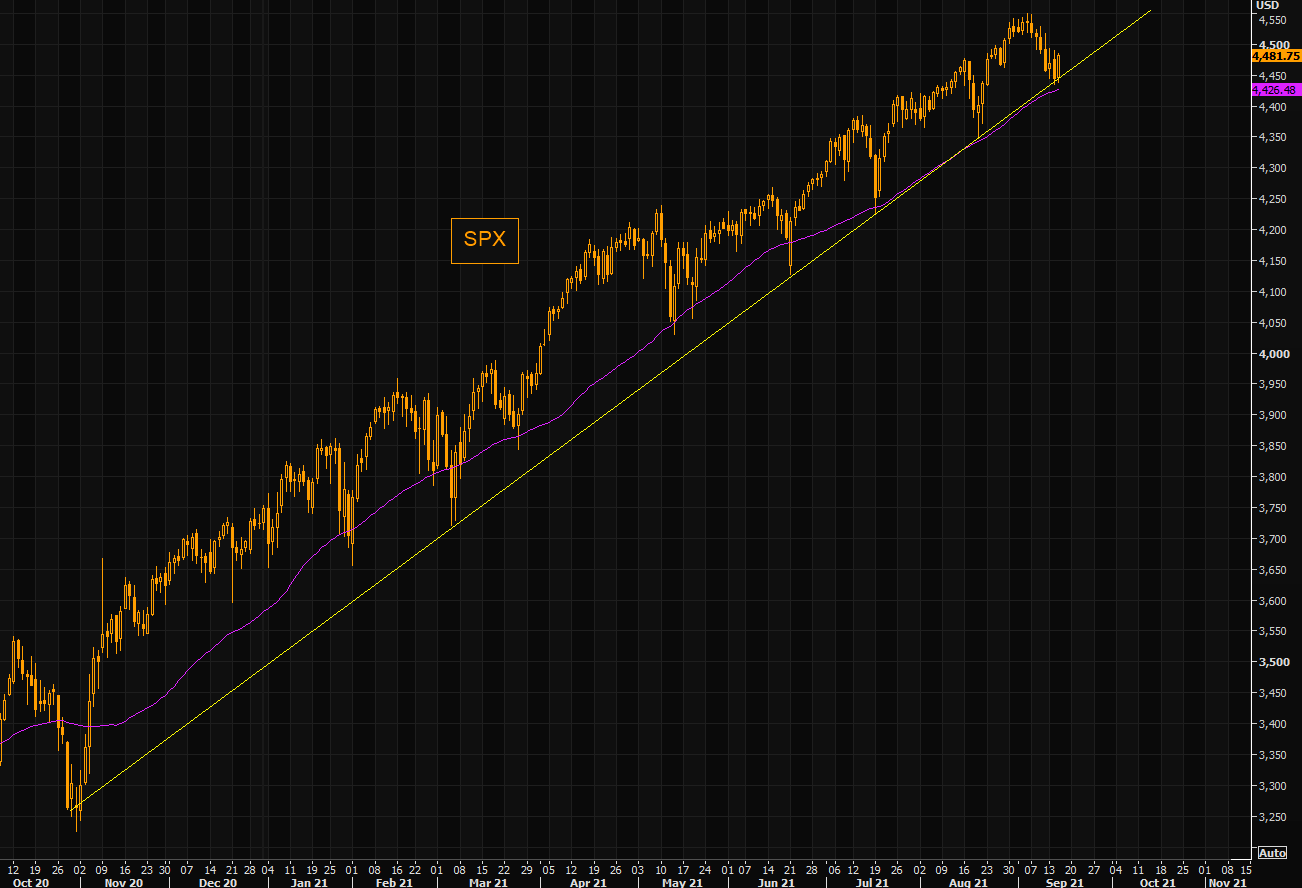
But the trend is your friend:
The great SPX buy the dip chart continues delivering the easiest trading set up. Bullish trend perfection as the cork in water market can’t get enough of upside. It works until it doesn’t… (The Market Ear)
Inflation Jumps to 4.1% in Canada, Jolting Trudeau Campaign
The consumer price index rose 4.1% in August from a year earlier, Statistics Canada reported Wednesday in Ottawa, marking the fifth consecutive month of inflation readings above the Bank of Canada’s 3% cap. That’s the highest since March 2003, when it touched 4.2%. Economists were predicting a yearly gain of 3.9%. A surge in housing costs has been a key driver in annual inflation. (…)
On a monthly basis, prices rose 0.2%, compared with economist estimates of a 0.1% gain.
The average of core measures of inflation, often seen as a better measure of underlying price pressures, rose to an annual 2.57% pace in August, the highest since 2009. (…)
The gauge of housing costs rose 14.3% in August from a year earlier. That’s the largest yearly increase since 1987 and fourth consecutive month of double-digit price growth, the report said.
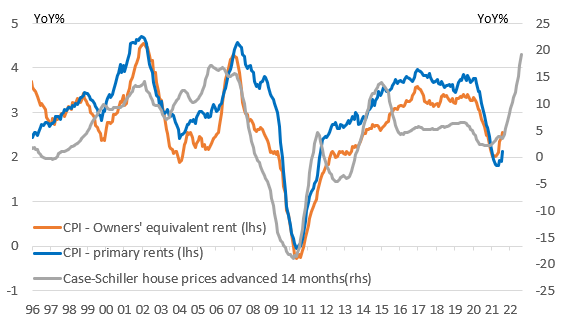
“I think because home prices have risen so quickly, now pushing more people into the rental market, we will see further upward pressure on rents through this year,” Sal Guatieri, senior economist at BMO Capital Markets, said in an interview on BNN Bloomberg Television. “That could keep the shelter component of CPI rising at a good clip and putting general upward pressure on inflation.”

Benchmark home prices climbed 0.9% from July and were up 21% from last year, according to data released Wednesday by the Canadian Real Estate Association. With both the number of transactions and new supply relatively flat in August, sales as a share of new listings — a measure of market tightness — remained elevated at 72%. That’s well above long-term average of around 55%. (…)
The number of homes sold nationally fell 0.5% last month, while the number of properties newly listed for sale rose 1.2%, the data showed. Despite the slight bump to supply, the amount of housing stock available for sale in Canada only amounted to about 2.2 months of inventory, down from 2.3 months in July, the report showed.
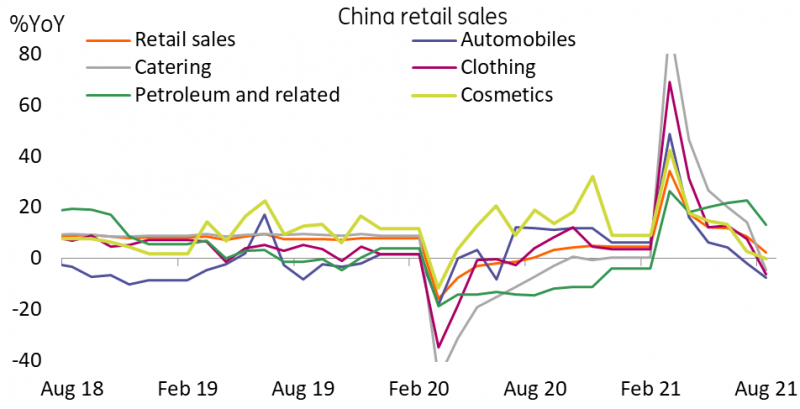
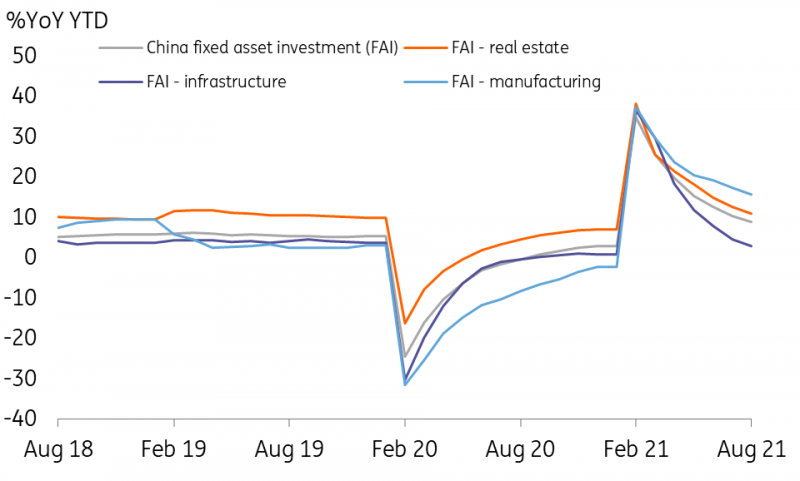
China’s Property Curbs Send Economic Tremors Nonperforming real-estate loans rise at Chinese banks
(…) Policy tightening is the immediate problem for Chinese developers, but the underlying issue is that they have borrowed too much over the last decade to expand, said Mark Williams, chief Asia economist at London-based research house Capital Economics. (…)
“Markets should be prepared for what could be a much worse-than-expected growth slowdown, more loan and bond defaults, and potential stock market turmoil,” Mr. Lu wrote, saying that property makes up a quarter of the Chinese economy. (…)
The median gross-profit margin of Chinese developers tracked by Goldman Sachs fell steeply in the first half of this year, by 4.6 percentage points to about 22%.
As of mid-August, developers had defaulted on $6.2 billion of high-yield debt this year, a higher total than the previous dozen years combined, according to Morgan Stanley.
Moody’s Investors Service, which recently lowered its outlook on the sector to negative, forecasts industrywide contracted sales could fall as much as 5% in the next six to 12 months, on a trailing 12-month basis, as sales volumes fall, price rises slow, and given that activity was robust in the last six months of 2020.
Signs of stress are also appearing in banks’ loan books, as more of their corporate loans to developers go sour, although so far their mortgage portfolios are holding up well. (…)
At Industrial and Commercial Bank of China Ltd. , for instance, nearly 4.3% of property loans were nonperforming at the end of June, up from about 2.3% six months earlier. Property makes up about 7% of all corporate loans at ICBC, China’s biggest commercial bank by market value. (…)
“The overall credit risk for banks is increasing,” said Alicia Garcia-Herrero, chief economist in the Asia Pacific region at Natixis, a French financial firm. She said she was worried about mortgage repayments if home prices drop and the economy keeps slowing.
The effects could also show up farther afield, in businesses that rely on new homes as a source of demand, such as building companies and makers of construction equipment, furniture and household appliances. (…)
- China Goes Cold Turkey on Property Weak economic data show just how complicated any transition away from real estate could be
(…) The political calendar is running out: Next fall the 20th Party Congress will arrive, when most observers expect Xi Jinping to bid for a third term at China’s helm. He may be reluctant to permit a deep property-induced slump at such a sensitive time, even assuming the country manages to escape serious financial turbulence associated with the woes of developers such as Evergrande. (…)
Developers’ housing inventories are far lower than during the 2015 crash in most parts of the country, according to ANZ Bank—with the notable exception of China’s northeastern Rust Belt. That may help limit falls in home prices. But it can’t prevent a substantial hit to economic activity as new construction projects are put on hold. And sharply falling land prices could cause other problems: Land sales are a key source of local government revenue, while developers who levered up to buy expensive land will be left holding the bag, adding further strain to their overstretched balance sheets. (…)
- Evergrande’s Woes Fuel Selloff in Chinese Property Shares A selloff in Chinese property stocks intensified, as concern mounted about the effects of an official campaign to rein in the sector that has already sparked turmoil at Evergrande.
By early afternoon in Hong Kong, the Lippo Select HK & Mainland Property Index had fallen 5.4%, putting it on course for its lowest close in more than four years, FactSet data showed. The drawdown in property shares helped pull Hong Kong’s flagship Hang Seng Index down about 2%, setting the benchmark up for its lowest closing value of 2021.
The 52-stock Lippo Select index is mostly made up of real-estate companies based in mainland China. Including Thursday’s move, it has dropped 23% so far this year, as Beijing has piled pressure on real-estate developers in an attempt to cool the country’s property market. (…)
Both highly indebted companies and those with stronger balance sheets were caught up in Thursday’s selling, with the junk-rated Guangzhou R&F Properties Co. losing 12% and investment-grade-rated peer Shimao Group falling by a similar amount. (…)
The 30-constituent Hang Seng Property Services and Management Index fell 7.3%, on course for its lowest close since its launch in April. (…)
- China’s Biggest Movie Star Was Erased From the Internet, and the Mystery Is Why Zhao Wei was the Reese Witherspoon of China, then she was censored by the Communist Party amid a clampdown of the country’s entertainment industry.
- China slows game approvals to enforce tough new rules -Bloomberg News Regulators are cracking down on increasingly popular zombie-themed games that are considered “too scary” by NPPA standards, it added. Scrutiny was also stepped up on subjects regulators consider undesirable, such as “boys’ love” themes that have recently become trendy, it said.
- Financial blogger crackdown leaves China investors scrabbling for data Websites and social media accounts are scrubbed making it harder to assess state of economy
COVID-19
Various charts from NBF, John Authers and others, plus comments, trying to see a light…
- Cases per million remain uncomfortably high in many highly vaccinated countries, and rather low in many also highly vaccinated countries:

- These rankings should be highly embarrassing to the “leaders”:

- It’s pretty obvious that leadership matters in this matter: John Authers:
(…) we are instead witnessing one of the purest and most deadly expressions of political risk on record. The toll of the virus is increasing, and its progress has confounded much expert prognostication once again. But it is political differences, which generally have more to do with some kind of tribal allegiance than with any ideology, which are driving negative outcomes. (…)
In the following chart, I have indexed both the U.S. and the U.K. death rates to their peak during the first wave in the spring of last year. This seems to be the fairest way to gauge the relative severity of each wave for each country. The difference is startling:
While U.K. deaths are 10% of the first wave’s peak, while U.S. deaths are 90%
(…) But when it comes to deaths, the U.S. third wave is now almost as bad as the first, while the U.K. isn’t having a third wave at all. How to explain this?
Epidemiologists have the rest of their lives to answer that question. But using Occam’s Razor, we know that the vaccine came along early this year, and the vaccine would certainly explain the sharp decline in both countries’ death rates. And if we look at how many people have actually been vaccinated in the U.K. and the U.S., we have the inkling of an explanation:
(…) People in both countries are free not to get the vaccine. Americans are choosing to make far more use of that freedom. That leads to large pools of unvaccinated people in parts of the country, which makes it easier for the more contagious variant to take hold, and gives it more opportunities to infect the vaccinated as well. (…)
Looking at the numbers for Texas and Florida, the two large states where Republican governors have vocally refused to enforce social distancing [and mask mandates] and where there is great skepticism toward the vaccine, the results are startling. I compiled the following chart the same way as the earlier comparison of the U.S. and the U.K., indexing both states’ death rates to the peak in the first wave, which in the southern U.S. came in August last year. As with the U.S. and the U.K., the pattern was remarkably similar until early this summer. Since then, Texas has endured a clear-cut third wave. The experience in Florida is remarkable, and suggests that there is more to the problem than vaccine hesitancy:
Unlike virtually anywhere else in the Western world, Florida is in the midst of a third wave much worse than the first two. Without getting too political, this makes the state’s current policies toward the virus very hard to understand; and also makes the current death toll look like the result of deliberate decisions, both by politicians and individuals. This is only a hypothesis, and it looks as though there is more to the Floridian third wave than resistance to vaccines, but numbers like this help explain why investors are calm.


The Canadian situation is really an Alberta (Kenny) problem:


- Cresting, peaking? “An average of about 150,000 Americans are contracting COVID each day. That number has fallen by 8% over the past two weeks.” (Axios)
 (
(






 (
(