The enemy of knowledge is not ignorance, it’s the illusion of knowledge (Stephen Hawking)

It ain’t what you don’t know that gets you into trouble. It’s what you know for sure that just ain’t so (Mark Twain)

Invest with smart knowledge and objective odds

THE DAILY EDGE: 24 FEBRUARY 2021

A leaked report shows Pfizer’s vaccine is conquering covid-19 in its largest real-world test

From MIT Technology Review:

A leaked scientific report jointly prepared by Israel’s health ministry and Pfizer claims that the company’s covid-19 vaccine is stopping nine out of 10 infections and the country could approach herd immunity by next month.

The study, based on the health records of hundreds of thousands of Israelis, finds that the vaccine may sharply curtail transmission of the coronavirus. “High vaccine uptake can meaningfully stem the pandemic and offers hope for eventual control of the pandemic as vaccination programs ramp up across the rest of the world,” according to the authors. (…)

The draft report confirms that the vaccine is able to cut covid-19 illness and deaths by more than 93% and also provides the first large-scale evidence that the vaccine may prevent most infections, including those that don’t cause symptoms. (…)

The new findings are broadly consistent with separate announcements in recent days from two of Israel’s large health organizations, Maccabi Healthcare Services and Clalit Health Services, which together care for 80% of Israelis.

On February 14, Ran Balicer, chief of innovation and research at Clalit, the largest Israeli HMO, said that evidence collected on 1.2 million members “shows unequivocally that Pfizer’s coronavirus vaccine is extremely effective in the real world a week after the second dose.” (…)

Because Israel tests people fairly comprehensively, the researchers were also able to estimate that the vaccine was 89.4% effective in preventing any detectable infection at all, including asymptomatic infections. (…)

That finding, which is new, suggests that the vaccine could strongly suppress transmission of the virus between people and could help bring the outbreak to an end, a possibility Pfizer and the Israeli researchers say they are closely watching. (…)

But Topol cautioned that the current study is “not conclusive on its own” and that ruling out asymptomatic transmission will require more frequent testing, a type of study that Pfizer is also undertaking. Another unknown, says Topol, is whether or not protection from the vaccines wanes with time. (…)

Lab research has suggested that vaccines should be just as effective against B.1.1.7 [“British” variant] as against the earlier strains, and the real-world experience in Israel is overwhelmingly confirming this. (…)

Jerome Powell Sees Easy-Money Policies Staying in Place

(…) “The economy is a long way from our employment and inflation goals,” Mr. Powell said in testimony to the Senate Banking Committee, a statement he has repeated in recent weeks. (…)

Mr. Powell said Tuesday that inflation could be somewhat volatile over the next year and might rise due to a potential burst of spending as the economy strengthens. But that, he said, would be a “good problem to have” in a world where economic and demographic forces have been pulling inflation down for a quarter of a century.

He said he wouldn’t expect inflation to reach “troubling levels,” and wouldn’t expect any increase in inflation to be large or persistent.

“Inflation dynamics do change over time but they don’t change on a dime, and so we don’t really see how a burst of fiscal support or spending that doesn’t last for many years would actually change those inflation dynamics,” he said. (…)

Mr. Powell said the Fed monitors several measures of the labor market’s health, including the percentage of the population that is employed. That share was 57.5% in January, down from 61% before the pandemic.

“When we say maximum employment, we don’t just mean the unemployment rate,” he said. “We mean the employment rate.” (…)

The math:

  • the unemployment rate is up from 3.5% to 6.3% or +2.8%. But the participation rate declined from 63.4% to 61.4% or 4.3 million people. To return to a 3.5% unemployment rate requires 4.5 million new jobs at constant participation and another 5.2 million at the Jan. 2020 participation rate. Total: +9.7 million jobs.
  • the employment rate is down from 61.1% to 57.5% or -3.6%. But the civilian population increased 1.3 million. To return to a 61.1% employment rate requires +9.4 million additional jobs at the current civilian population level.
  • Since January 2020, 9.0 million jobs were lost in service-producing industries and 0.9 million in goods-producing industries.

fredgraph - 2021-02-24T071313.304

Noting that asset bubbles triggered recessions in 2001 and 2007-09, Sen. Pat Toomey (R., Pa.), the top Republican on the panel, asked Mr. Powell if he sees a link between elevated asset prices and the Fed’s easy-money policies.

“There’s certainly a link,” Mr. Powell said. “I would say, though, that if you look at what markets are looking at, it’s a reopening economy with vaccination, it’s fiscal stimulus, it’s highly accommodative monetary policy, it’s savings accumulated on people’s balance sheets, it’s expectations of much higher corporate profits…. So there are many factors that are contributing.”

U.S. FHFA House Price Index Continues to Rise Markedly

The Federal Housing Finance Agency (FHFA) House Price Index increased 1.1% m/m in December following an unrevised 1.0% m/m gain in November. This was the seventh consecutive month in which house prices had risen by 1.0% or more. Prior to this seven-month run, this index had risen 1% or more in only five months in the series history dating back to January 1991.

Compared to a year ago, house prices were up 11.4%, the highest annual rate of increase in the series history. Over the past seven months, house prices rose 16.6% annualized, also their highest seven-month advance ever. For Q4, house prices were up 3.8% from Q3 and 10.8% from Q4 2019, both series records. This was the 38th consecutive quarter in which house prices have risen. House prices rose in all 50 states in Q4 from a year earlier. For all of 2020, prices rose 7.7%. The all-transactions quarterly index increased 2.1% q/q in Q4, its largest rise since Q2 2017.

House prices rose in each census division in December from November and also from a year ago. Seasonally adjusted monthly house price changes in December from November ranged from +0.8% in the West North Central and South Atlantic regions to +1.7% in the East South Central region. The 12-month changes ranged from +8.8% in the West South Central division to +13.7% in the Middle Atlantic region.

image

Good thing that mortgage rates dropped from 3.7% to 2.8%. But following a 12% jump in prices, it would not need much of a rate rise to kill affordability. Ten-year bond yield have risen from 0.5% in the summer to nearly 1.4%…

fredgraph - 2021-02-24T072622.272

fredgraph - 2021-02-24T073226.059

(…) If mortgage rates begin to increase at a faster pace, some borrowers could be discouraged from attempting to buy a home during the crucial home-selling months of March through June. In a typical year, more than 40% of annual home sales are made during this period, according to the National Association of Realtors. (…)

(CalculatedRisk)

(…) “It’s the U.S. bond market pulling up global bond yields, and in some cases in ways that are moving faster than they’d like,” said Ethan Harris, Bank of America Corp.’s head of global economic research. “If you’re in countries outside the U.S., you’re looking at this as kind of an unwelcome import.” (…)

The jump in U.S. yields threatens to drag up other markets, challenging the policies of the ECB, Bank of Japan and Bank of England, Krishna Guha and Ernie Tedeschi of Evercore ISI told clients in a report this week. That’s a worry for those policy makers whose focus remains more on stoking growth than containing any nascent inflation pressures. (…)

Europe’s factories raise goods prices as supply bottlenecks bite Manufacturers are passing rising cost on to clients, fuelling inflation in the eurozone

Biden to Address Chip Shortages With Executive Action President Biden plans Wednesday to order a broad review of supply chains for critical materials from semiconductors to pharmaceuticals and rare-earth minerals, aiming to spur domestic production while strengthening ties with allies.

(…) “To be competitive and strengthen the resilience of critical supply chains, we believe the U.S. needs to incentivize the construction of new and modernized semiconductor-manufacturing facilities and invest in research capabilities,” the letter [from a group of associations representing technology companies, the automotive industry and other business interests] read. “We believe the need is urgent and now is the time to act.” (…)

The executive order is expected to call for a 100-day review of supply chains for four areas: semiconductors, used in products from cars to phones, large-capacity batteries used in electric vehicles, pharmaceuticals and rare-earth elements that are key to technology and defense. For example, neodymium is needed for the solid-state lasers used to designate missile targets. (…)

The government will seek to encourage domestic production with incentives such as job-training programs and businesses loans, in addition to using the federal procurement process for more American-made purchases. It will also explore limiting some imports, officials said, without providing specifics. (…)

While the executive order Mr. Biden is to sign is long-term, the White House has been working to address the chip shortage, officials said, including asking allies and manufacturers for help. (…)

“Right now, semiconductor manufacturing is a dangerous weak spot in our economy and in our national security. That has to change,” Mr. Schumer said, citing the auto industry. “We cannot rely on foreign processors for the chips. We cannot let China get ahead of us into production.”

Hence Taiwan…

China Faces European Obstacles as Some Countries Heed U.S. Pressure Some European countries are starting to block Chinese involvement in their economies, drawing closer to positions advocated by the U.S. amid growing anxiety in Europe over China’s increasingly aggressive geopolitical posture.

(…) Governments from the Baltic to the Adriatic seas have recently canceled public tenders that Chinese state-owned companies were set to win, or are moving to ban Chinese companies from investing or contracting in their countries.

The shifts have been prompted by a mix of national-security concerns and disappointment with the performance of Chinese contractors, say officials involved in the decisions. Several of the canceled projects fell within China’s world-wide infrastructure initiative, Belt and Road, which has disappointed several participating countries.

The shift is largely taking place in smaller European countries, adding to tensions within the European Union, where big countries still largely favor maintaining business links with China. (…)

China underestimated the “Russia factor,” said Andreea Brinza, vice president of Bucharest-based think tank the Romanian Institute for the Study of the Asia-Pacific. European countries dominated by Moscow during the Cold War have lingering strategic concerns, and as most of them rely on U.S. security guarantees, they want to show which side they are taking in trade disputes between Washington and Beijing, she said. (…)

“We are choosing the Western technosphere. We are not choosing the Chinese technosphere,” said Laurynas Kasciunas, chairman of the Lithuanian parliament’s national-security and defense committee, which oversees a national-security review board that had recommended banning Nuctech.

Such policy reversals remain a minority amid extensive Chinese business activity across the EU. Chinese direct investment into the bloc has declined since a peak in 2016 because of new European limits and Chinese restrictions on financial outflows. But public-procurement wins in Europe by Chinese companies—mostly state-owned—have ballooned recently, according to a Wall Street Journal analysis of public data.

In response, the EU last year issued guidelines for weeding out bidders from outside the bloc that offered extraordinarily low prices and launched a study on the impact of foreign subsidies in Europe, covering areas including procurement and corporate acquisitions. New EU rules on member states’ screening of foreign investments for potential national-security consequences took effect in October, and many EU countries have adopted national versions. (…)

Tax Hikes for High Earners Are on the Table in Some States Governors in New York, Minnesota and elsewhere urge higher income and capital-gains taxes to fortify pandemic-weakened budgets

(…) Unlike the federal government, states generally can’t borrow to plug budget holes. After accounting for existing federal aid, states might need to come up with about $56 billion in spending cuts or revenue increases to balance their budgets through the fiscal year that ends in most states in June 2022, according to an estimate from Moody’s Analytics. (…)

RISK ON!

The GS “Risk appetite” indicator printing a new high

Risk off!

Cathie Wood Funds Hit by Biggest Investor Outflow on Record The loss of cash was more than three times higher than the past record.

Investors pulled $465 million from Ark Investment Management’s flagship product, the ARK Innovation ETF (ticker ARKK), in the latest trading session for which flow figures are available, according to data compiled by Bloomberg.

They also withdrew $202 million from the ARK Genomic Revolution ETF (ARKG) and $119 million from the ARK Next Generation Internet ETF (ARKW).

While those flows are a fraction of Ark’s assets under management — its ETFs held more than $60 billion as of last week — the exodus is unprecedented in the short history of the firm, which Wood founded in 2014. The outflow from ARKK was more than treble its previous record. (…)

John Authers:

(…) Absolute Strategy suggests that the 1950s-style experience of loose fiscal policy combined with accommodative monetary policy could spur nominal economic growth and deliver a dynamic rotation into value:

relates to Stop Toasting Powell and Think About Regime Change

How Jeffrey Gundlach Gets Ready for Higher Rates

(…) To Gundlach, the expected inflation increase “is a real game changer.” In a recent CNBC appearance, he noted that inflation “has been subdued for 20 years.” And since Federal Reserve Chair Jerome Powell has stated that the central bank will hold down short rates for at least two more years, longer rates will continue to chase inflation higher, making the curve even steeper. Buoying that trend is Powell’s expressed willingness to allow inflation to run above the Fed’s 2% target without central bank intervention.

(…) according to Gundlach, signs of incipient growing inflation are already here: He pointed out that “agricultural prices have been depressed for years, and now are rocketing higher.” Over the past 12 months ending in January, food prices rose 3.8%, the largest hike for any category in the CPI. Energy, lower for the 12-month period, had major jumps in the past two months, 5.1% and 7.3%, as oil prices began escalating again.

(…) Gundlach thinks that the 10-year T-note will move up to 2% by year-end. And if inflation exceeds the 10-year’s yield in the future (which it does now slightly), then he believes the bond will go above 2.5%. (…)

To DoubleLine, there are some compelling plays available to counter any inflation. Like leveraged loans (bank lending to highly indebted companies), which suffered badly during the early 2020 crunch. (…) As these instruments have floating rates, they are a good inflation hedge, DoubleLine stated in a commentary. And with the steepening curve, they yield close to 4.5%, not bad in a time of generally low rates.

The size of the nation’s debt load, federal plus personal, corporate, etc., worries Gundlach. “We can’t pay it back,” he said in a conversation about the economy on Fox Business. The only way to do it, he said, is “debasing the liabilities through more inflation.” (…)

Amid such scarifying times as ours, Gundlach recommends a variation of what’s called the “barbell strategy.” It’s a concept that was first voiced by statistician Nassim Nicholas Taleb and last year received Goldman Sachs’ endorsement: Namely, invest in extremes to let your portfolio better weather any turbulence, like pairing cyclical and defensive stocks.

Gundlach’s model portfolio, which he described in a DoubleLine webcast last month, seeks to protect against both inflation and deflation. For a time during the Great Recession and sporadically ever since, Wall Street and the Fed have had bouts of fear over deflation. At the moment, inflation appears much more likely. His asset allocation is to divide one’s holdings into four categories:

  • Long-term Treasurys. These guard against deflation. If the value of other assets shrinks, then the debt obligations of the richest and most powerful nation on earth will be, as they long have, the haven for investors. Thus, the government bond prices will lift.
  • Cash, also a deflation. As stocks, bonds, commodities, and other assets lose value, the amount of cash needed to buy them falls. So cash becomes more valuable.
  • Stocks, an inflation. Stocks didn’t fare well amid the double-digit inflation of the 1970s, yet those were extreme circumstances. Usually, corporate earnings keep pace with inflation, and stock prices are strongly connected to profits. For Gundlach, the best prospects are emerging market stocks, especially Asian names. In the US, he’d go for energy and financial services shares.
  • Bitcoin, gold, real estate. The last two are storied hedges in times of inflation. Bitcoin, certainly, is new on the scene. Gundlach suspects it now may be in a bubble that could burst: The virtual currency has more than quadrupled in price since August, and is now is at $48,992. Gundlach, though, suspects that Bitcoin, known as “digital gold,” would function well when the CPI heads north.

Today’s environment has an unreal aspect, in Gundlach’s eyes. “We’re not in Kansas anymore,” he said. Getting by in an Oz-like world, he believes, will not be easy.

THE DAILY EDGE: 23 FEBRUARY 2021

Consumer Demand Snaps Back. Factories Can’t Keep Up. Snarled supply chains, labor shortage thwart full reopening; ‘everyone was caught flat-footed’

(…) Without restaurants to visit and trips to take, Americans bought out stocks of cars, appliances, furniture and power tools. Manufacturers have been trying to catch up ever since. Nearly a year since initial coronavirus lockdowns in the U.S., barbells, kitchen mixers, mattresses and webcams are still hard to find. A global shortage of semiconductors has forced many car makers to cut production in recent weeks. (…)

Consumer spending on long-lasting goods in the U.S. rose 6.4% last year but domestic production of those goods fell 8.4%, according to federal data, leading to shortages and higher prices.

(…) companies are placing supersize orders to compensate for the extra time it takes to procure supplies from factories and freight operators constrained by global efforts to contain the coronavirus. That’s exacerbating the strain on supply chains. (…)

“The global supply chain is not as strong as people thought,” Mr. Pin said. (…) “The entire supply chain was stressed in 2020 and is still in a bad spot,” founder Bill Henniger said. “The machinery, workforce and facilities are all running 24 hours a day.” (…)

Stanley’s tools business reported a 57% increase in profit for the fourth quarter on a 25% increase in sales, partly fueled by its ability to boost prices. Sales of electric sanders so far during the first quarter of 2021 are fourfold higher than the same time last year. (…)

Mr. Greenblatt said finding steel in the U.S. to increase his production has been a challenge. Prices for steel, copper and other industrial commodities are at the highest point in years. That is putting pressure on profit margins for Marlin and other manufacturers. (…)

The reduction in domestic production of specialty metals including stainless steel is even more acute. By the end of the year, just three companies in the U.S. will supply stainless steel. (…)

Domestic steel prices have risen more than 160% since last August, leaving steel consumers in a quandary – whether to absorb or pass along the increased cost.

“We’ll be lucky if we break even at this price,” said Stuart Speyer, president at Tennessee-based Tennsco. Steel costs for the manufacturer of lockers, bookcases and cabinets are up 98% in the past six months.

Whirlpool last month said increased steel costs would shave 150 basis points from its profit this year. Farm equipment maker AGCO and crane maker Terex have announced price increases to offset material costs. (…)

U.S. steel prices are 68% higher than the global market price and almost double China’s, even with prices in both China and Europe up over 80% from their pandemic-induced lows.

The price gap is so wide that even with a 25% tariff, it would be cheaper to import than buy from domestic mills. The United States imported 18% of its steel needs last year.

Logistical challenges, like container shortages, and thin overseas supply are keeping imports in check. But some distributors expect imports to pick up by June if the domestic market remains tight. (…)

How AIT hesitancy can turn into JPOWs taper tantrum

It is very easy to defend an average inflation targeting regime as long as you are not overshooting. BUT (!) will it be as easy when core inflation prints around 2.75% by summer? We doubt it, which is why a taper tantrum 2.0 is a clear risk. (…)

There are reasons to be more structurally upbeat on inflation this time around compared to earlier reflationary cycles. China’s output prices are rising, supply chains have been disturbed, freight rates are elevated, but more importantly the policy mix has changed. Mechanisms that ensured a transfer of freshly printed USD to households/corporates were put in place through most of 2020, not least due to direct transfers of money but also due to publicly backed credit programmes. QE is not inflationary unless the USD or EUR actually reach the real economy, which actually happened in 2020. Bidenomics may further reflate this story, with even bigger direct cheques in store for the average American household.

(…) As long as bond yields rise for the right reasons, then they will be allowed to go higher. In other words, if spreads remain compressed, equity multiples (forward P/Es) increase and inflation expectations increase, then higher bond yields will be accepted. So far so good; of course the cocktail of higher long bonds yields, higher multiples and lower spreads will not last forever, but it may continue in a peaceful way until the re-opening actually happens, and therefore the Fed may be stuck behind the curve, if they actually want to prevent a tightening of financial conditions. (…)

The Fed keeps repeating that the “appropriate monetary policy will likely aim to achieve inflation moderately above 2% for some time”, but we are not any wiser on what exactly that means after the FOMC minutes this week. This is the KEY question for 2021 and it will be tested as early as in Q2. Will the Fed for example accept core inflation overshooting by e.g. 0.5-0.75% point? (…)

No matter whether the Fed actually takes the decision to taper purchases (or decide to sound “hesitant” on accepting too much inflation overshooting), the mere risk of it happening will influence markets into Q2, and several of our leading indicators have already started to warn of peakish key figure momentum by the middle of this year, with potential new setbacks into 2022, not least as the impulse from higher rates and energy prices will dampen momentum 9-12 months from now. (…)

Some trouble brewing during H2-2021 according to our Philly Fed subcomponent indicator

BTW, FYI, simple exercise assuming CPI and Core CPI rise 0.2% MoM throughout 2021: CPI reaches +3.3% YoY in May and retreats to +2.5% in December; Core CPI reaches +2.5% in May and retreats to +2.2% in December. Get ready to hear the word “transitory” ad nauseam.

Nordea continues:

All of the above will furthermore be unfolding amidst talking points such as a “roaring 20s” and “cracks in secular stagnation”. And the US curve isn’t that steep, so why not just keep your steepeners on and hope for the best? That’s what we would do.

US curve lagging behind sentiment survey indicators

If for instance the Fed manages to tighten policy by a cumulative 225bps as they did in the last tightening cycle, why shouldn’t the curve look at least as steep as during that cycle? (AIT and MMT-like politics if anything suggest even more risk premiums today than back then, we believe). The last time we had US ZEW expectations at today’s stellar levels – in 2002, the curve traded at 170bps and was on track for a move to 275bps(!).

Not even half-way there, given previous big steepening trends

  • Mind the gap between the PMI and the US10YR. The gap is impressive. The 10-year US Treasury Yield has further to rise.2. Tactical turning point: manufacturing is reaccelerating. Without central bank intervention, the 10y Treasury yield would be close to 3%. (The Market Ear)

And while Nordea is “clearly on the US outperformance side of the [EUR/USD] bet over the coming 6-9 months”…

In the longer run, we are not too upbeat on the dollar. Did you for instance notice that the CNY’s share of global swift payments rose to its highest share since 2016 in January? And what if China is successful in its DC/EP roll-out (which we will hear much more about around the Winter Olympics of 2022)? We actually see four reasons why the dollar smile could move to the dollar’s detriment over the coming decade: i) Biden “bananafying” the Fed, ii) China’s DC/EP and the weaponisation of the dollar, iii) energy politics, iv) regulation and taxes. You can read more on the dollar smile and its future here.

John Authers: How Much Do Central Banks Fear the Bond Toddler? So far, it looks like they will give the market what it wants.

(…) Markets are looking for a parental response. Central banks have said they are going to leave rates lower for longer this time. Do they really mean it? If yields go up half a percentage point in short order (the monetary equivalent of threatening to scream until you’re sick), will central banks relent at the risk of an even bigger tantrum next time, or opt to draw the disciplinary line, and put up with the screaming?

We’ve had two skirmishes between central bankers and markets already this week, with another to follow Tuesday as Federal Reserve Chairman Jerome Powell testifies to Congress. So far, it looks as though all of them will opt for giving the market what it wants, and risking spoiling the child. (…)

[Monday, Christine Lagarde] told the European parliament that the ECB was would maintain “favorable financing conditions” throughout the pandemic period. “Banks use those yields as a reference when setting the price of their loans to households and firms,” Lagarde said. “Accordingly, the ECB is closely monitoring the evolution of longer-term nominal bond yields.”

(…) That leads to the widespread presumption that Powell will have to say something to pacify the markets when he talks to Congress (…).

There is a rotation going on within the market, but it isn’t affecting the overall level of equities. While this continues to be true, the Fed won’t be too alarmed. It is when bond yields have risen too much for the stock market that they will also have risen too much for the Fed. So the chance of any fresh policy action or new money that hasn’t already been announced is very low.

CONSUMER WATCH

Sales have bounced back from the April low, but will likely be down around 7% year-over-year in February. The weather has impacted sales this month. The Wards forecast of 15.6 million SAAR, would be down about 6% from January.

CHINA WATCH

The Market Growth Services sector Index is now at a 42 month high, although the manufacturing sector Index remains some way behind.

The Sales Growth Index backs up the buoyancy of business confidence, with data relating to actual revenues as opposed to beliefs about the future. Both Manufacturing and Services Indexes show very positive numbers well above the 50 “no growth” line.

Unlike in the USA, where price movements are starting to look suspiciously like turning into renewed inflation, prices appear more under control in China, and indeed in the manufacturing sector are actually falling as production is ramped up.

However, the Jobs Index does not suggest that recruitment levels are back to pre Covid levels in the manufacturing sector. As in the USA, it appears that the experience of Covid has left many companies still very cautious and as yet  reluctant to recruit. However in the Services sector the Jobs Index is now at an 80 month high, reflecting the recovery to positive  levels of the Sales and Market Growth Indexes.

ISRAEL WATCH

A new WATCH given Israel’s huge lead in vaccination, perhaps offering clues for the ROW.

(…) The rise in the rate of saving, despite the high level of unemployment in the Israeli economy, which reached 18% in January, is a probably a result of two parallel forces. One is the money that the government distributed to all citizens indiscriminately last year, because it was unable to distinguish between those in need of aid and those who were not. The other is the lockdowns, which reduced private consumption by more than 9% in 2020. (…)

The Central Bureau of Statistics figures show that net saving by households in Israel in 2020 rose to a record 31.2% of disposable income. For the sake of comparison, in 2019, the rate of private saving was 21.3% of disposable income. Elsewhere in the world, saving rates were lower. In Canada, for example, the rate of saving as a proportion of disposable income was 15% in 2020 and 6.7% in 2019, and in the US the figures were 13.7% and 7.5%. (…)

(…) Between the end of that lockdown [April] and last November, home prices rose by 3.6%, giving an annualized rate of increase of 6%, much of which, as mentioned, occurred starting from the second lockdown. (…)

The housing prices index, which is separate from the CPI, continued to rise in the period November-December, in comparison with October-November, climbing by 0.9%, after rising 1%% the previous month. Housing prices have risen 4% over the past 12 months.

The prices of new homes rose by 0.5% in November-December, in comparison with October-November, and have risen by 3.1% over the past 12 months.

Tech Stocks Drop Amid Rising Bond Yields The Nasdaq Composite declines as rising government-bond yields prompted concern that technology shares are looking too expensive.

Market divergence continues

The benchmark 10-year Treasury yield rose to 1.37%, a fresh one-year high, showing investors remain bullish on the economy and a recovery in inflation. (…) Along with the jump in bond yields, oil jumped by nearly 4%, gold and silver rose and commodities rose to their highest in almost eight years, as investors continued to buy assets that will benefit from reduced COVID-19 cases and a growing economy.

unnamed - 2021-02-23T073412.498

Data: FactSet; Chart: Axios Visuals

  • The stock market’s highest flyers remain under pressure this morning. Futures for the tech-heavy Nasdaq 100 dropped 1.5%, after the index slumped 2.6% in trading yesterday on a selloff in some of the hottest pandemic buys such as Peloton Interactive Inc. which sank 10%. Tesla Inc. shares are set to tumble again at the open with futures trading well south of $700. CEO Elon Musk’s bet on Bitcoin also took a hit with the cryptocurrency dropping significantly again this morning. (Bloomberg)
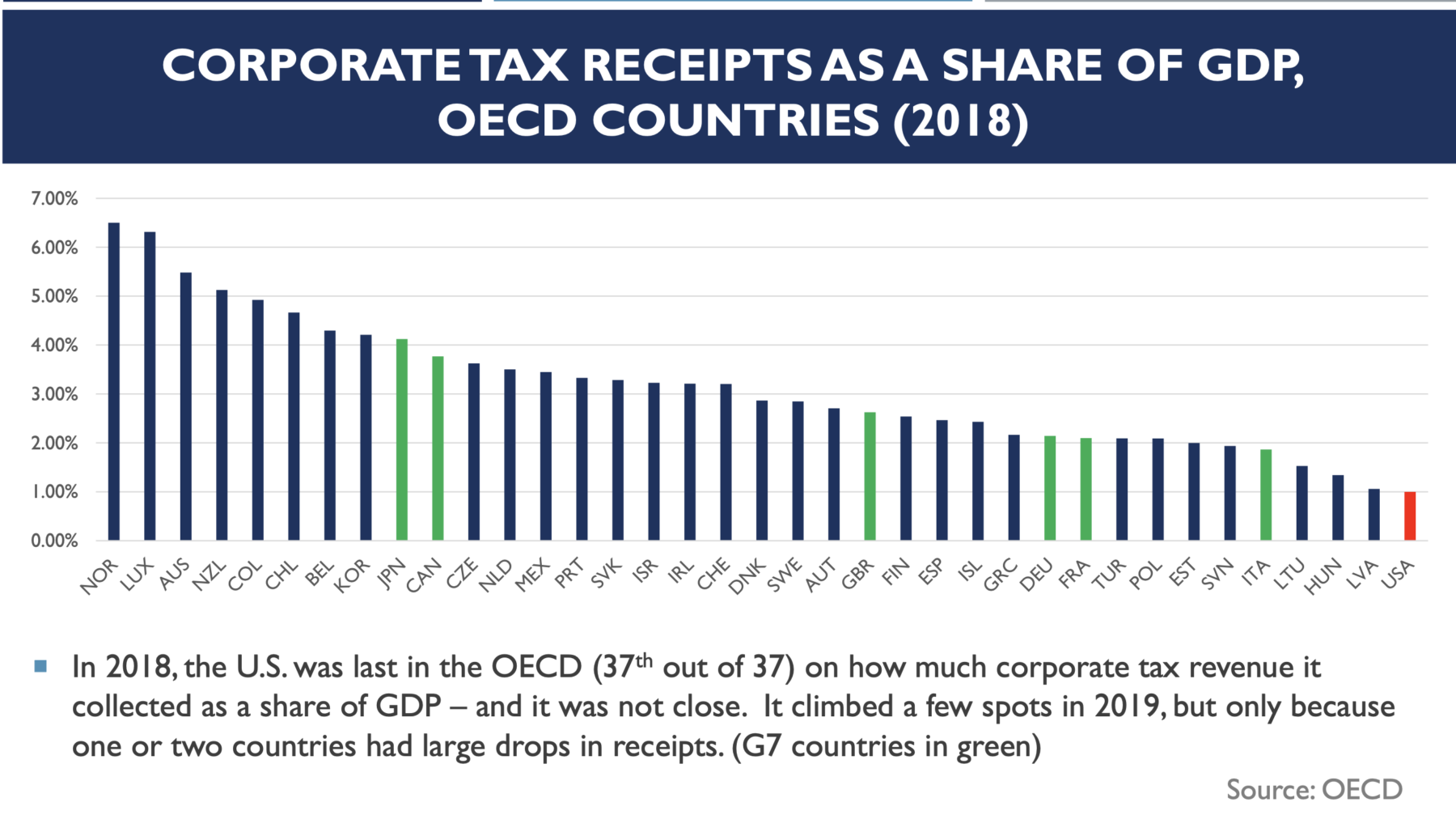
Yellen Favors Higher Company Tax, Signals Capital Gains Worth a Look

Treasury Secretary Janet Yellen said President Joe Biden favors boosting taxes on companies, and signaled openness to considering raising rates on capital gains, while steering clear of a wealth levy.

“A wealth tax has been discussed but is not something President Biden” favors, Yellen said at a virtual conference on Monday hosted by the New York Times. She said such a tax would have significant implementation problems.

The administration is looking to boost the corporate tax to 28%, Yellen said. The Treasury chief said last week that revenue measures would be needed to help pay for Biden’s planned longer-term economic reconstruction program to help address concerns about debt sustainability.

Yellen also said that a hike in the capital-gains tax might be something “worth considering.” Asked about a financial-transactions tax, she said, “One would have to examine closely what effect it would have” on ordinary investors. (…)

Yellen separately signaled the Biden administration supports research into the viability of a digital dollar. “Too many Americans don’t have access to easy payments systems and banking accounts, and I think this is something that a digital dollar, a central bank digital currency, could help with,” she said.

  • Treasury Secretary Janet Yellen said “people should be aware” of bitcoin’s extreme volatility, saying it’s “an extremely inefficient way to conduct transactions” and calling the amount of energy needed to mine bitcoin “staggering.” (New York Times)
COVID-19
  • In the U.S., the latest vaccination rate is 1,365,820 doses per day, on average. At this rate, it will take an estimated 10 months to cover 75% of the population with a two-dose vaccine. (…) So far, 44.1 million have received at least one dose. At least 19.4 million people have completed the two-dose vaccination regimen. Globally, the latest vaccination rate is 6,242,182 doses per day, on average. At this rate, it will take an estimated 5 years to cover 75% of the population with a two-dose vaccine. (Bloomberg)
  • The vaccines are working

Long-term care facilities have been responsible for 35% of all coronavirus deaths in the U.S., despite accounting for less than 1% of the population. (Axios)

unnamed - 2021-02-23T073745.334

Data: The COVID Tracking Project. Chart: Michelle McGhee, Andrew Witherspoon/Axios