Lawmakers Move Closer to Covid-19 Relief Pact Top congressional leaders said they were coming closer to reaching an agreement on another coronavirus relief package, after months of fitful efforts to approve more aid.
Americans Run Down Checking Accounts as Aid Cutoff Approaches
Americans’ cash cushions have been declining for months, most acutely among low-income households, underscoring the already-precarious financial situation of the millions of people who may soon lose their jobless benefits.
The median household checking account balance surged by 65% after the arrival of stimulus checks in April, formally known as Economic Impact Payments, but balances have steadily declined since May, according to a report published Wednesday by the JPMorgan Chase Institute. (…)
JPMorgan Chase Institute, part of the biggest U.S. bank, estimates 9.4 million people are on track to lose their unemployment benefits at the end of the month without congressional action. The vast majority of those people are receiving Pandemic Unemployment Assistance, a program that offers jobless benefits to those not traditionally eligible like gig workers.
And when families’ jobless benefits run out, their spending is expected to “drop sharply,” and they may fall behind on their mortgage payments, according to the institute.
Flash PMIs
Eurozone business activity came close to stabilising in December as stronger manufacturing output growth helped to counter a further drop in service sector activity. Encouragingly, future output expectations jumped to a 32-month high, as prospects brightened amid recent news on vaccine developments.
The flash IHS Markit Eurozone Composite PMI® rose from 45.3 to 49.8 in December, registering a marginal drop in business activity after a steep decline in November. The improvement means the PMI has averaged 48.4 in the fourth quarter. Although down from 52.4 in the third quarter, the fourth quarter average is well above that seen in the second quarter (31.3), suggesting that the economic impact of the second waves of virus infections has been far less severe than the first wave.
Although manufacturing output growth accelerated in December, having slowed in November, the service sector saw output contract for a fourth successive month, albeit with the rate of decline easing markedly to the slowest since September as fewer companies reported output to have been hit by coronavirus disease 2019 (COVID-19) lockdown restrictions compared to November.
Inflows of new orders rose marginally and for the first time since September, boosted by an increased rate of growth of new orders in the manufacturing sector and a substantial slowing in the rate of loss of new business in the service sector compared to that suffered in November.
A key differential in order book growth was seen in terms of exports. While exports of goods rose at the second-fastest rate in 34 months, falling just short of October’s recent high, service sector exports once again fell sharply, the rate of decline moderating only slightly on November due to ongoing strict travel and tourism restrictions.
The marginal gain in new business contributed to a marked easing in the rate of depletion of backlogs of work, which registered the smallest decline since February, hinting in turn at less spare capacity compared to prior months.
With backlogs of work no longer falling sharply, companies reined in their job cutting, meaning employment fell in December at the slowest rate since the pandemic began. Employment nevertheless decreased across the eurozone as a whole for a tenth consecutive month, dropping in both manufacturing and services, albeit at reduced rates.
The slower rate of job losses was also attributed to brightened prospects for the year ahead, in turn often associated with encouraging news on the development of COVID-19 vaccines. Business expectations about output in the coming 12 months rose to the highest since April 2018. Sentiment about future prospects hit a 27-month high in the service sector and a 34-month high in manufacturing.
Average rates charged for goods and services meanwhile fell at the slowest rate since prices began falling back in March, linked in some cases to strengthening demand and improved pricing power, but also due to increased cost pressures in the manufacturing sector. Manufacturers’ input costs rose in December at the fastest rate for just over two years, linked in many cases to increasingly widespread shortages for many key raw materials. Suppliers’ delivery times lengthened to one of the greatest extents seen in the survey’s near 24-year history.
Looking at trends across the region, Germany reported an expansion of output for the sixth successive month, its flash composite PMI rising from 51.7 to 52.5. Manufacturing output growth cooled for a second month running but remained among the highest seen in the survey’s history, accompanied by a moderation in the service sector’s downturn.
Output meanwhile continued to fall in France for a fourth successive month, though the flash composite PMI jumped from 40.6 to 49.6 to indicate a sharp easing in the rate of contraction to the slowest seen over this period of decline. Manufacturing output returned to modest growth and service sector activity came close to steadying.
A more substantial contraction of business activity was reported in the rest of the eurozone, though even here the rate of decline waned to the weakest since September as improved manufacturing output growth helped counter a further drop in services output. The flash composite output index rose from 42.8 to 47.5.

The headline au Jibun Bank Japan Manufacturing Purchasing Managers’ Index™ (PMI)® rose from 49.0 in November to 49.7 in December. Although production and new orders have fallen for the past two years, in both cases the latest fall was the weakest in this period. Furthermore, employment levels among Japanese manufacturers rose for the first time since February, albeit at a fractional pace. Business sentiment eased to the softest since August, but optimism remained robust.
At 47.2 in December, the au Jibun Bank Flash Japan Services Business Activity Index fell from 47.8 in November to signal a quicker deterioration in output across the service sector. New business inflows contracted sharply, and at a similar pace to the previous survey period, while export orders also reduced further. Each of the aforementioned indicators have fallen in 11 consecutive months. Staffing levels reduced for a second successive month, although the rate of decline was marginal overall. Business expectations softened further in December, with the degree of positive sentiment the weakest in four months.

Manufacturing, Mining Drive November Increase in Industrial Production Output rises 0.4% but remains below pre-pandemic levels
Manufacturing, the biggest component of industrial production, increased 0.8% in November, the Fed said. Production of motor vehicles and parts rose 5.3%. (…) The November rise in output followed a revised 0.9% increase in October, compared with a 1.1% initial estimate. (…)
Capacity utilization, which reflects how much industries are producing compared with what they could potentially produce, rose to 73.3% in November from a revised 73.0% in October.


The Haver Analytics charts above use actual production data. Markit’s PMI is a diffusion index measuring the percent of respondents seeing improvement from the previous month, without specifying magnitudes:

More actual data:

 Federal Taxes Paint Grim Picture on the Economy: Congress Should Take Notice
Federal withheld income tax receipts represent hard contemporaneous data. Tax receipts are current and complete, unlike other economic data series such as household and payroll employment, which are based on a sampling of a small percentage of the working population and businesses.
The pandemic hit the economy in March, triggering widespread job loss and partial and full closing of many small businesses. In November, 9 months into the pandemic, federal gross withheld income tax receipts were off 13% from a year ago. That is roughly in line with the average decline of 15% recorded over the 9-month span, March through November.
Checking the tax data records from the US Treasury the decline in tax receipts over the last 9 months is the largest on record. The only comparable period is the 14% drop in 2009 during the Great Financial Recession.
But the decline in withheld tax receipts in 2009 was in part driven by the tax cuts passed by Congress. A report by the Congressional Budget Office (CBO) found that the 2009 decline in tax receipts consisted of a sharp drop in household income, especially among the top 1 percent earners, and through a reduction in withholding taxes. Recall in 2009, finance, a sector that employs a lot of the top-wage earners lost a record 300,000 jobs, and those that kept their jobs saw a sharp reduction in pay and bonuses.
In 2020 Congress did not pass any tax cut, and top-wage earners, especially in finance, have seen increases in jobs and income. So the record decline in federal income tax receipts in 2020 is of a different ilk.
It’s too early to ascertain the main source of the tax receipt collapse in 2020. But I would be willing to bet that in addition to the income loss associated with job loss in travel, entertainment, and recreation, a big chunk is also due to the income losses incurred by small businesses.
According to the National Federal of Businesses of Independent Businesses, 75% of small firms operate as “unincorporated pass-through entities. That means the small business owners pay the personal tax rate, which is calculated on the business owners total earnings. So taxes paid by small businesses show up alongside workers taxes in federal withheld income tax receipts. That probably helps explain the gap between the 15% decline in tax receipts over the past 9 months and the 7% decline in employment. (…)
Taxes are sending an S.O.S signal, saying that significant parts of the economy are experiencing severe distress. (…)

US Sales Data Reveals Big Price Increases in December
We get the U.S. flash PMI later this morning but we just got the Sales Managers Index. Note my bold parts. This comes from sales managers, right on the front line.
Business Confidence rose to a 10 month high in December, and is now well over the crucial 50 “no growth” level. Panelists in general are feeling more confident that the early months of 2021 should see some return to normality.
The Market Growth Index rose to a 13 month high in the period, and a sharp jump up from 50.0 in November, the “no growth” level. As this question asks panelists about the level of absolute growth in their markets, and not with reference to the previous month, the increase is likely to reflect a significant positive movement.
The Staffing Levels Index regained a positive level over 50, and achieved a 12 month high, indicating a slow recovery in staffing markets generally.
The only serious negative to emerge from the December survey was the continuation in December of the widespread price rises seen in November. Unless the Price Charged Index movements moderate in Q1 2021, the US could see the re-emergence of considerable levels of price inflation in 2021.

Covid19


- Almost 140,000 Britons have received first vaccine dose
- FDA approves first over-the-counter Covid-19 test Self-testing kit developed by Australia’s Ellume provides results in 20 minutes
The Contradictions of China’s Real-Estate Boom Can’t Keep Going Real-estate developers provide much-needed economic activity and land purchases. A squeeze on their balance sheets by the government would have impacts on international markets.
(…) And without the ability to add leverage, their ability to buy the land required to finance local governments would be more limited. Analysts at Nomura expect land-sales revenue to rise by just 5% next year, down from 9% this year, the slowest increase in at least five years. (…)
But there are some markets that will feel the impact of a slowdown in construction, industrial metals chief among them. (…)
It is possible that the Chinese government simply bends in the face of these contradictions, and allows the developers more leeway on debt financing. But if it doesn’t, then the sector—and the wider Chinese economy—should begin to feel the squeeze in earnest next year.
Chinese Clothing Giant Defaults on Second Domestic Yuan Bond
A troubled Chinese clothing firm has defaulted on two domestic bonds in 24 hours, in the latest sign of financial stress among the country’s weaker private companies.
Shandong Ruyi Technology Group Co. hasn’t wired funds for coupon payment on a 1 billion yuan ($153 million) bond due Tuesday, according to a filing to the Shanghai Clearing House. The company cited tight liquidity for missing the payment. (…)
The luxury clothing firm’s debt failures are shifting investors’ attention back to risks in China’s private sector following a spate of bond defaults by several high-profile state-linked firms since last month. Led by private firms, onshore defaults in the country have surpassed 100 billion yuan for a third straight year in 2020.
Concern about the company’s finances has grown this year after a local government financing vehicle withdrew from a pact to become its second-largest shareholder.
Saudi Arabia Reins In Spending to Contain Deficit The kingdom aims to narrow a pandemic-induced budget deficit and pursue austerity even as a rally in oil prices signals increasing demand for crude and a global economic recovery.
The Saudi government expects to trim its budget deficit from 12% of economic output this year to 4.9% in 2021, as it lowers spending by about 7% to 990 billion Saudi riyals, equivalent to $264 billion, the country’s Finance Ministry said Tuesday. State revenues are forecast to grow nearly 10% to 849 billion riyals on higher taxes and oil revenues.
Saudi Arabia’s budget announcement is a closely watched measure of spending in the wider Gulf region and an indicator of Riyadh’s expectations on the direction of oil prices. (…)
Indicating Saudi Arabia’s unease about global economic prospects, however, the country argued against an increase in collective output by the Organization of the Petroleum Exporting Countries and a group of Russia-led oil producers at a meeting earlier this month. The group eventually voted against Saudi Arabia and upped output, betting the worst of the shock to demand is over.
Census Estimates U.S. Population Grew 8% in Last Decade, Slowest Since the 1930s
(…) That estimate showed there were about 332.6 million people in the U.S. on census day, April 1, according to the midpoint figure from the bureau’s demographic analysis. The median age in the country was 38.5 years as of that day, up from 37.2 in 2010.
In 2010, the comparable population total was 308.35 million. If confirmed by the 2020 census, it would mark the slowest growth since the 1930s, when the Great Depression and restrictions on immigration slowed growth to 7.2%. (…)
The number of Americans who are 65 or older rose 37% in that period, reaching 54.3 million, representing the arrival of the first half of the boomers. The number of Americans who are 85 or older rose 10% in the decade, reaching 6.1 million. (…)
 When asked to explain why President Trump’s legal team keeps coming up empty in election-related challenges, 61 percent of voters cite insufficient evidence, 8 percent blame poor legal representation, and 27 percent — including 51 percent of Republicans — say it’s bias in the courts against Trump. Read more.


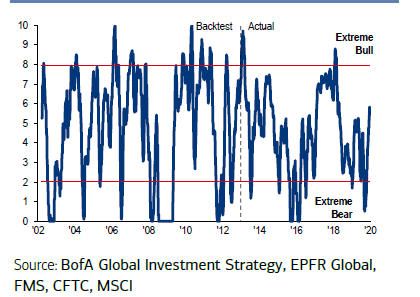


 Correlation is not causation:
