- Over 40% of the US has now reversed or placed reopening on hold. Yesterday Arizona joined Florida, Texas and California in beginning to reverse reopening policy, bringing the share of the population in states where policy is becoming more restrictive up to 30% over just the past five days. Governors of several smaller states have announced their reopenings are on hold, and yesterday the governors of New York, Pennsylvania, and Connecticut each said they are considering postponing reopening plans as well. With case growth still accelerating nationwide, states are likely to continue to take further targeted measures to attempt to mitigate virus spread and maintain available healthcare capacity at sustainable levels.
- Prevalence of Covid-like illness symptoms and new cases per million are declining only in a few states, and the estimated effective reproductive number Rt (growth in new cases adjusted for testing) stands at 1.10 nationally. The positive test rate is rising nationally but remains below 10% in most states, and hospital capacity remains in passing territory for states representing most of the population.
- (…) we see the first reversal in the rate of progress towards normalization across the aggregation of data covering ‘Stay at Home’ and ‘Back to Normal’ categories. (Goldman Sachs)
-
Fauci Warns of Potential 100,000 Virus Cases a Day New coronavirus cases “could go up to 100,000 a day” if people continue to flout advice on social distancing and face masks, Anthony Fauci, the nation’s top infectious-disease doctor told a Senate committee.
- Between late April and early May, when many US states began to re-open, the percentage of tests in the US as a whole which were positive was over 10%, twice the level the WHO recommends before easing restrictions.


PANDENOMICS
MANUFACTURING PMIs
USA: Record rise in manufacturing PMI amid looserCOVID-19 restrictions
June PMITM data signalled only a fractional deterioration in U.S. manufacturing conditions as goods producers and their customers began to reopen amid looser restrictions following the outbreak of coronavirus disease 2019 (COVID-19). The downward trend in production eased markedly as new orders stabilised amid reports of a relative improvement in demand conditions. Companies reported a further drop in workforce numbers as evidence of spare capacity remained, but the rate of job losses also moderated sharply. Optimism about the year ahead meanwhile revived considerably.
At the same time, inflationary pressures picked up, as both input costs and output charges rose for the first time in the second quarter.
The seasonally adjusted IHS Markit final U.S. Manufacturing Purchasing Managers’ Index™ (PMI™) posted 49.8 in June, up a record 10points from 39.8 in May, to signal a marked easing in the overall manufacturing downturn. The latest figure was also slightly higher than the earlier released ‘flash’ reading of 49.6.
Contributing to the slower decline in operating conditions was a stabilisation of new orders. No change in client demand in June brought to an end a three-month sequence of contraction in new business and signalled a notable turnaround from the severe decrease seen in April. Where an increase was reported, firms linked this to a gradual pick-up in demand as customers reopened. New export orders continued to fall, however. Although modest, the drop in external sales was linked to some export markets remaining closed amid COVID-19 restrictions and reports of some customers switching to local suppliers.
With signs of firmer demand conditions, production fell at a sharply reduced rate in June. Where output declined, it was largely linked to historically muted order inflows and the ongoing closure of some factories. Nonetheless, the overall rate of contraction was the slowest since February as other companies reported the end of temporary shutdowns.
Meanwhile, cost burdens rose in June as suppliers hiked their prices due to logistical issues and higher shipping costs. The increase was only marginal, however. At the same time, firms partially passed on greater input prices to customers through higher selling prices. That said, the increase in output charges was only slight as firm sought to remain competitive under challenging demand conditions.
Employment across the manufacturing sector declined for the fourth month running in June, as firms shed workers at a moderate pace following subdued demand. Signs of excess capacity remained evident as manufacturers registered a sharp reduction in backlogs of work. However, the overall loss of jobs was considerably weaker than those seen in the prior two months.
Goods producers also indicated renewed optimism that output would increase over the coming year. Positive sentiment stemmed from hopes of a sustained pick-up in client demand and an end to the pandemic. The degree of confidence was solid overall and reached a four-month high.
Finally, manufacturers recorded further falls in both pre- and post-production inventories as stocks were used to fulfil new orders, though rates of decline slowed markedly compared to May.

China: Manufacturing sector conditions continue to strengthen in June
The recovery in manufacturing sector conditions in China continued in June, with firms signalling a further rise in production and a renewed increase in total new business. The upturn was supported by the recent easing of measures related to the coronavirus disease 2019 (COVID-19) outbreak, which enabled more firms to resume normal business operations and a general improvement in market conditions. However, export work continued to fall amid reports of weak external demand. Nonetheless, business confidence rose to a four-month high, while firms expanded their purchasing activity at a quicker rate.
The headline seasonally adjusted Purchasing Managers’ Index™ (PMI™) increased from 50.7 in May to 51.2 in June, to signal a second successive monthly improvement in the health of the sector. Though modest, the rate of improvement was the strongest recorded since December 2019.
Chinese manufacturers signalled increased production for the fourth month running in June, as businesses continued to recover from company shutdowns and restrictions that were put in place earlier in the year due to the COVID-19 outbreak. Although the rate of output growth softened since May, it remained solid overall. A number of firms also linked the latest increase in output to rising new order volumes amid signs of firmer client demand. Notably, total new orders expanded for the first time since January, albeit modestly. Underlying data indicated that stronger domestic demand predominantly boosted sales, as new export orders continued to decline.
Employment meanwhile remained on a downward trend in June, with staffing levels falling for the sixth month running. Firms often commented on the non-replacement of voluntary leavers and planned redundancies. At the same time, greater volumes of new work led to a renewed increase in outstanding business, albeit marginal.
As new orders increased, firms expanded their purchasing activity at a quicker pace in June. Though modest, the increase in buying activity was the joint-quickest since January 2018. Consequently, stocks of purchased items increased for the first time in six months. Inventories of finished goods meanwhile declined further, albeit at a fractional rate.
Survey data signalled a slight deterioration in vendor performance during June, as travel restrictions related to COVID-19 continued to impact logistics.
Average input prices increased for the first time in four months at the end of the second quarter. The rate of inflation was solid overall, with a number of companies mentioning that raw material costs had risen amid signs of firmer market conditions. However, selling prices rose only slightly as overall pricing power was restricted due to tough market competition.
Chinese manufacturers were generally confident that output would be higher than current levels in 12 months time. Furthermore, the degree of positive sentiment improved to its strongest since February. Firms linked upbeat forecasts to expectations that market conditions and demand will continue to recover.


Eurozone manufacturing sector moves towards stabilisation in June
In line with the continued easing of global coronavirus disease (COVID-19) restrictions on economic activity, the severe downturn in the eurozone manufacturing economy continued to ease in June. The seasonally adjusted IHS Markit Eurozone Manufacturing PMI® strengthened to a four-month high of 47.4, up from 39.4 in May and an improvement on the earlier flash reading.
Posting an increase of eight points since May, the PMI recovered further from April’s nadir. Nonetheless, the headline index has now recorded below 50.0 for 17 successive months and remains consistent with the sector facing challenging operating conditions.
There was some divergence in trends, however, by market group. Both intermediate and investment goods continued to contract, but there was a return to growth amongst consumers goods producers.
Of note, two countries – France and Ireland –recorded PMI levels above 50.0, with growth in France the best for 21 months. Greece and Spain moved closer to stabilisation, followed by Italy and Austria. Germany and the Netherlands continued to lag the rest of the region.
Manufacturing output declined only modestly in June and to a much lesser degree when compared to the considerable falls seen in recent months. However, production continues to be undermined by ongoing weakness in new order books: June’s survey again showed a notable reduction in total new orders (albeit at the weakest pace for four months). New export sales were also down, declining for a twenty-first month and at a noticeable pace.
Latest data indicated that firms continued to operate well below capacity during June, with backlogs of work outstanding falling for a twenty-second successive month – and again at a severe rate (despite easing since May).
Amid reports of reduced working hours and a lack of overall workloads, staff cuts were signalled. Employment fell in June for a fourteenth successive month, and again at a noticeable pace. All nations recorded a drop in manufacturing employment, led by Germany, Italy and the Netherlands.
Purchasing activity also remained depressed in June, with manufacturers choosing to reduce their buying of inputs for a nineteenth successive month. Firms signalled a preference for wherever possible to utilise existing stocks as they battled to free up working capital. Inventories of both inputs and stocks of finished goods subsequently declined during June.
Despite reduced demand for inputs, average lead times continued to lengthen. Although rising to the smallest extent of the past four months, delivery times were again noticeably longer as vendors continued to face challenges in transportation and stock shortages at their units.
Latest prices data indicated that deflationary pressures remained apparent across the manufacturing economy during June. Input costs were reduced for a thirteenth successive month, and manufacturers passed on their cost savings to clients. Average output prices fell solidly to extend the current period of deflation to a year.
Finally, confidence about production in the year ahead returned to positive territory during June, and to its highest level in four months. Positive sentiment was linked by manufacturers to hopes that the further easing of lockdown measures will support a return to sales and demand growth in the coming year.

Chris Williamson, Chief Business Economist at IHS Markit:
The final PMI numbers for June add further to signs that the eurozone factories are seeing a strong initial recovery as the economy lifts from COVID-19 lockdowns. The rise in the June survey is indicative of output falling at an annual rate of just 2%. That compares with a near 30% rate of contraction seen at the height of the lockdowns in April. This remarkable turnaround implies very strong month-on-month gains in the official production numbers for the past two months.
Expectations for the year ahead have also rebounded sharply as hopes grow that the economy will continue to find its feet again in the coming months. However, even with these gains, production and sentiment remain below pre-pandemic peaks, and persistent weak demand combined with ongoing social distancing measures are likely to act as a drag on the recovery. The focus therefore now turns to whether gains seen in the past two months can be built on, or if momentum fades again after this initial rebound.
Japan: Manufacturing sector remains under pressure as demand continues to drop
Japan’s manufacturing economy was faced with further challenges in June, according to the latest PMI survey, which showed sharp reductions in new orders, output and purchasing activity. Businesses that restarted their production lines reportedly operated well below capacity as economic conditions both domestically and globally remained fragile amid the ongoing coronavirus disease 2019 (COVID19) pandemic. That said, growing expectations of a recovery led business sentiment to jump back into positive territory for the first time since February.
The headline au Jibun Bank Japan Manufacturing Purchasing Managers’ Index™ (PMI)® edged up slightly to 40.1 in June, from 38.4 in May. Despite increasing, the index remained noticeably below the 50.0 no-change mark and therefore indicated a further deterioration in the health of the goods-producing sector.
Latest data signalled a further marked decline in production volumes at Japanese manufacturers. Panel comments overwhelmingly linked the drop in output to the COVID-19 pandemic, with factories running low operating rates in response to disappointing sales. Almost half of the survey panel (48%) recorded lower production, compared to 13% that expanded output in June.
Order book volumes dropped markedly when compared to May. Although the deterioration softened, it remained steep overall.
According to anecdotal reasons, low consumption, continued business disruption due to the COVID-19 shock and weak market conditions contributed to the decrease in workloads. Overseas sales followed a similar trend, declining at a weaker, but still steep rate during June. Market groups data pointed to an increase in export orders placed with consumer goods makers, while intermediate and capital goods producers recorded further drops. There were some mentions of an increase in demand from China. (…) “The chance of a V-shape recovery in the manufacturing sector appears slim at this stage, which opens up the possibility of a two-speed economy if the domestic-focused service sector shows more signs of activity. It will be important to monitor the forward-looking components of the survey such as new orders and export sales, which are likely to drive the direction that operating rates take over the coming months. It will likely take a sustained pick-up in global demand conditions before factories start committing more resources into production volumes.

Mnuchin, Powell Pledge Additional Relief to Prevent Lasting Damage to Economy They offer few specifics in House hearing as stimulus measures are set to expire
(…) “We have a lot of important features that all come to an end in July,” Mr. Mnuchin told lawmakers at the House Financial Services Committee on Tuesday. He said the administration wanted any additional relief to be “targeted to certain industries that have been especially hard-hit by the pandemic.” (…)
Axios explains the schedule challenge in D.C.:
Because the House and Senate have alternating recess schedules, Congress will have to reach a deal on the phase 4 package in the small window between July 20–31. That’s the time period between when they return from their respective recesses and when temporarily increased unemployment payments to more than 33 million Americans will expire.
One big battle between Democrats and Republicans is over the reason unemployment has remained so high.
- GOP lawmakers argue that enhanced jobless benefits were too generous. “A lot of people have sort of rationally said, ‘I prefer to keep getting the [unemployment] benefit for as long as I can because I’m making 100% or 150% or 200% of what I made at work,'” a Republican aide familiar with the stimulus talks tells Axios.
- Democrats contend that the economy was so badly damaged that workers don’t have jobs to go back to and without the increased $600 a week payout from unemployment insurance will face poverty and possibly homelessness.
Here’s the important chart:
Economists are worried about the “income cliff” at the end of the month. That’s when the $600/week of additional unemployment benefits run out.

Source: Deutsche Bank Research
And some worrying trends:
Weekly Economic Index

Small Business Jobs Index
The Paychex/IHS Markit Small Business Jobs Index provides a monthly, up-to-date measure of change in small business employment in the United States. It analyzes year-over-year worker count changes, trending the results to reveal movement in small business employment. An upward trend represents a strengthening job market, while a downward trend is a sign of a slowdown. Findings are reflective of data through Thursday, June 18.


Hours worked, businesses open, and employees working:

Source: Homebase
Tomorrow we get the most recent data on unemployment claims measured in the middle of June. A data feed from a tech company called Homebase, which manages digital timecards for 100,000 small businesses, is flashing yellow as fewer employees worked in the last week of June than the rest of the month.
Our smartphones — linked to satellites in space — leave a digital trail that give economists and policy makers more visibility than they have ever had before. The White House looks at aggregated and anonymized data from SafeGraph, which maps some 45 million cellphone locations to more than 5,000 businesses.
SafeGraph’s mobility tracker shows that foot traffic to businesses slowed down at the end of last week.
Germans rushed to reopen wallets after lockdown eased Record rise in retail sales boosts economic outlook for eurozone’s largest economy

Airbus Plans to Cut 15,000 Jobs, Citing Impact of Coronavirus Airbus said it would cut 15,000 jobs across its commercial aircraft division, the biggest restructuring in the planemaker’s history, citing what it expects to be the Covid-19 pandemic’s yearslong impact on the aviation sector.
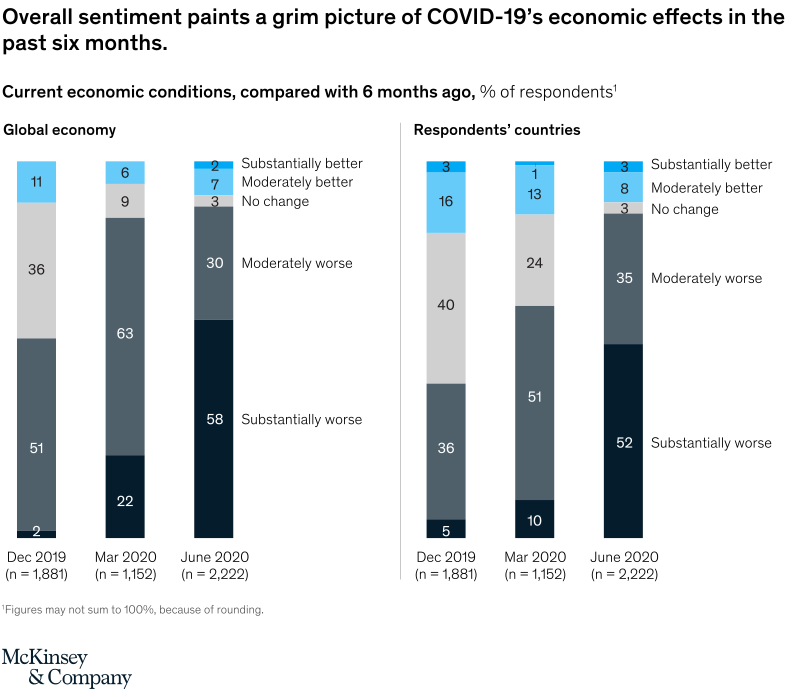
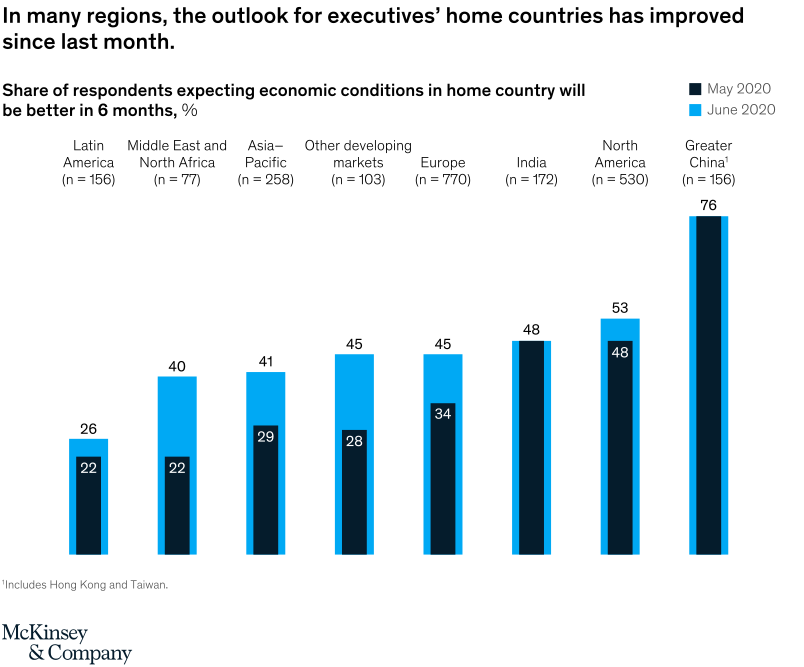
McKinsey just released its latest global survey of executives. Some findings:
-
88% of executives were gloomy at the in June.
- 39 percent expect their workforce size to decline over the next six months (up from 24 percent in March), which is the highest share to say so since April 2009.
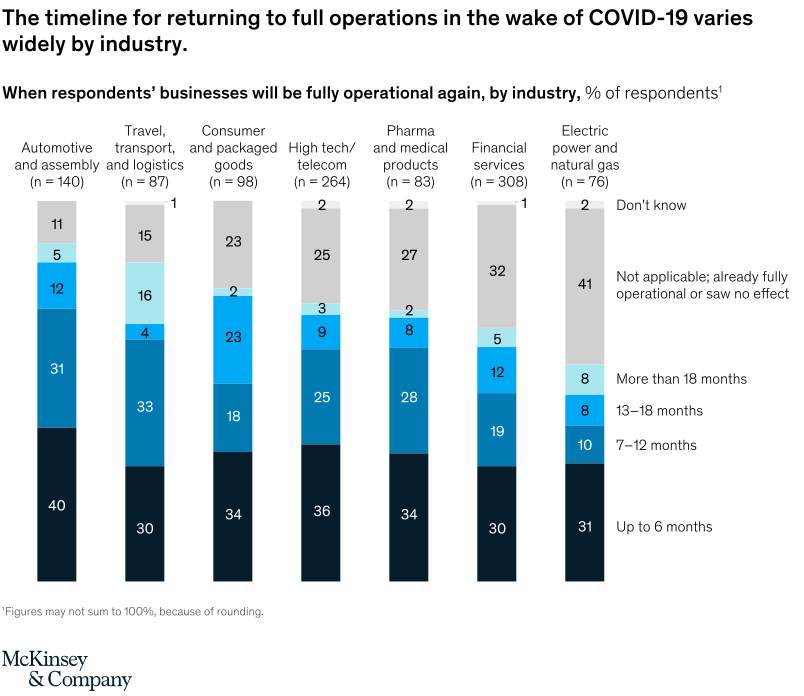
- On average, about one-third say their companies will be fully operational before the end of the year, while an additional 36 percent expect it will take until 2021. Executives in automotive and assembly are the most likely to report some effect on their business, while those in travel, transport, and logistics expect the longest return; over half say it will take until 2021 to be fully operational again.
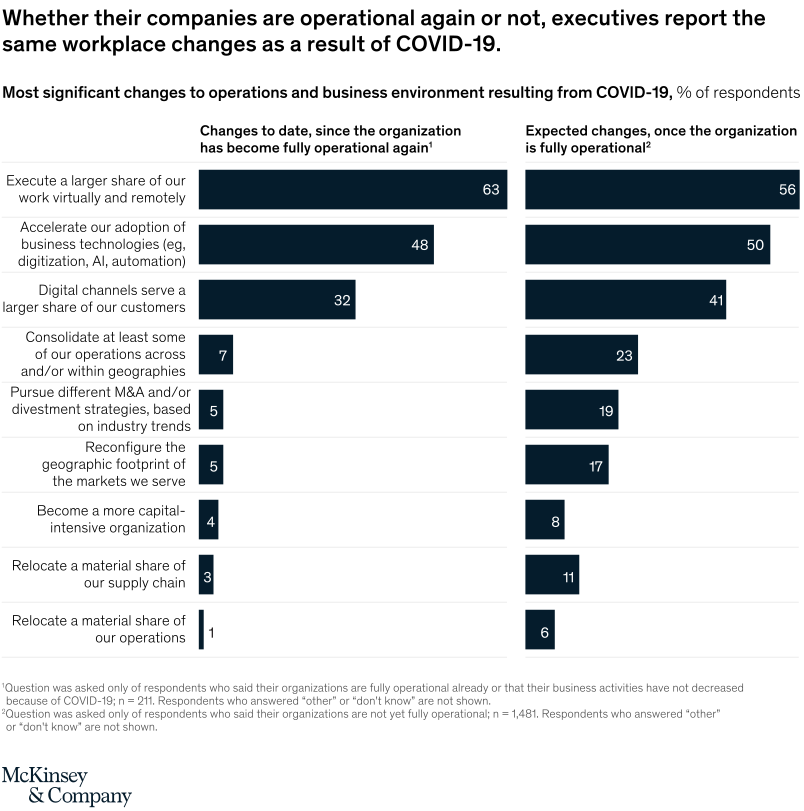
- We also asked about the biggest changes—to date, or expected—once companies are fully operational, and respondents cite the same changes whether or not their businesses are already at that point The most commonly cited changes are a larger share of virtual or remote work, accelerating adoption of business technologies, and the likelihood that digital channels will serve a larger share of customers. But depending on where the company is based, some changes seem likelier than others. For businesses headquartered in developed economies, respondents most often expect virtual or remote work (63 percent, compared with 41 percent at emerging-economy companies) once their businesses are operational again, while those at emerging-economy firms more often cite different M&A and divestment strategies (27 percent, versus 16 percent) and reconfiguring their geographic footprint (24 percent, versus 14 percent).
- Weak consumer demand remains the most common risk to company growth. But the share citing business-model disruptions in their industries has increased since the April and May surveys, as has the share citing the fast pace of technological changes. With respect to opportunities for growth, the shift to new technologies is cited most often, by 35 percent of respondents, up from 26 percent in March.
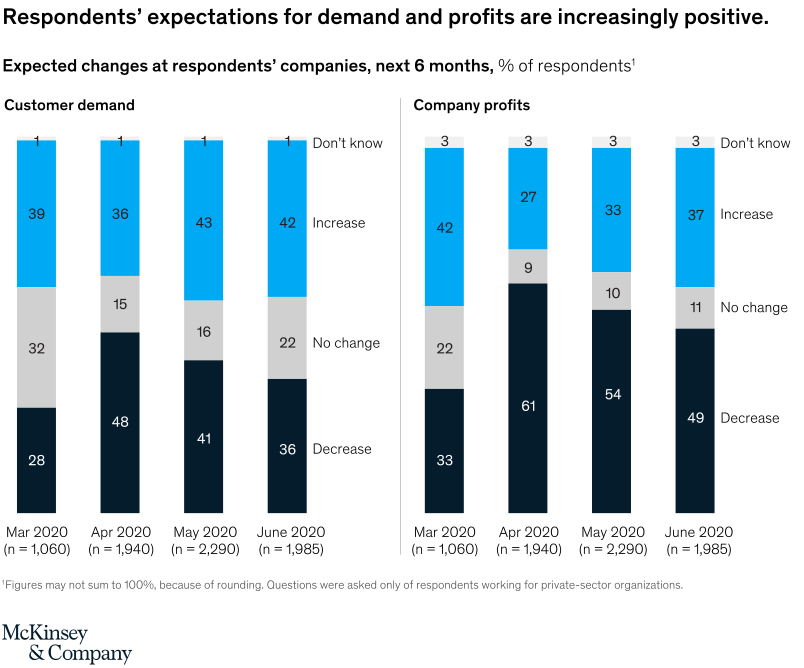
- And after reporting record pessimism on expected demand and profits two months ago, executives’ outlook on both fronts is tempering. Respondents are more likely to expect demand will increase than decrease, while two months ago, the opposite was true. Views on company profits are still more negative than positive, but the share expecting higher profitability continues to grow.
SENTIMENT WATCH
From SentimenTrader:
Wall Street has never been more confused, or apprehensive. Even while analysts have been upgrading price targets from the bottom up, strategists have hesitated to raise their price targets from the top down.
Bloomberg notes that there is a wide disparity in where strategists think the S&P 500 is going to end the year. Indeed there is – the standard deviation among year-end price targets at the end of June has never been wider, by a long shot.
That’s somewhat misleading since it uses the raw price level, and the S&P has rallied significantly over the past 20 years. Expressed as a percentage of the S&P’s price at the end of June, the standard deviation among year-end targets is still the highest since 2009.
What’s even more notable is that strategists aren’t giving the S&P much room to rally. On average, they have a year-end target of 2998, about 2% below where the S&P is trading. That’s tied for the lowest-ever year-end target relative to where the S&P was trading at the end of June.
Strategists by nature are optimists, so it’s highly unusual to see them with such a low opinion of where the S&P should go over the next six months.
(…) Individually, these folks are invariably smart and well-educated. Like other surveys of smart money or big money populations, though, in aggregate we can sometimes see signs of group-think, and that tends to be a contrary indicator. That’s the case here, too.
Even though there is a wide disparity among some of the year-end targets, the overall forecast is very low. And when strategists gave the S&P 500 the least credit this far into the year, it had a strong and consistent tendency to defy those expectations by rallying into year-end.


The market seems to be following the 2009 pattern.

One big difference is that valuations are nowhere what they were in 2009:

The S&P 500 is holding above its still rising, albeit very slowly, 200dma:

But the equal-weight RSP is struggling:

And so is the rest of the world:

According to Bloomberg data, secondary offerings in the U.S. raised $113 billion in the second quarter, the most on record. The nearly 400 deals that priced this quarter is also the most ever. (…) Convertible bond issuance also surged this quarter. Those deals amounted to more than triple the cash raised in the second quarter of 2019 as some companies needing money looked to minimize the impact of dilution while capitalizing on lower rates. (ZeroHedge)

This huge demand for equities in the current circumstances continues to puzzle most analysts. One thesis is that “unsophisticated” retail investors are the main buyers. They must not be the same people that the AAII surveys as SentimenTrader illustrates:
The latest survey from the Association of Individual Investors showed yet another week of apathy, even outright pessimism. This is now the 18th straight week with the survey showing more people thinking stocks will go down than up, the 2nd-longest since the survey’s inception.
This streak has pushed the 16-week average of the Bull Ratio below 40% for the first time since 2009. When the ratio first became this depressed, it wasn’t an automatic contrary buy signal. The S&P 500 had more work to do on the downside when it first triggered in 1990 and it was woefully early in 2008. That helped contribute to a poor risk/reward ratio over the short- to medium-term.


PANDEMONIUM
Covid-19 also makes the US-China ‘phase-one’ trade agreement less promising. Though China and the US seem to have agreed to uphold the agreement, there are risks that China may import fewer agricultural products from the US. China will now require food importers to declare that agricultural products have not been contaminated by Covid-19 and this might prompt America to accuse China of not following through on the agreement quickly enough. China has argued that the slow progress is a result of Covid-19.
Americans Want More, Not Less, Immigration for First Time
Thirty-four percent of Americans, up from 27% a year ago, would prefer to see immigration to the U.S. increased. This is the highest support for expanding immigration Gallup has found in its trend since 1965. Meanwhile, the percentage favoring decreased immigration has fallen to a new low of 28%, while 36% think it should stay at the present level.
This marks the first time in Gallup’s trend that the percentage wanting increased immigration has exceeded the percentage who want decreased immigration.

