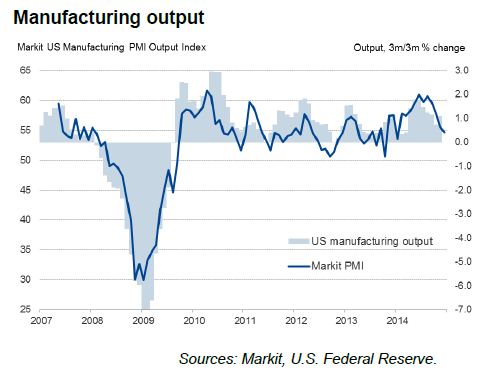
U.S. manufacturing output and new orders continued to rise at a solid pace in December, but both rates of expansion eased to the weakest for 11 months. The latest survey also highlighted a moderation in job creation and input buying growth across the manufacturing sector. Meanwhile, goods producers benefitted from a slowdown in cost inflation to its lowest since April 2013, reflecting falling commodity prices and oil-related costs.
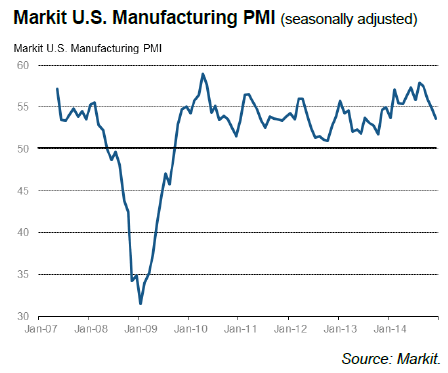
Adjusted for seasonal influences, the Markit Flash U.S. Manufacturing Purchasing Managers’ Index™ (PMI™) registered 53.7 in December, down from 54.8 in November and the lowest reading for 11 months. Nonetheless, the index was comfortably above the neutral 50.0 value and remained higher than the long-run series average (52.1).
A weaker improvement in overall business conditions partly reflected slower output growth in December. The latest expansion of production volumes was the least marked since the snow-related slowdown seen during January. Anecdotal evidence from survey respondents suggested that a moderation in new business gains in recent months had contributed to softer output growth at their plants.
Latest data highlighted a solid rise in new business received by U.S. manufacturing companies, but the pace of expansion eased fractionally since November and was the least marked for 11 months. Some manufacturers commented that greater uncertainty about the economic outlook had resulted in softer client spending patterns. Nonetheless, export sales rebounded in the manufacturing sector, as highlighted by a moderate increase in new orders received from abroad during December.
Manufacturing payroll numbers increased for the eighteenth consecutive month in December. However, the latest survey indicated that the rate of employment growth eased to its lowest since July. Reports from survey respondents suggested that slower new business growth and reduced pressures on operating capacity had weighed on staff hiring.
Weaker output and new business growth contributed to the slowest increase in input buying since January. Meanwhile, stocks of purchases rose at a reduced rate in December and post-production inventories were pared back for the first time since June.
Meanwhile, manufacturing input cost inflation moderated for the third month running and was the lowest since April 2013. Survey respondents noted that decreased commodity prices and oil-related costs had resulted in weaker overall input cost pressures. Factory gate price inflation also slowed in December, with the latest increase in output charges the weakest for seven months.