The enemy of knowledge is not ignorance, it’s the illusion of knowledge (Stephen Hawking)

It ain’t what you don’t know that gets you into trouble. It’s what you know for sure that just ain’t so (Mark Twain)

Invest with smart knowledge and objective odds

THE DAILY EDGE: 15 JUNE 2022: Fed Up!

The May CPI report sure got the hawks out:

Inflation Demands Bold Fed Action An increase in rates this week is a good start. The process will be painful, but it’s also necessary.

(…) The Federal Reserve runs the risk of compounding a string of recent errors by being too tentative in raising rates. The Fed needs to act decisively to get a grip on inflation and inflationary expectations.

The situation is serious. Soaring inflation exceeds wage increases and is undercutting American consumers’ real purchasing power. Middle- and lower-income earners have suffered the most. Inflation-related worries have sliced large chunks off stock-and bond-market values, reducing household net worth. The University of Michigan Consumer Sentiment Index has fallen to its lowest measure in 50 years. (…)

The Fed’s credibility has been seriously damaged, and it must take aggressive monetary action to re-establish its inflation-fighting credentials. (…)

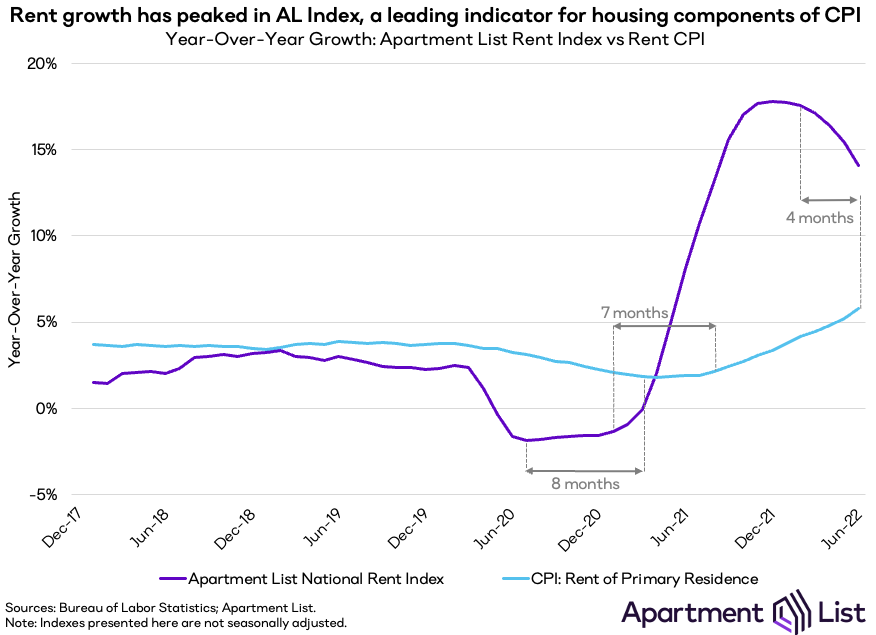
While it’s true that accelerating energy and food prices are accentuating inflation, the biggest driver of rising core inflation is prices of services, particularly shelter. Its two components—owner-occupied equivalent rent and direct rental costs—historically have lagged home prices, which have risen more than 20% in the last year, according to the Case-Shiller Home Price Index. Shelter costs are likely to continue accelerating through mid-2023.

The Fed prefers to measure inflation using the Personal Consumption Expenditure Price Index, which includes spending items like healthcare financed by Medicare, Medicaid and employer-financed insurance. But the Consumer Price Index is more heavily weighted toward what Americans pay for things out of their pockets. CPI inflation must be addressed with tough action.

Don’t expect help on the fiscal-policy side. Stimulus money continues to flow into the economy, even as federal budget deficits recede. Federal government spending of earlier budget authorizations continues. State and local governments saved virtually all of the $500 billion they received in federal grants and have begun to spend some of those funds. Strikingly, many are now providing financial subsidies to offset higher gasoline costs, which may buy votes for local elected officials but also contributes to demand for energy and thus to inflation. Also, the American Infrastructure and Jobs Act, enacted in November 2021, authorized an additional $1 trillion in deficit spending. The Biden administration now has a political incentive to hurry up that spending, which will add to economic activity, jobs and wage pressures in the already over-stretched construction sector.

It’s the Fed’s job to fight inflation. (…) the Fed can’t rely on hope. The Fed’s forward guidance is not a substitute for policy action. It must move decisively and reduce inflation to its long-run 2% target. Reducing inflation requires slowing nominal spending growth, which will squeeze business margins and raise unemployment. The short-run costs of rising unemployment may be painful, and the Fed may come under political pressure from Congress and the White House to accept a higher underlying rate of inflation. Markets may expect the Fed will eventually give in to these pressures and pause, accepting higher underlying inflation because the short-run costs of rising unemployment will be too painful.

The Fed must dispel that market expectation through aggressive actions. Raising rates 75 basis points and indicating more to come would send a necessary message. At this point, short-run pain is inevitable, but healthy longer-run economic performance requires lower inflation and a credible central bank.

  • The WSJ editorial board to the FOMC:

(…) The Fed leaked Monday that the FOMC might consider a 75-point rate increase, and financial markets tanked on the news. But at 1% the real fed-funds rate is still deeply negative, and the Fed’s mistake is that it has been too easy for too long. The sooner the Fed breaks inflation, the better. (…)

This means slower growth, which was already underwhelming at minus-1.4% in the first quarter and is on a paltry 0.9% pace in the second quarter, according to the Atlanta Fed’s GDPNow tracker.

Tighter money and the risk of recession should also cause the White House to abandon its anti-growth fiscal and regulatory agenda. A slowing economy doesn’t need a $1 trillion tax increase, yet Senate Majority Leader Chuck Schumer is still trying to persuade Sen. Joe Manchin to sign on to a smaller version of Build Back Better. (…)

Democrats tried the tax increase to break inflation in the late 1960s but prices kept rising. They raised taxes in 1993 in the name of lower interest rates, but the Greenspan Fed still had to raise interest rates in 1994. The only way a tax increase would reduce inflation today is if it triggered a recession. (…)

The economic point is that policy makers should be pursuing pro-growth fiscal, deregulatory and trade policies to offset the impact of tighter money. That was the Ronald Reagan – Paul Volcker formula that broke inflation in the 1980s and led to a boom. (…)

(…) Regaining control of the inflation narrative is critical to the Fed’s policy effectiveness, its reputation and its political independence. The longer this takes, the greater the negative effects on economic well-being and social equity in the US, and the larger the negative spillovers for the rest of the world. (…)

The notion of a central bank consistently chasing inflationary developments, running out of good policy options and, in the process, intensifying economic and financial volatility would not be uncommon in a developing country lacking institutional credibility and maturity. It is highly unusual, and particularly distressing, for the central bank that is at the center of the international monetary system. (…)

  • “It is monetary policy 101 that to defeat inflation, you need positive real interest rates in 1980 Volcker raised rates to 19% to combat 14% inflation. Greenspan raised rates in 1990 to 8.5% to fight 6% inflation. Even burns raised federal funds to 13 in 1974 to fight 11.5% inflation but retreated too quickly to get the job done. Today, we have real interest rates at the most negative level in the last 70 years. The idea that tightening a% or two from here will beat inflation is hardly credible” – Greenlight Capital President David Einhorn (via The Transcript)
  • “betting on a soft landing to me is a real long shot. The other statistical fact is once inflation’s got above 5%, to use your word, it’s never been tamed without a recession so if you’re predicting a soft landing you’re going against decades of history. Could happen, anything’s possible, but I don’t think it’s probable” – Duquesne Capital Founder Stanley Druckenmiller (via The Transcript)
  • the biggest problem for the Fed may not even be the CPI surprise. Instead, it could be the chart below. Are longer-term inflation expectations becoming unanchored? (The Daily Shot)

U.S. Producer Price Inflation Picks Up in May

Price inflation at the wholesale level remains heated. The Producer Price Index for Final Demand increased 0.8% during May (10.8% y/y) after rising 0.4% in April, revised from 0.5%. These last two gains follow three consecutive months of 1.1%-to-1.6% increase.

Producer prices less food, energy & trade services increased 0.5% (6.8% y/y) in May after increasing 0.4% in April. A 0.6% rise had been expected for the PPI less food & energy. (…)

Food prices were fairly steady during May (13.0% y/y) after significant gains in the prior four months.

The PPI for goods less food & energy gained 0.7% (9.7% y/y) following two consecutive months of 1.1% increase. Prices for final demand finished goods less food & energy increased 0.8% (8.8% y/y). Finished consumer goods prices less food & energy rose 0.9% in May (8.4% y/y) following a 0.6% increase. Durable consumer goods prices rose 0.7% last month (8.9% y/y) after four months of roughly 0.9%. Core nondurable consumer goods prices rose 1.0% (8.1% y/y), the strongest increase in three months. Prices for private capital equipment rose 0.7% (9.3% y/y) after increasing 1.2% in April.

Services prices rose 0.4% during May (7.6% y/y) following a 0.2% April decline. Trade services prices also increased 0.4% last month (13.6% y/y) after falling 0.6%. Services prices less trade, transportation & warehousing edged 0.1% higher in May (3.0% y/y) after falling 0.2% in April.

Construction product prices increased 0.4% in May (19.0% y/y) after surging 3.7% in April.

Intermediate goods prices jumped 2.3% (21.6% y/y) due to a 4.6% gain (47.5% y/y) in processed fuel costs.

 image image

Plate This Credit Suisse account of the restaurant industry suggests consumers are cutting back on discretionary spending:

Restaurant industry sales trends in May were solid, though decelerated during the month and relative to April. Based on data from Knapp-Track, Casual Dining SSS in May were 5.6%, including traffic of -0.9%, and based on our calculated compounding 3-yr SSS, May 3-yr SSS (vs 2019) were 7.8%, relative to 10.2% in April, 3.9% in March and -0.1% in February.

A more accurate measure of strength would deflate nominal sales with CPI-food-away-from-home which jumped from +4.0% in May 2021 to +7.4% this May. May SSS would then come in a less solid -1.8%.

CS adds that “Based on data from OpenTable, the change in seated diners (vs 2019) is -5.7% in the first half of June, relative to -2.4% in May, -1.3% in April and -4% in March.”

Combing the CPI data, I also found interesting that inflation in full service restaurant was 9.0% in May compared with 7.3% for limited service restaurants, probably because of the higher salary component in FSR costs structure vs LSR. The gap has been increasing in each of the last 3 months: March to May, FSR prices are up 10.0% annualized vs +3.2% at LSR. Higher wage rates are finding their way on the menus.

OPEC Oil Output Fell in May, Adding to Pressure on Cartel

Output among the 13 countries that make up OPEC dropped by 176,000 barrels a day last month to average roughly 28.5 million barrels a day, data from the cartel released Tuesday showed. (…)

The production declines came as protesters closed major oil refineries in OPEC member Libya, where output fell by 186,000 barrels a day. Output fell at other members, too: Nigeria’s by 45,000 barrels a day and Iraq’s by 21,000 barrels a day. The declines outweighed more modest supply increases from Saudi Arabia, the United Arab Emirates and Kuwait. (…)

Earlier this month, the cartel and a group of allied producers led by Russia agreed to a bigger-than-expected oil-production increase in an effort to tame rising oil prices. The group said it would raise output by 648,000 barrels a day in July and August, but the pledge was met with skepticism from oil-market analysts.

Many OPEC members are already producing at close to full capacity, with only leading producers Saudi Arabia and the U.A.E. believed to have sufficient spare capacity to raise output.

Meanwhile, other producers have struggled to meet their quotas in part because of aging oil-production infrastructure. The cartel’s production was already lagging behind an earlier, more modest target to increase production each month by 400,000 barrels a day. (…)

OPEC cut its production growth forecast among non-OPEC nations this year by 250,000 barrels a day to 2.1 million barrels a day.

The decrease is due to continued struggles for Russian oil producers to find customers for their crude since Moscow’s invasion of Ukraine. OPEC said Russian output would likely total 10.6 million barrels a day this year, 250,000 barrels a day less than it was expecting last month.

That marks the third consecutive month OPEC has lowered Russian oil-supply forecasts for the year, amounting to 1.1 million barrels a day that have been knocked off Russia’s expected output. (…)

The group’s oil production plan assumes Russia will increase its output by 170,000 barrels a day from July.

OPEC kept its demand forecasts steady. The cartel expects oil demand this year to grow by 3.4 million barrels a day.

(…) [Biden] says gas prices are 75 cents higher and diesel prices are 90 cents higher than the last time crude oil was trading around $120 per barrel.

“The lack of refining capacity — and resulting unprecedented refinery profit margins — are blunting the impact of the historic actions my administration has taken to address Vladimir Putin’s Price Hike and are driving up costs for consumers,” Biden said. (…)

(…) More than 1 million barrels a day of US oil refining capacity — or about 5% of the total — has been shut since the start of the pandemic. Some aging facilities were closed permanently as the virus crushed fuel demand. Others are being modified to produce renewable diesel instead of petroleum-based fuels amid a web of federal policies spurring a shift to green energy; those conversions may be too far along to reverse course. (…)

And while high prices typically entice investment, there’s little sign that oil companies will build new refineries now, amid a long-term shift away from fossil fuels, long payback times, booming construction costs and permitting challenges.

Even beyond the US, there have been big refining capacity reductions since the start of the pandemic — another 2.13 million barrels per day outside the US — that have further exacerbated the price pain. US refining allies have stressed that China’s export of petroleum products has declined even as the country’s refinery run rates shrink. (…)

LOWEST MAY JOB GAINS FOR TEENS SINCE 2018

Last month, 153,000 teens aged 16 to 19 gained jobs, according to an analysis of non-seasonally adjusted data from the Bureau of Labor Statistics (BLS) by global outplacement and executive coaching firm Challenger, Gray & Christmas, Inc.

May gains are 30% lower than the 219,000 teen jobs added in the same month last year. It is the lowest number of teen job gains in May since 2018 when 130,000 jobs were added.

Employment in Retail, a major employer for teens, fell by 61,000 jobs in May, according to the monthly employment situation from the BLS. Over half of the losses occurred in general merchandising stores.

  • “At one point in Walmart U.S., Alan, we had over 300,000 people out on COVID leave in January. And that, as you know, the curve was steep and when it came down on the backside, they all came back to work, but we had hired others to try and fill those gaps given that so many people were out. So I think we have moved to the point where finding people and hiring people and retaining people isn’t the issue we’re facing at the moment. But we do now have a higher wage rate.” – Walmart (WMT) CEO Doug McMillon (via The Transcript)

So, there was a shortage, they hiked wages to attract workers, now overstaffed, but higher wages stick…

No wonder then:

unnamed - 2022-06-14T181201.789

Data: Business Roundtable; Chart: Axios Visuals

The good news: As of early June, 177 leaders of America’s biggest companies surveyed by the Business Roundtable — brought to you first in Axios Macro — were still planning to hire and invest at high rates.

The bad news: Their outlook deteriorated rapidly compared to early March — the sixth-fastest drop in the 78 quarters the survey has been conducted.

  • 50% plan to increase employment levels in the next six months, down from 68% last quarter.
  • 47% say they will increase capital investment plans, down from 60% last quarter.
  • 72% expect sales to increase, 10 percentage points less than last quarter.

There’s this other bad news courtesy of @IanRHarnett: CEOs’ mood is very much linked to profit growth:

Small biz people are even more depressed. In fact, they have never been so down!

unnamed - 2022-06-14T180655.792

Data: NFIB; Chart: Simran Parwani/Axios

  • Real estate firms Compass and Redfin [-8%] announced layoffs. (CNBC)
  • Warner Bros Discovery to cut as much as 30% of advertising sales force. (The Information)
  • Crypto platform Coinbase is laying off roughly 18% of its workforce, about 1,100 full-time jobs, amid a crypto downturn.
  • Amazon’s drone delivery service will begin in California. (Axios)

Meanwhile, chaos is spreading:

Traders Put 80% Odds on Three-Quarter-Point Rate Hike in Canada

The average annual increase of seven major union wage settlements in March and April was 3.1%, according to government data. That’s almost double the average pace of pay increases between March 2020 and January 2022. (…)

The Public Service Alliance of Canada, which represents 120,000 workers or about a third of federal employees, is demanding a pay increase of 4.5% per year in negotiations that have hit an impasse. (…)

Teamsters Canada secured wage increases last month that range from 9% to 25% for warehouse workers of grocer Metro Inc. in Ottawa. Last month, crane and heavy equipment operators went on strike and successfully pushed for a hourly wage increase of C$3 ($2.36) per year until 2025. (…)

ECB Calls Emergency Meeting to Address Bond-Market Disruption Borrowing costs for Italy and other indebted southern European euro members have soared in recent days

(…) Investors have dumped southern European government debt in recent days after the ECB laid out plans on Thursday to phase out its giant bond-buying program and conduct a series of interest-rate hikes to fight record-high inflation. The yield on Italy’s 10-year government bonds has climbed to about 4.2%, the highest level since 2013 and up almost three-quarters of a percentage point in just five days.

ECB board member Isabel Schnabel sent a strong signal on Tuesday that the bank is ready to create a new bond-buying tool at short notice to contain a spike in southern European bond yields, which is bringing back memories of the bloc’s debt crisis a decade ago.

unnamed - 2022-06-15T065140.075

FYI, Italian debt-to-GDP is significantly higher than it was during Euro Crisis 1.0 while nationalism is a more potent political force than 10 years ago. That could spell trouble.

(…) triple-B-rated Italy’s government debt stood at 150% of GDP as of year-end, up from 119% a decade earlier and 134% on the eve of the pandemic.  Yet thanks largely to Frankfurt’s tireless efforts, Italy paid only the equivalent of 3% of GDP last year to service its burgeoning debt load, compared to 5% as the sovereign credit crisis raged in 2011 and 2012.

Italy faces upwards of €850 billion ($884 billion) in maturities over the next four years according to Bloomberg, equivalent to a third of its total debt load. Increased interest expense could soon be in the offing, as Europe’s third-largest economy pays a weighted average interest rate of roughly 2.5%. For context, Italy’s two-year yield now stand at 2.13%, compared to 0.83% less than three weeks ago. (ADG)

But don’t worry, Ms. Lagarde is there: “I can only repeat what I have said, which is that we will not tolerate fragmentation.” 

But it’s already happening. Who thinks Germans will go along with Club Med Subsidy 2.0? This ain’t Greece… Here we go again!

China Economic Data Beats Across The Board In Apparent ZeroCOVID Policy ‘Victory Lap’

(…) While all the economic signals did deteriorate in May (except unemployment), they also all beat expectations…

Retail sales fall less than expected and there’s a tick higher in investment. Industrial output notably stronger, reflecting the easing of restrictions, and the surveyed jobless rate fell to 5.9%

  • China Industrial Production YTD YoY BEAT: +3.3% vs +3.1% exp but WORSE from +4.0% prior

  • China Retail Sales YTD YoY BEAT: -1.5% vs -1.7% exp but WORSE from -0.2% prior

  • China Fixed Asset Investment YTD YoY BEAT: +6.2% YoY vs +6.0% exp but WORSE from +6.8% prior

  • China Property Investment YTD YoY BEAT: -4.0% vs -4.4% exp but WORSE from -2.7% prior

  • Surveyed Jobless Rate BEAT: 5.9% vs 6.1% exp and BETTER than 6.1% prior

Under the hood of today’s labor market improvements, the situation is ‘varied’ we suggest rather charitably:

  • Surveyed unemployment rate of the population aged from 16 to 24 was 18.4%

  • Jobless rate of those aged from 25 to 59 was at 5.1% percent

  • Urban surveyed unemployment rate in 31 major cities was 6.9%

Looking through the retail sales data, there were big drops for clothing, cosmetics, jewelry, electronics, furniture, automobiles and more. Beverages, tobacco, alcohol and petroleum (probably reflecting oil prices) were among the gainers.

Simply put, today’s data provides prima facie evidence that the Chinese economy hit a bottom in April and is now slowly on the mend – Mission Accomplished Beijing?

However, not wanting to steal the jam from China’s donut too much, despite industrial output rebounding to growth territory, apparent oil demand – a leading indicator – widened its decline to 8.3%YoY in May, suggesting that more bad news is ahead in the coming months.

As Bloomberg notes, even the NBS is hinting at caution: “We must be aware that the international environment is to be even more complicated and grim, and the domestic economy is still facing difficulties and challenges for recovery.”

  • China GDP: nearly 11 billion Covid tests seen giving economy a US$26 billion boost in second quarter
  • Widespread outbreaks across China since April have racked up a coronavirus-testing bill the size of a small country’s annual GDP, according to Chinese researchers
  • Meanwhile, there are growing concerns among experts that an interest group composed of coronavirus test suppliers might have formed

The sheer cost of China’s mass coronavirus-testing campaign since April is expected to exceed the full-year gross domestic product (GDP) of nations such as Iceland and Cambodia, while giving China’s economy a much-needed shot in the arm, according to analysts.

An estimated 10.8 billion Covid-19 tests will be carried out in China during the April-June period, at a total cost of 174.6 billion yuan (US$26 billion), researchers with Soochow Securities said in a note on Sunday.

And that spending is likely to boost the nation’s economic growth rate by 0.62 percentage points in the year’s second quarter, while also helping to offset the impact of shrinking household consumption on the quarterly GDP, they said.

John Authers: The Stock Market Still Has Another Shoe to Drop

(…) This is now a bear market by any sensible definition, and yet a strong majority of big investors expect rates to be higher a year from now. At all previous tough moments for the stock market in this century, investors overwhelmingly believed that rates were coming down. The Federal Reserve and the bond market aren’t going to arrive like the cavalry this time:

relates to The Stock Market Still Has Another Shoe to Drop

(…) It’s decades since a market selloff has been met with higher rates, and few people active in finance today have any experience of a moment like this. So what should we be paying for a stock?

(…) the entire selloff to date has been driven entirely by valuations. This chart, prompted by Ian Harnett of Absolute Strategy Research Ltd. in London, shows the rolling 12-month change in the S&P 500’s trailing multiple. The expansion in 2020, in response to the gusher of cash to deal with the pandemic, was the fastest on record, and it has now been followed by the most drastic compression on record.

image

Valuations could certainly go lower still, but the bulk of the valuation-led part of the selloff is over. Now, the question is whether the earnings expectations on which those multiples are based are accurate. If expectations are over-optimistic and need to be cut, then there is room for share prices to fall further without much multiple compression. The BofA survey found serious bearishness about the profit outlook. Only in the immediate aftermath of the Lehman Brothers bankruptcy in 2008 has a greater proportion of fund managers expected global profits to fall:

image

(…) However, that is not the view of the brokers’ analysts who Bloomberg surveys to produce profit estimates. S&P 500 earnings expectations have risen 3% so far this year. Admittedly, this is mostly thanks to energy companies. Exclude them and forecasts are down minimally. (…)

If companies have enough pricing power to get their customers to pay more for their goods, then all well and good. But the Fed is now on a concerted campaign to try to ensure that they can’t do that. If you don’t want to fight the Fed, you might want to factor lower profits ahead into your calculations.

(…) a strong US currency also tends to inhibit earnings for everyone else. Over time, as this Absolute Strategy chart shows, surges in the dollar tend to be followed by falls in global earnings. The pressure a stronger dollar exerts on all those who need to buy dollar-denominated commodities or repay debt denominated in the currency makes this an inevitability:

relates to The Stock Market Still Has Another Shoe to Drop

(…) the longer the dollar rally continues, the more optimistic earnings forecasts appear. (…)

David Rosenberg:

  • As for the stock market, we have never before seen the Fed tighten policy into an official bear market. There is a first for everything and this is it.
  • As for the economy, the bottom line is that since 1970, a 22%+ drawdown in the S&P 500 over a five-plus month time span has resulted in a recession “only” 100% of the time (five for five).

The other part of the 60-40 portfolio:

  • Global bonds nearing a bear market. The Bloomberg Global Aggregate Index, which tracks total returns from investment-grade government and corporate bonds, has slumped 19.7% from a record high in January 2021.

(…) The selloff in fixed income has wiped out almost $10 trillion of value in global bonds this year, erasing the gains made after central banks undertook unprecedented easing to cushion the global economy from a once-in-a-generation pandemic.

The global bond index has already slumped 16% in 2022, more than three times the size of the next biggest annual loss since 1990, after supply snarls, surging commodity prices, and rebounding consumer demand caught central bankers off guard, causing them to play catch-up on inflation.  

Global bond market on threshold of 20% pullback from record high

Devil Electric Last Mile Solutions plans to liquidate about a year after a SPAC deal tagged the electric vehicle startup with a $1.4 billion valuation (Axios)

THE DAILY EDGE: 14 JUNE 2022: Meetings of the Minds

Small Business Owners’ Expectations for the Future at 48-year Low Inflation continues to be No. 1 problem as owners raising selling prices matches record high

The NFIB Optimism Index fell 0.1 points in May to 93.1, marking the fifth consecutive month below the 48-year average of 98. Owners expecting better business conditions over the next six months decreased four points to a net negative 54%, the lowest level recorded in the 48-year-old survey. Expectations for better business conditions have deteriorated every month since January.

Twenty-eight percent of owners reported inflation was their single most important problem in operating their business, a decrease of four points from April. The net percent of owners raising average selling prices increased two points to a net 72% (seasonally adjusted), back to the highest reading in the 48-year-history of the survey last reached in March and 32 points higher than May 2021.

“Inflation continues to outpace compensation which has reduced real incomes across the nation,” said NFIB Chief Economist Bill Dunkelberg. “Small business owners remain very pessimistic about the second half of the year as supply chain disruptions, inflation, and the labor shortage are not easing.”

Other key findings include:

  • Fifty-one percent of owners reported job openings that could not be filled, up four points from April.
  • The net percent of owners who expect real sales to be higher decreased three points from April to a net negative 15%.
  • A net 46% (seasonally adjusted) of owners reported raising compensation, down three points from April with a net 25% planning to raise compensation in the next three months, down two points from April but historically high.
  • Thirty-nine percent of owners report that supply chain disruptions have had a significant impact on their business, up three points. Another 31% report a moderate impact and 22% report a mild impact. Only 8% of owners report no impact from the recent supply chain disruptions.

(…) Unadjusted, 3% of owners reported lower average selling prices and 71% reported higher average selling prices. Price hikes were the most frequent in wholesale (80% higher, 4% lower), manufacturing (79% higher, 1% lower), retail trades (78% higher, 2% lower), and construction (77% higher, 2% lower). (…)

One percent of owners (seasonally adjusted) reported higher nominal sales in the past three months, down two points from April. The net percent of owners expecting higher real sales volumes decreased three points to a net negative 15%.

The net percent of owners reporting inventory increases fell five points to a net negative 1%. Seventeen percent of owners reported increases in stocks while 15% reported reductions as solid sales reduced inventories at many firms. A net 8% of owners viewed current inventory stocks as “too low” in May, up two points from April. A net 1% of owners plan inventory investment in the coming months.

The frequency of reports of positive profit trends was a net negative 24%, down seven points from April. Among the owners reporting lower profits, 34% blamed the rise in the cost of materials, 25% blamed weaker sales, 10% cited labor costs, 9% cited the usual seasonal change, 8% cited lower prices, and 3% cited higher taxes or regulatory costs. For owners reporting higher profits, 49% credited sales volumes, 18% cited higher prices, and 16% cited usual seasonal change.

Surprised smile 30-Year Mortgage Rates Increase to 6.13%
India’s wholesale price inflation runs at 30-yr high, makes rate hikes more likely
Bond Slide Continues, With No End in Sight U.S. Treasury yields have surged to new multiyear highs, reflecting uncertainty over how high the Fed will have to raise interest rates to tame inflation.

(…) Heading into Friday, there was widespread hope on Wall Street that bond yields had finally reached the peak of this year’s climb, having done enough to tighten financial conditions that consumer demand and inflation could gradually return to more sustainable levels. Now, many say they have little idea how high the Federal Reserve will have to raise short-term interest rates to wrest control of prices, which are currently rising at a rate several times higher than the central bank’s 2% annual target.

“There is definitely an element of capitulation,” in the bond market’s move, said Thomas Simons, senior vice president and money-market economist in the Fixed Income Group at Jefferies LLC. “There is a general acknowledgment that Friday’s data was a profound message.” (…)

On Monday, the yield on the benchmark 10-year U.S. Treasury note settled at 3.371%, its highest close since April 2011 and up from 3.041% on Thursday. (…)

The two-year yield, more sensitive to the near-term outlook for monetary policy, settled at 3.279%, up from 2.815% Thursday, and surged as high as 3.413% in late trading after the Journal report. It has climbed 0.641 percentage point over the past seven trading sessions, the largest seven-day yield gain since 2001.

Friday’s consumer-price-index data could hardly have been more dispiriting, according to investors and analysts. Not only did headline inflation reach a four-decade high at a point when many investors had expected it to be coming down, but there were substantial price increases across the board, in everything from housing costs to children’s footwear. (…)

Delivering another blow to Treasurys, data released just an hour and a half after the CPI report showed consumers’ long-term inflation expectations rising to their highest level since 2008. That hurt the argument that anchored inflation expectations would help keep a lid on actual inflation. (…)

As of Friday, the Bloomberg U.S. Aggregate bond index—largely U.S. Treasurys, highly rated corporate bonds and mortgage-backed securities—had returned minus 11% this year. Its second-worst performance over the same period was minus 2.9% in 1984, in records going back to 1976. (…)

“Perhaps the biggest risk for higher rates is that investors just decide to sell bonds,” said Donald Ellenberger, a senior fixed-income portfolio manager at Federated Hermes. “If investors decide that bonds aren’t doing a very good job hedging stocks and still aren’t paying much income, we could see rates spike higher because Wall Street dealers don’t have the balance-sheet capacity or desire to warehouse bonds nobody wants.”

CMG Wealth’s dashboard carries a lot of red and mainly downward arrows, whatever the asset class:

image

Fed Likely to Consider 0.75-Percentage-Point Rate Increase A string of troubling inflation reports is likely to lead Federal Reserve officials to consider surprising markets with a larger-than-expected interest-rate increase at their meeting this week.

(…) Before officials began their premeeting quiet period on June 4, they had signaled they were prepared to raise interest rates by a half percentage point this week and again at their meeting in July. But they also had said their outlook depended on the economy evolving as they expected. Last week’s inflation report from the Labor Department showed a bigger jump in prices in May than officials had anticipated.

Two consumer surveys have also shown households’ expectations of future inflation have increased in recent days. That data could alarm Fed officials because they believe such expectations can be self-fulfilling. (…)

The Fed last raised rates by 0.75 percentage point at a meeting in 1994 [November], when the central bank was rapidly raising rates to pre-empt a potential rise in inflation. (…)

“What we need to see is clear and convincing evidence that inflation pressures are abating and inflation is coming down. And if we don’t see that, then we’ll have to consider moving more aggressively,” Mr. Powell said [last month]. (…) “We therefore will need to be nimble in responding to incoming data and the evolving outlook,” he said. (…)

“We believe that risk-management considerations call for aggressive action to reinforce the Fed’s inflation-fighting credibility,” Barclays economists wrote in a subsequent report Monday. While such a move “would go against communications leading into the blackout period,” the report said “risks of prolonged inflation have intensified,” justifying the larger rate rise.

After the publication of this article on Monday afternoon, other forecasters, including at JPMorgan Chase & Co. and Goldman Sachs Group Inc., said they expected a 0.75-percentage-point rate rise this week. (…)

“It’s a one-two punch,” said Diane Swonk, chief economist at Grant Thornton. “They’ve got to go now with 75. The Fed is behind the curve, and they know it.”

On Friday, a University of Michigan survey of consumers’ long-term inflation expectations rose to its highest level since 2008. On Monday, the New York Fed reported that its survey showed consumers’ short-term inflation expectations had jumped and that the distribution of households’ longer-term expectations was more varied than in the past, suggesting more households might be expecting higher inflation to stay, even though the median didn’t rise. (…)

Alternatively, Mr. Powell and his colleagues could signal a rising likelihood of shifting to larger rate rises at the Fed’s meeting in late July.

But if officials anticipate a significant likelihood of such an increase at the July 26-27 meeting, they could decide to move more aggressively this week.

Ms. Swonk said she expected officials to make such an argument at this week’s meeting. “The data now is not good. The data is saying they have to do more,” said Ms. Swonk. “We’re moving into a more inflation-prone world, and they know that, and if they don’t derail it now, this could be incredibly corrosive.”

Already, borrowing costs set by markets have climbed faster than the Fed’s benchmark rate in anticipation of its policy moves. Mortgage lenders on Monday said they were beginning to quote a 30-year fixed loan with rates above 6%, levels that haven’t been reached since 2008.

Other analysts said Monday afternoon that a larger 0.75-point rate jump would cause more problems for the central bank than it would solve by confusing investors about how the Fed reacts to new data.

“It just opens up additional communication challenges thereafter,” said Neil Dutta, an economist at research firm Renaissance Macro. “It suggests the Fed is losing confidence in its forecast. We all know they were trying to catch up, but now it looks like they are panicking.”

Mr. Dutta said he also worried that a supersize rate increase would make it harder for the central bank to avoid a recession. “It suggests the Fed is willing to push the economy into a ‘hard-landing’-like scenario to get inflation under control,” he said.

This FOMC meeting is most interesting:

  • Powell and Co. have said repeatedly that they are focused on inflation and data dependent and that they will appropriately react to data. Powell recently draped himself in a Volcker suit and warned that there will be pain.
  • This May CPI report was unambiguously and universally acknowledged as very bad. The data is clear to everybody.
  • Show your cards Mr. Powell… or fold and lose credibility.
  • The next FOMC is July 26-27, then September 20-21.
  • Can he talk his way out, waiting hopefully for the May PCE report (June 30) and agonize until the June CPI on July 13?
  • Assume May retail sales are pretty weak tomorrow (consensus +0.1%, range -1.1%-0.4%, vs +0.9% in April). Core Goods CPI was up 0.7% in May and Target revised down its Q2 guidance 3 weeks after its first negative guidance.
  • Will they judge that 75 point could add too much pain but risk the market wrath?
John Authers: The Fed Has No Choice But to Let This Tantrum Rip With inflation having gained momentum, policy makers can no longer calm things down. Indulging the bond market last year may prove a critical mistake.

(…) This is one of those times when you can believe what you read in the papers — the Fed has now set everyone up for a 75-basis-point hike on Wednesday. Anything else would be a huge surprise. The story, breaking first in the Wall Street Journal, arrived in time to accelerate what were already dramatic market moves. (…)

What are the chances that the Fed surprises by being lenient on Wednesday, as Bernanke was in September 2013? Judging by the guidance given to my colleagues in the financial press, I would say roughly zero. Now real yields have reached September 2013, in possibly even more disorderly fashion, but the reality of inflation makes it impossible for the Fed to calm everyone this time. (…)

Meanwhile, other central banks are under pressure of their own. In Europe, the yield on 10-year Italian BTP bonds topped 4%, for the first time since the first week of 2014, after a frighteningly vertiginous ascent. This has nothing to do with any specific news out of Italy,  and everything do with signs that rates in the euro zone and the US are going to be rising a lot. It’s almost a decade since the European Central Bank promised to do “whatever it takes” to save the euro, and surprisingly the market never forced the ECB to prove this. Now, the issue of how to prevent euro fragmentation, with all the thicket of legal and political issues it raises, is unavoidably back. With the ECB under new management, it may at last be called upon to fulfill its promise. As with the Fed, that’s much harder to do when inflation is running far ahead of target:

Italian 10-year BTPs yield more than 4% for the first time in eight years

But the real problem could be for the Bank of Japan, the exception to all global monetary rules. It instituted a revolutionary policy of “yield curve control” way back in early 2016, as the country’s stocks went into a bear market and Asia battled to deal with the impact of a sudden Chinese devaluation. Effectively, the BOJ promised not to let the 10-year yield rise above 0.25%. Merely saying this was enough to send the JGB yield steeply negative. Like the ECB’s “whatever it takes” promise, it was a signal that had its own effect.

Now, just like the ECB’s promise, the BOJ’s yield curve control is being put to the test. As of now, the 10-year JGB yields a fraction above 0.25%:

JGB yields have edged above 0.25% for the first time in six years

(…) Both the BOJ and the Ministry of Finance, in a rare display of unity, made clear last week that they were uncomfortable with the yen’s low level. That didn’t stop the currency from dropping below 135 per dollar for the first time since the Asian financial crisis in 1998.

Can the BOJ possibly keep this up? We’ll know Friday, but the market sentiment is that something will have to give soon. Direct intervention to strengthen the yen is hard to justify as it is currently being driven by orthodox domestic economic factors. So does the BOJ abandon yield curve control, or at least permit yields to rise to 0.5%? Probably.

That will have ramifications. Germany and Japan have come to be regarded as reliable suppliers of very cheap money. The ructions of the last few days are driven in large part by the realization that German rates can no longer be relied on. The BOJ’s meeting could yet prove even more consequential for the world than the FOMC’s two days earlier.

Wall Street’s Favorite Recession Signal Is Back as Curves Invert
Stagflation Fears Surge and ‘Sentiment Is Dire’ in BofA Survey

Investor fears of stagflation are at the highest since the 2008 financial crisis, while global growth optimism has sunk to a record low, according to Bank of America Corp.’s monthly fund manager survey.

Global profit expectations also dropped to 2008 levels, with BofA strategists noting that prior troughs in earnings expectations occurred during other major Wall Street crises, such as the Lehman Brothers bankruptcy and the bursting of the dotcom bubble.

BofA’s survey, which included 266 participants with $747 billion under management in the week through June 10, ended before the US inflation data on Friday “shattered” hopes of the Federal Reserve pausing its aggressive cycle of rate hikes, according to strategists led by Michael Hartnett.

relates to Stagflation Fears Surge and ‘Sentiment Is Dire’ in BofA Survey

“Wall Street sentiment is dire but no big low in stocks before big high in yields and inflation, and the latter requires uber-hawkish Fed hikes in June & July,” Hartnett wrote.

The results — including 73% of respondents expecting a weaker economy in the next 12 months, the lowest since the survey started in 1994 — provide insight into fund manager allocations and sentiment right before the S&P 500 collapsed into a bear market on Monday as surging US inflation fueled fears of sharper Fed action. (…)

Hawkish central banks was seen as the biggest tail risk to markets among investors, followed by global recession. Long oil and commodities was the most crowded trade.

DeFi in Turmoil as Eye-Popping Yields Prove Too Good to Be True