The enemy of knowledge is not ignorance, it’s the illusion of knowledge (Stephen Hawking)

It ain’t what you don’t know that gets you into trouble. It’s what you know for sure that just ain’t so (Mark Twain)

Invest with smart knowledge and objective odds

THE DAILY EDGE: 17 MARCH 2022

Gasoline price surge hits broader US spending

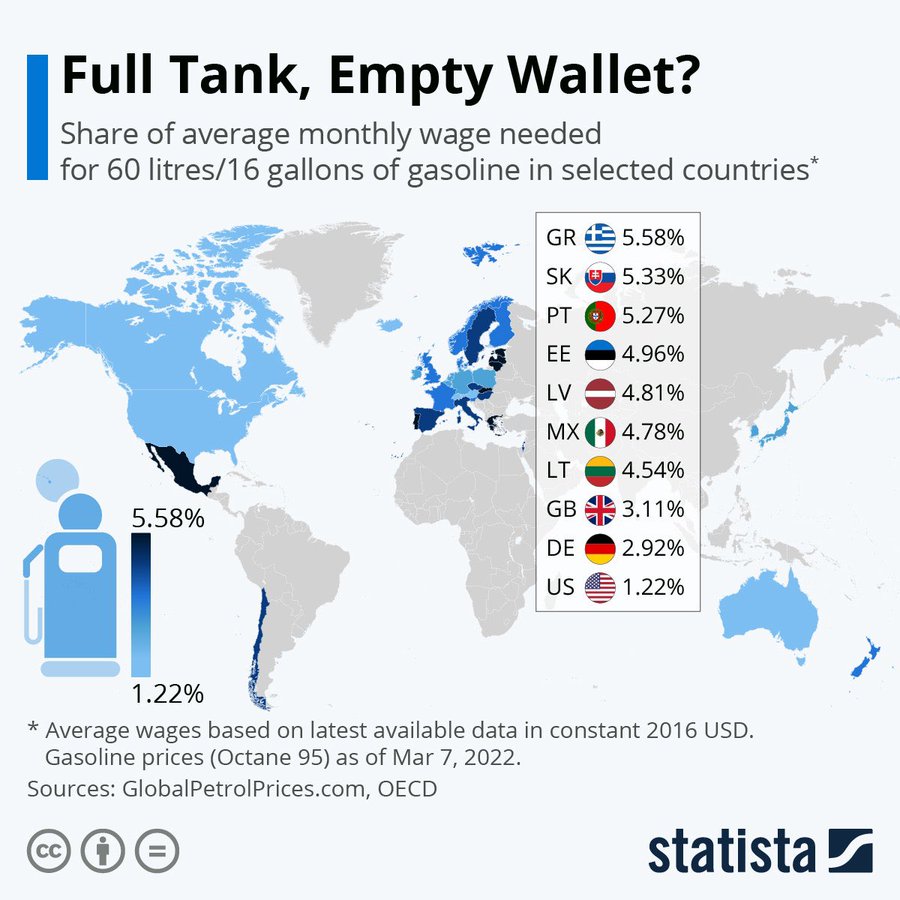
The US consumer started the year strongly, spending with more exuberance than initially thought in January. However, gasoline prices are rising sharply, which leaves less cash in consumers’ pockets to spend on other goods and services. Household consumption could become a drag on economic growth in the coming months unless pump prices drop quickly.

US retail sales rose 0.3% month-on-month in February, a little below the 0.4% consensus. However, January’s already huge 3.8% jump has been revised up to 4.9% as shoppers returned with greater vigour than originally thought after the Omicron wave depressed spending in December.

The “control” group, which excludes volatile components such as auto dealers, food service, building materials and gasoline, and has a stronger correlation with overall consumer spending patterns, fell 1.2% month-on-month, but this is versus an upwardly revised growth rate of 6.7%. Consequently, we can safely say that the consumer sector has started the year on a very firm footing and likely means some upward revisions are required to first-quarter consumer spending forecasts.

The details of the February report show gasoline was the main positive contributor (rising 5.3% month-on-month) on higher prices. Excluding gasoline, retail sales fell 0.2% with the main weakness in furniture (-1%), electronics (-0.6%)and non-store retailers (-3.7% ). Decent gains were seen in clothing (1.1%) and sporting goods (1.7%). The chart below shows a more detailed breakdown of the path of components.

Looking ahead, the March report will show an even more marked divergence between gasoline station sales and non-gasoline. Surging gasoline prices – the national average for gasoline is currently $4.30/gallon versus an average of $3.50 in February – will leave less cash in the pockets of consumers to spend on other goods and services. This will weaken household consumption’s contribution to GDP growth in the second quarter so we have to hope that the 25% fall in oil prices seen in the past week will quickly translate into lower pump prices.

That said, rising wages and employment will boost incomes, while the build of household savings provides a solid backstop that can keep consumers spending. Consequently, we are thinking it will be more of a slowdown rather than an actual contraction story.

On balance though, the US consumer started the year very strongly, and in an environment of strong jobs growth and 40-year highs for inflation, this fully justifies a series of rate hikes from the Federal Reserve, starting today.

On a MoM basis, control sales are up 4.1% annualized in the last 3 months and 4.0% in the last 4.

fredgraph - 2022-03-16T101411.288

But headline CPI is up 8.2% annualized in the last 3 and 4 months.

In real terms, the picture is very different: last 3 months -4.1% a.r., last 4 months: -4.3%.

For Q1’22, January provides a strong start (first 2 months +27.3% a.r.) but March could be hit hard by the 20-25% jump in gas prices which, in itself, will reduce discretionary income by 2.0-2.5% MoM.

(…) Macy’s Inc. M 7.76% tried to raise prices on some mattresses and sofas by $100, but shoppers pushed back, Chief Executive Jeff Gennette said. Clothing brand Bella Dahl raised prices on its T-shirts by about $20, then sales fell and the company rolled back the price increase. “There was a revolt,” said Steven Millman, its chief brand officer. “If we go any higher, we’ll do half the sales.” (…)

In apparel, there is “some trading down with more shoppers turning to value players for some of their purchases,” according to Neil Saunders, a GlobalData managing director. “This is likely in response to squeezed budgets.”

Unit sales of general merchandise goods such as apparel, footwear, toys and sports equipment declined in nine of the 10 weeks from Dec. 26 through March 5 compared with the same period a year ago, according to market research firm NPD Group.

Roughly 43% of consumers surveyed by NPD in February said that if prices continue to rise, they will delay less-important purchases to stick to a budget. (…)

Luxury players have been jacking up prices with no visible collapse in demand. Items that are scarce because of supply-chain shortages also can command higher prices. And shoppers are more willing to pay up for fashion items like spring dresses than basic T-shirts, executives said. (…)

The Chase card spending tracker, through March 11, sees control sales down 0.3% in March, in nominal dollars. Spending in restaurants is down 3.4% so far in March.

Business Leaders Survey: Covering service firms in New York, northern New Jersey, and southwestern Connecticut

Business activity perked up in the region’s service sector, according to firms responding to the Federal Reserve Bank of New York’s March [2-9] 2022 Business Leaders Survey. The survey’s headline business activity index jumped eighteen points to 18.3. The business climate index came in at -23.3, indicating that firms imagegenerally viewed the business climate as worse than normal for this time of year. Employment levels continued to grow modestly, and wages again rose at a swift pace.

The prices paid index remained near record levels and the prices received index hit a fresh record high. Optimism about future conditions dropped sharply.

Services inflation remains strong:

image

Fed Raises Interest Rates for First Time Since 2018 Officials signal quarter-point increase will be followed by six more this year to combat inflation

Officials signaled they expect to lift the rate to nearly 2% by the end of this year—slightly higher than the level that prevailed before the pandemic hit the U.S. economy two years ago, when they slashed rates to near zero. Their median projections show the rate rising to around 2.75% by the end of 2023, which would be the highest since 2008. (…)

Seven officials projected the Fed would need to raise rates above 2% this year, a level that would require at least one of their moves this year to be a half-percentage-point increase, which the Fed hasn’t done since 2000. (…)

“As I looked around the table at today’s meeting, I saw a committee that’s acutely aware of the need to return the economy to price stability and determined to use our tools to do exactly that,” said Fed Chairman Jerome Powell at a news conference on Wednesday that followed the Fed’s first fully in-person meeting in two years. (…)

“That’s a very, very tight labor market—tight to an unhealthy level, I would say,” he said. (…)

Mr. Powell said that the Fed could finalize a plan to shrink its $9 trillion asset portfolio at its next meeting, May 3-4, and to implement it shortly afterward. The central bank ended a long-running asset-purchase stimulus program last week. (…)

During the presser, M. Powell made very clear that:

  • The Fed’s dual mandate on employment and inflation prioritizes containing inflation in order to meet the employment objectives.
  • The FOMC is totally focused on keeping inflation expectations anchored at 2%.
  • The FOMC will use its tools (i.e. interest rates) to achieve its goals.
  • In reality, they do not know how inflation and wages will behave so they will constantly adjust to evolving circumstances.

John Authers in The Day the Fed, Putin and Xi Threw in the Towel:

(…) Only three months ago, no FOMC member thought that rates could go beyond 2.25% by the end of next year. Now, almost all of them think that rates will go at least that far, and a couple believe rates will go as high as 3.75%. It’s arguably the biggest shift from one meeting to the next in the decade that the Fed has been publishing dot plots.

In addition to giving up on “lower for longer” rates, the Fed also seems to be capitulating on its forecasts for inflation to come under control relatively swiftly. (…)

These inflation estimates are, obviously, much higher. Perhaps more shockingly, they are all over the place. This year has nine months to run, and yet the spread of estimates for inflation at the end of it covers almost two percentage points. There is no consensus. That is alarming, and prompted some to fear that the Fed was admitting it didn’t know what was going on. (…)

Powell was focused like a laser beam on convincing the world that he was prepared to hike, hike and hike again to beat inflation. (…)

Euro-Area Inflation Climbs Faster Than Expected on Energy Surge

Consumer prices surged 5.9% last month, according to Eurostat data published Thursday, with energy prices up 32% from the previous year. (…) A separate release showed the euro area’s job vacancy rate rose to 2.8% in the fourth quarter, in a sign that companies may increasingly be struggling to hire staff.

Euro-area inflation accelerated more than initially reported in February

Image

Brazil’s Central Bank Raises Benchmark Interest Rate to 11.75%, Signals More Tightening
Foxconn Forecasts Tough Operating Environment From Pandemic, Inflation, War The iPhone assembler resumed some production in Shenzhen by setting up a bubblelike environment and keeping workers inside.
Kremlin Denies Report of Major Progress in Talks

(…) “Our economy will need deep structural changes in these new realities, and I won’t hide this—they won’t be easy; they will lead to a temporary rise in inflation and unemployment,” Mr. Putin said in televised remarks on Wednesday before a video meeting with Russian government officials. (…)

Mr. Putin pledged to carry out a raft of measures to offset the pain of the sanctions on Russians, including increased payments to pensioners and state employees, a hike in the minimum wage and financial assistance to businesses. The purchasing power of ordinary Russians has been deeply eroded after Western sanctions triggered a sharp devaluation of the ruble.

But Mr. Putin stopped short of endorsing Soviet-style price controls. He also said Russia’s central bank wouldn’t resort to printing money to meet the government’s spending needs. (…)

“Now everyone knows that financial reserves can simply be stolen,” Mr. Putin said. He called the freezing of Russia’s central-bank assets illegitimate and warned it would lead countries around the world to store their reserves in tangible assets such as gold, land and raw materials instead of financial assets. (…)

During the video meeting with Mr. Putin on Wednesday, the leader of Russia’s Tatarstan region said production at truck maker Kamaz, which employs tens of thousands of people in his region, could fall by 40%.

Russia could also be on the cusp of defaulting on its debt for the first time since 1998. The Russian government was required to pay $117 million in interest payments on two dollar-denominated government bonds Wednesday. Russia’s finance minister said the payment had been made and appeared to be tied up at the U.S. bank where Moscow holds its dollars. The U.S. Treasury Department countered that sanctions didn’t prevent Russia from servicing its debt. (…)

China plans audit concession in face of US delisting threat

Covid-19 Admissions Near a Low, but Risks Loom Countervailing trends of declining U.S. Covid-19 hospital admissions and rising cases in the U.K. complicate the outlook for the pandemic’s trajectory

(…) Counts of newly admitted Covid-19 patients in U.S. hospitals are nearing their lowest recorded level after any prior surge. The seven-day average for patients with confirmed and suspected Covid-19 cases admitted to hospitals slid to 6,406 by Wednesday, down from a record high that topped 28,000 in January, a Wall Street Journal analysis of federal data shows. (…)

But U.S. health experts are watching rising Covid-19 caseloads in parts of Europe. The U.K. is of particular concern because trends there have tended to presage those in the U.S. The spread of the BA.2 Omicron variant and the relaxation of Covid-19 precautions—two factors also present in the U.S.—might be driving up Covid-19 there, according to public-health experts. Research indicates that BA.2 is a yet more infectious version of the virus.

“Our experience with Delta and Omicron is that what happens with Europe doesn’t stay in Europe; it hits us,” said Jay Varma, a physician and epidemiologist who directs Weill Cornell Medicine’s Center for Pandemic Prevention and Response. (…)

U.K. data show that while cases and hospitalizations have risen, the number of patients requiring ventilators has remained low. The U.K. Health Security Agency estimated in March that BA.2 represented more than four of every five known Covid-19 cases in England.

The CDC this week estimated that BA.2 recently represented about 23% of U.S. cases, far behind the U.K., but on the rise for several weeks. The estimate climbed to 39% in a region that includes New York and New Jersey, two of many states that recently lifted masking mandates as the winter surge retreated. (…)

Case data in the U.S. have become less reliable because of the rise in at-home testing, which generally isn’t captured in state case counts, and some states have dialed back on the frequency of their reporting. (…)

Cases are also rising strongly in Germany, France, South Korea, just to name a few.

THE DAILY EDGE: 16 MARCH 2022: 已经足够

已经足够 is “enough already” in mandarin according to Google translate.

Relayed to the Kremlin: уже достаточно!

Zelenskiy Says Russia Positions ‘More Realistic’ 

Ukrainian President Volodymyr Zelenskiy said Russia’s “positions in the negotiations sound more realistic” as the two sides are scheduled for another round of talks on Wednesday. Russian Foreign Minister Sergei Lavrov also said there is some hope for compromise, but progress remains difficult. Hours earlier, Russian President Vladimir Putin said Ukraine’s leadership was not “serious” about resolving the conflict.

Whether a trade war or a real one like in Ukraine, China has shown that it will try to prevent its geopolitical struggles with the U.S. from hurting the domestic economy. A rapidly worsening Covid situation and the need to maintain stability in a pivotal year for Xi make it less likely the Chinese leader would allow Vladimir Putin’s invasion of Ukraine to blow back at home. (…)

“The big issue now is what decisions and actions China takes,” Singaporean Foreign Minister Vivian Balakrishnan said in an interview to be broadcast at the upcoming Bloomberg Live Asean Business Summit, adding that Beijing has “enormous influence” on Russia. “If you get a deepening of the bifurcation of the global economy, of supply chains, of technology, this will be a very, very different world.” (…)

On Tuesday, China’s envoy in Washington issued one of Beijing’s clearest denials yet that it had advanced warning of Russia’s war. (…)

“Assertions that China knew about, acquiesced to or tacitly supported this war are purely disinformation,” he wrote. “Had China known about the imminent crisis, we would have tried our best to prevent it.” (…)

The FT’s Gideon Rachman made an interesting point:

The fact that the EU, UK, Swiss, South Koreans, Japanese and Singaporeans have joined in the financial sanctions on Russia has created a united front of developed economies that should concern Beijing. China has repeatedly measured itself directly against the US, ticking off milestones as it goes: largest trading power, largest economy measured by purchasing power, largest navy. Yet if China now has to measure itself against not just the US, but also the EU, UK, Japan, Canada and Australia, its relative position looks much less powerful. … The idea of an economic severance of China from the west, once unthinkable, is beginning to look more plausible. It might even appeal to the growing constituency of economic nationalists in the west who now regard globalisation as a disastrous error.

(…) This can no longer be described as a brain drain: It’s a stampede for the exits. Konstantin Sonin, an economist at the University of Chicago, has estimated that about 200,000 Russians fled in the first 10 days of the invasion—to Armenia, Georgia, Israel, Kazakhstan, Kyrgyzstan, Turkey—any country that admits Russians visa-free. (…)

They’re leaving everything behind, most of them because they want nothing to do with Putin’s sham-imperial project and don’t want to be associated with his war crimes; others because they cannot imagine living under the Soviet-style autarky to which Western sanctions have doomed Russia. (…)

Xi Spurs Frantic Stock Buying With Lifeline for China Markets After a brutal 12 months for Chinese equities, Wednesday’s session was looking like a tepid bounce off multi-year lows until the headlines started rolling from Beijing. Then greed quickly replaced the panicked selling of the past few days.

In a brief statement carried by state media, China’s top financial policy body vowed to ensure stability in capital markets, support overseas stock listings, resolve risks around property developers and complete the crackdown on Big Tech “as soon as possible.” Yi Gang, governor of the People’s Bank of China, followed with a statement saying the central bank would help implement the policies, as did the banking watchdog.

(…) it was the first time China publicly addressed investors’ top concerns in one coordinated swoop. The move underscored Xi’s focus on ensuring economic and financial stability before a Communist Party congress at which he’s expected to secure at least another five years in power. (…)

The State Council statement made a veiled reference to his political imperatives, calling on all parties “to deeply understand the significance of the “‘two establishes’” in keeping the economy and markets stable — jargon that affirms Xi’s position as the Communist Party’s most important figure.

Government departments should “actively introduce policies that benefit markets,” according to a meeting of the Financial Stability and Development Committee, led by Vice Premier Liu He, who’s in charge of overall economic policy.

China also supports firms listing overseas and has achieved positive progress in discussions with Washington over Chinese stocks on U.S. exchanges, Xinhua’s report of the meeting said, adding that both sides are working to formulate a detailed cooperation plan. Concern that companies like Alibaba might need to delist from overseas markets had been a major driver of the selloff in recent days. (…)

Chinese shares fell to levels last seen in 2008The Hang Seng China gauge plunged 24% this month through Tuesday. Even after Wednesday’s surge, the index is down about 40% in the past year, the worst performance globally. Chinese stocks in the U.S. have lost 75% from their 2021 peak, while the yield on Chinese junk dollar debt has surged above 27% for the first time.

The yuan has also started to look vulnerable. Selling momentum in the offshore Chinese currency on Monday reached an intensity only seen a handful of times in the past five years. The yuan suffered the biggest real-money net outflows among all global emerging-market currencies last week, according to Citigroup Inc. calculations based on client trades. (…)

Xi is totally focused on next October. He needs to deal with a sinking Putin, surging Covid, a slowing economy, threatening real estate, a sinking stock market and a weakening currency. In 6 months!

BTW, recall that Chinese vaccines were said much less efficient against Omicron than Western mRNA vaccines. Maybe, this is what’s behind this new, stronger wave:

Cities with high-/mid-risk districts account for roughly 25% of national GDPimage_4

Source: NHC, CEIC, Goldman Sachs Global Investment Research

BTW #2:

image

 image image

(NBF)

France Opens Door to Talks With Spain on Building Gas Pipeline France is willing to resume talks with Spain about building a gas pipeline connecting the two countries as Europe races to reduce its dependence on Russian gas.

France, which has long resisted Spanish calls to build the link, is now willing to discuss the viability of the so-called Midcat pipeline if Madrid officially requests it, said Jean-Michel Casa, French ambassador in Madrid. Spain has about a quarter of Europe’s regasification capacity. (…)

The pipeline could help substitute Russian gas by allowing Algerian gas to flow into Europe as well bolstering liquefied natural gas imports through Spain. (…)

U.S. Producer Price Gain Moderates in February

The Producer Price Index for Final Demand increased 0.8% (10.0% y/y) during February following a 1.2% January rise. A 0.9% increase had been expected in the Action Economics Forecast Survey. The PPI excluding food and energy rose 0.2% in February (8.4% y/y) after strengthening 1.0% in January. Expectations had been for a 0.6% gain. The PPI less food, energy and trade services also rose 0.2% (6.6% y/y) after increasing 0.8% in January. These series were surveyed before Russia’s invasion of Ukraine and date back to 2010.

Another surge in energy prices led last month’s increase in the PPI with an 8.2% jump (33.8% y/y) following a 3.7% January rise. (…)

Food prices increased 1.9% (13.4% y/y) after rising 1.7% in January. (…)

Final demand for goods prices less foods & energy rose a steady 0.7% (9.6% y/y). Finished consumer goods prices less good & energy rose 0.9% in February (7.4% y/y) following a 0.7% increase. Durable consumer goods prices surged 0.9% last month (8.3% y/y) for the second consecutive month.

Core nondurable consumer goods prices also rose 0.9% (6.9% y/y) following a 0.5% increase. Prices for private capital equipment jumped a record 1.0% (8.0% y/y) for the second consecutive month.

Services prices held steady (7.8% y/y) after strengthening 1.0% in January. Trade services prices rose 0.2% (14.4% y/y) following three straight months of strong increase. Services prices less trade, transportation & warehousing fell 0.4% in February (+3.8% y/y) following a 0.8% increase in January.

Construction product prices rose 0.6% (16.6% y/y) after surging 3.6% in January. Construction costs for private capital investment rose 0.7% (18.3% y/y) after 4.0% increase.

Intermediate goods prices jumped 1.6% (23.3% y/y) due to a 7.4% gain (37.9% y/y) in processed fuel costs.

image

Goods prices, including Core Goods, remain very strong.

The surprise was in PPI Services, unchanged in February after jumping at a 10.6% annualized rate in December-January. Still up 7.8% YoY. From the BLS:

Within the index for final demand services in February, prices for truck transportation of freight moved up 2.0 percent. The indexes for food and alcohol retailing, machinery and vehicle wholesaling, transportation of passengers (partial), and outpatient care (partial) also rose.

Conversely, prices for portfolio management decreased 4.2 percent. The indexes for guestroom rental; apparel, jewelry, footwear, and accessories retailing; automobile retailing (partial); and residential real estate loans (partial) also declined.

Services inflation essentially comes from wages and fees. That lower portfolio management and guestroom rental fees along with slower gains in select retail wages result in unchanged services inflation numbers in February must be seen as a temporary inconsequential aberration.

February’s moderation in PPI will likely be reversed in March.

Oil Market Faces Biggest Supply Crisis in Decades, IEA Says Russia’s invasion of Ukraine and Western sanctions on its oil exports threaten a supply shock that will tighten energy markets even further unless major producers increase output, the International Energy Agency said.

(…) The impact could mean 3 million barrels a day of Russian supply effectively cut off from global markets starting next month, the IEA said. [That’s 26% of Russian oil production]. The agency slashed its forecast for global oil supply this year by 2 million barrels a day to 99.5 million barrels a day, based on what major producers of the Organization of the Petroleum Exporting Countries have currently agreed to pump. (…)

The result will also mean a blow to oil demand, but not by enough to balance the lost Russian supply. Demand for oil will be 1 million barrels a day less this year than the IEA was expecting last month at 99.6 million barrels a day. The IEA also cuts its forecasts for oil demand growth this year by 1.1 million barrels a day, to 2.1 million barrels a day.

The oil market will slip into a deficit as early as the second quarter unless the OPEC group of oil producers increase their supply levels, the IEA said. Beyond the spare capacity of leading OPEC members Saudi Arabia and the United Arab Emirates, there are no other sources of additional supply that can balance the market with oil inventories having already been depleted to multiyear lows and the prospect of additional supplies from Iran seemingly a long way off. (…)

Chinese Auto Stocks Drop as Troubles Pile Up Sluggish sales and supply-chain disruptions have made investors more pessimistic about the world’s largest car market.

(…) China’s shortage of auto chips is easing and the country’s supply of cars is rising, a spokesman for the country’s statistics bureau told a press conference Tuesday, according to an official summary posted on the website of the state-owned Securities Times.

More broadly, Chinese economic growth has decelerated and the property market is slumping. In China, that tends to dampen purchases of cars as well as furniture and home appliances, since home buyers often purchase a new car as well.

“If you look at the past 20 years of property-sales and passenger-vehicle-sales growth, they’re basically correlated,” said Angus Chan, an analyst at Bocom International. (…)

New car sales rose 4.4% last year to 20.1 million vehicles, after three years of declines. (…)

EVs have been rapidly growing market share in China. Sales of electric and plug-in hybrid cars in February more than doubled to 272,000 vehicles from a year earlier, according to the China Passenger Car Association.

U.S. Empire State Manufacturing Index Fell Sharply in March

The Empire State Manufacturing Index of General Business Conditions fell fifteen points in March to -11.8, its lowest level since May 2020. A reading of 8.8 had been expected in the Action Economics Forecast Survey. Twenty-four percent of respondents reported that conditions had improved, down from 33.5% last month, while 35.4% reported that conditions had worsened, up from 30.5% in February. The latest survey was conducted between March 2 and March 9. (…)

The new orders index fell in March to -11.2 from 1.4 in February and the shipments index fell to -7.4 from 2.9 last month. A lessened 26.2% of respondents reported higher shipments, while an increased 33.6% reported lower shipments. (…)

The number of employees index dropped 8.6 points to 14.5, suggesting only a modest rise in employment levels. Twenty-one percent of respondents reported increases in employment during March and 6.2% reported lower employment. The average workweek declined to 3.5, down from 10.9 in February.

Inflation pressures continued to be mixed this month. The prices paid index edged down to 73.8 from 76.6 in February, while prices received rose to a record high of 56.1 from 54.1 last month, signaling ongoing substantial increases in both input prices and selling prices. Seventy-five percent of respondents reported higher prices paid in March, while only 0.9% reported lower prices paid.

 image image

FIBER: Industrial Commodity Prices Continue to Strengthen

image

Ray Dalio: My Discussion with Henry Kissinger about how the World Order is Changing
Why you should care about quantum computing (McKinsey)

• Speedy and secure. There are two big reasons leaders should care about quantum computing. The first: quantum computers are much faster than conventional ones at solving problems. For instance, a typical computer would take billions of years to figure out the prime factors of large numbers, but a quantum computer takes only a few days. The second reason: since prime factorization underpins a great deal of today’s IT infrastructure, quantum computing will put an end to our present-day cybersecurity systems, which means companies that don’t update their IT systems will be powerless against cyberattacks. [HBR]

• With great power. When a commercial-grade version of a quantum computer arrives, it will deliver an explosion of computational power that will enable the world to do what it has only imagined before. Quantum computers can run simulations that could help companies speedily develop new medications and materials, for example. However, quantum computers could also be used to design bioweapons and hack into communications systems. Strong governance is therefore needed to manage the risks and maximize the benefits. [WEF]